If your doctor has mentioned arthroscopy, or you have been told you need keyhole surgery on your knee, this guide explains exactly what it involves and what you can realistically expect before, during, and after the procedure at Medinity Hospital in Lucknow.
Dr. R.P. Singh, Senior Orthopaedic Surgeon at Medinity Hospital, Gomti Nagar, Lucknow, performs arthroscopic knee surgery for ACL tears, meniscus injuries, cartilage damage, and other structural knee problems. This article covers what the surgery involves, which conditions it is used for, which symptoms mean you may need it, what it costs in Lucknow, what recovery looks like week by week, when arthroscopy is the right choice, and when it is not.
Key facts: arthroscopic knee surgery at Medinity Hospital, Lucknow
- ✓Keyhole procedure: 2 to 3 incisions, each less than 1 cm
- ✓Conditions treated: ACL tears, meniscus tears, cartilage damage, loose bodies, synovitis
- ✓Duration: 45 to 90 minutes depending on the procedure
- ✓Hospital stay: same day or next morning in most cases
- ✓Success rate: 80 to 90% for appropriate candidates (varies by condition)
- ✓ACL reconstruction: 82 to 90% return to sport in published studies
- ✓Recovery: 4 to 6 weeks for simple procedures; 6 to 9 months for ACL
- ✓Not suitable for: advanced arthritis with no mechanical symptoms, widespread cartilage loss
What is arthroscopic knee surgery and how is it different from open surgery?
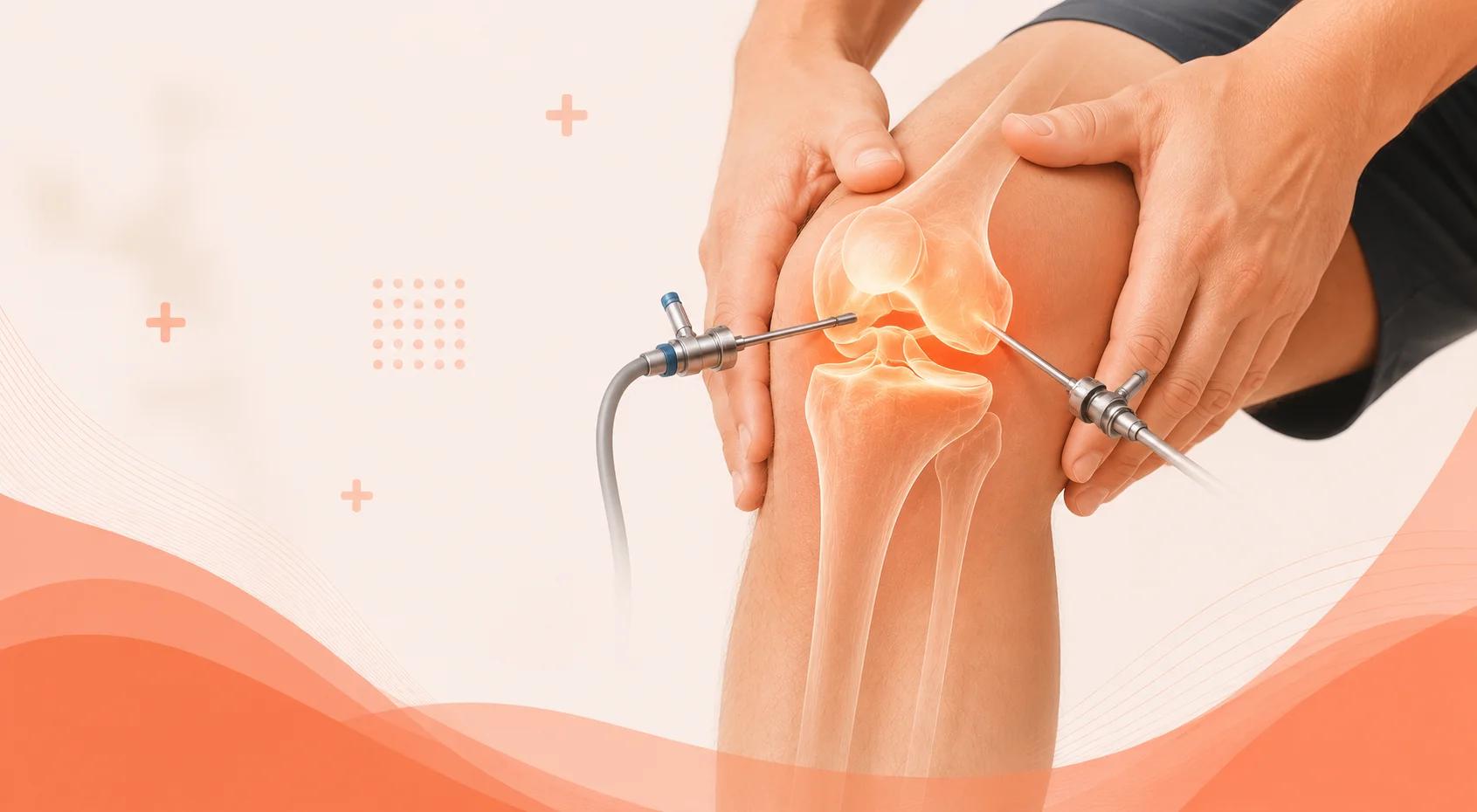
Arthroscopy uses a tiny camera called an arthroscope — inserted through a small incision smaller than 1 cm. The surgeon sees the inside of the joint on a high-resolution screen and uses micro-instruments to diagnose or repair the problem without opening the knee.
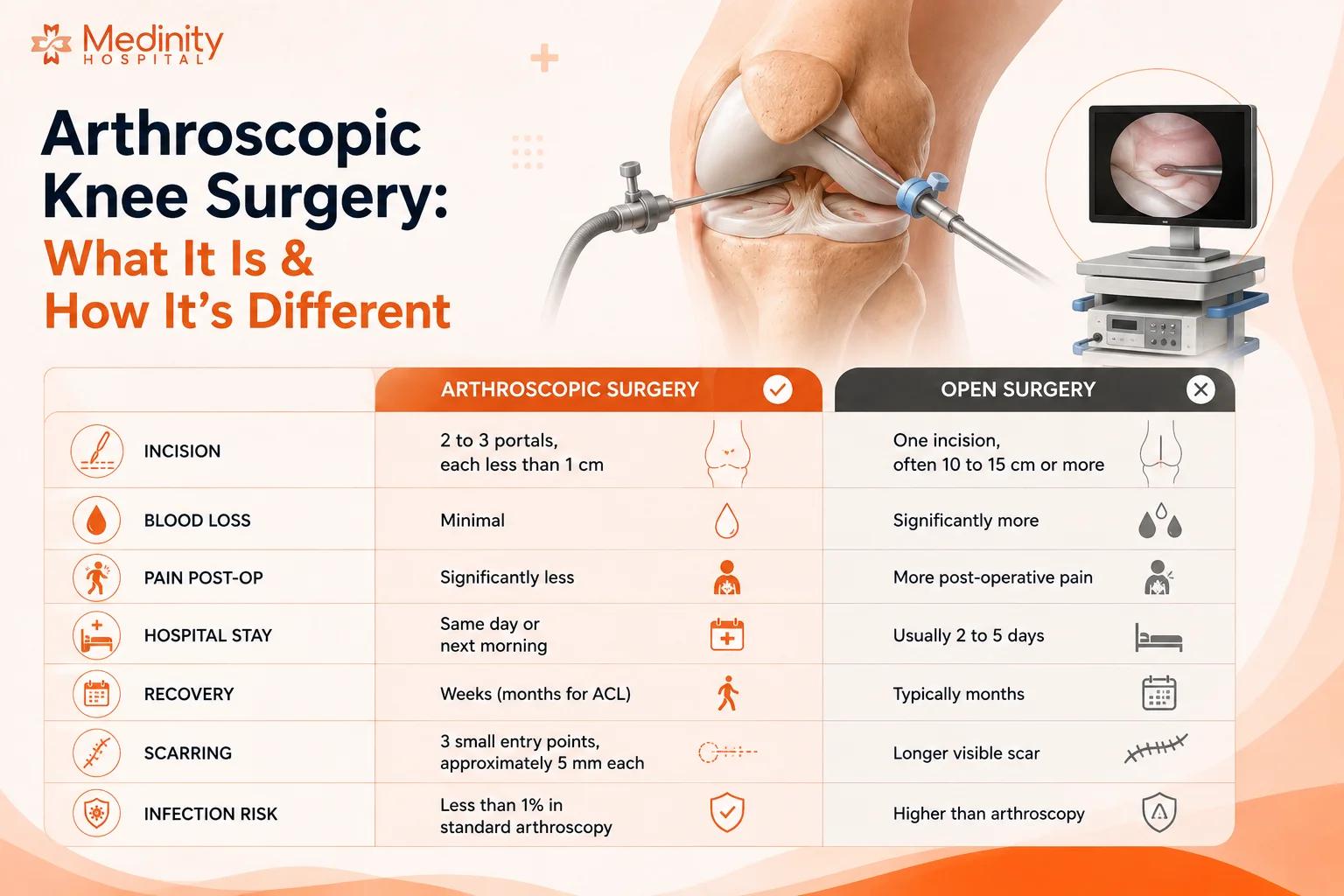
"One of the most common misconceptions I encounter at Medinity Hospital is that patients think 'keyhole surgery' means a minor operation. The procedure itself is minimally invasive, but for something like ACL reconstruction, the repair inside the joint is as demanding as any open surgery. What arthroscopy changes is the path to get there — smaller incisions, less tissue disruption, and a faster recovery."
Signs you may need arthroscopic knee surgery: symptoms that warrant an assessment
Most patients who eventually need arthroscopic knee surgery spend weeks or months trying to manage symptoms conservatively first. Here are the signs that suggest it is time for a specialist assessment and possibly surgical treatment:
- Knee locks and cannot straighten: Mechanical locking is one of the clearest surgical indications. A displaced meniscus fragment or loose body has physically blocked joint movement.
- Knee gives way or feels unstable during activity: Instability suggests significant ligament damage (ACL, PCL) that cannot be addressed by physiotherapy alone.
- Repeated swelling that returns within hours of activity: A joint that repeatedly fills with fluid after activity has an internal structural problem. Swelling that consistently returns despite 3 to 4 weeks of rest needs investigation.
- MRI confirms a repairable structural tear: When MRI shows a bucket-handle meniscus tear, a complete ACL tear with functional instability, or a significant loose body, non-surgical management alone will not address the underlying structural problem.
- Sharp, catching pain in a specific spot inside the joint: A catching or clunking sensation inside the knee with a reproducible sharp pain typically indicates a loose body, plica, or torn meniscus fragment catching between the joint surfaces.
- Physiotherapy has been tried for 3 to 6 months without adequate improvement: Conservative treatment should always be tried first. If a structured physiotherapy programme has not produced adequate improvement in 3 to 6 months, surgical assessment is appropriate.
"In my OPD at Medinity Hospital, one of the most common patterns I see is patients who have been managing a locked knee with rest, hoping it will resolve. By the time they come in, weeks or months have passed. A locked knee from a displaced meniscus fragment does not improve on its own. Early assessment prevents unnecessary delay."
What conditions does arthroscopic knee surgery treat at Medinity Hospital?
For detailed information on specific conditions, see our guides: ACL tear treatment in Lucknow, meniscus tear treatment, PCL and MCL tears, and non-surgical knee pain treatment.
When arthroscopic knee surgery is NOT recommended: the honest clinical answer
One of the most important things a patient can be told before any surgery is when surgery will not help. This is what genuine orthopaedic expertise looks like. Here are the situations where arthroscopy is not the appropriate treatment:
"The conversation I have with patients about when NOT to have surgery is just as important as when I recommend it. At Medinity Hospital, I tell patients honestly if their knee is unlikely to benefit from arthroscopy. An operation that does not address the actual problem does not help the patient and takes up recovery time that could be spent on effective conservative management."
What happens during arthroscopic knee surgery at Medinity Hospital, Gomti Nagar?
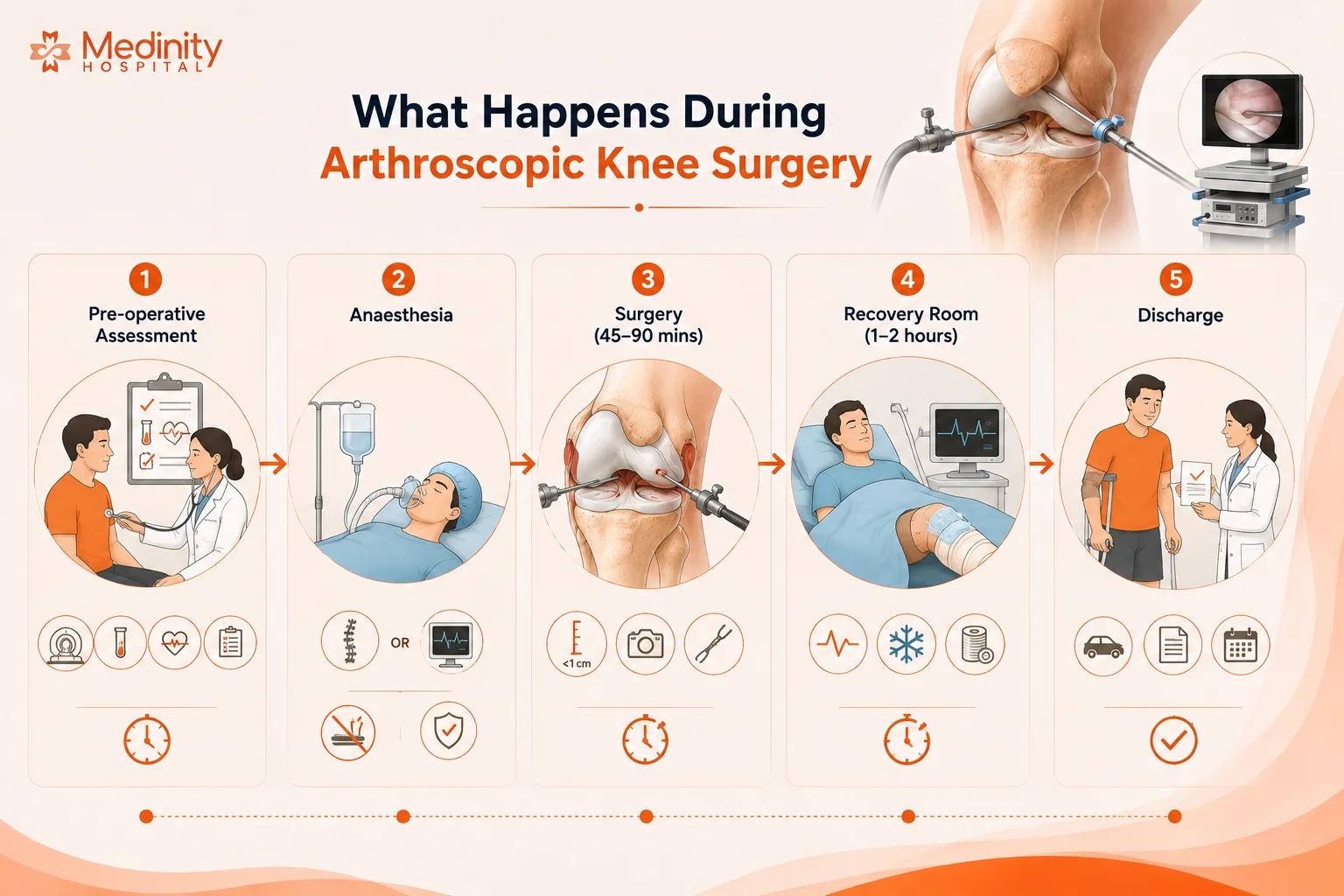
"When I explain arthroscopy to a patient before surgery at Medinity Hospital, one of the most reassuring things I can show them is the difference in what I can see on the arthroscope screen versus what an MRI shows. The arthroscope gives a magnified, real-time view that is often more detailed than the scan. Occasionally I find a problem inside the joint that the MRI hinted at but did not fully show."
How successful is arthroscopic knee surgery? Published evidence by procedure
"Outcome data matters more than any marketing claim. In my practice at Medinity Hospital, the patients who do best after arthroscopy are those where the MRI finding, the clinical symptoms, and the physical examination all point to the same problem. When all three agree, outcomes are consistently good. When only the MRI shows something but there are no clear symptoms to match, operating on MRI findings alone is not in the patient's interest."
Arthroscopic knee surgery cost in Lucknow: what determines the price?
Cost varies by procedure. Simple arthroscopy (meniscectomy or loose body removal) is significantly less expensive than ACL reconstruction because no implants are required. ACL reconstruction cost is higher due to fixation implants. All figures for Medinity Hospital are listed below.
Factors that affect the total cost:
- Implants and graft type: The single biggest cost variable. Meniscectomy requires no implants. ACL reconstruction requires interference screws, suspensory buttons, and possibly additional anchors. Premium-brand imported implants cost more than Indian-manufactured equivalents. Ask specifically what brand and grade of implant will be used.
- Procedure complexity: A straightforward meniscectomy is a shorter, simpler procedure than a multi-ligament reconstruction. OT time and surgeon expertise directly affect the fee.
- Hospital stay: Same-day discharge versus an overnight stay makes a meaningful difference to the final bill. Ask which is planned for your specific procedure.
- Anaesthesia type: Spinal versus general anaesthesia has slightly different cost implications. Ask what is planned.
- Physiotherapy: Whether post-operative physiotherapy is included in the package or billed separately varies between hospitals. At Medinity Hospital, physiotherapy is available on the same campus.
- Insurance coverage: Most major cashless health insurance policies in India cover arthroscopic knee surgery as a recognised procedure. Pre-authorisation from your insurer is required before admission. Confirm whether Medinity Hospital is a network provider for your policy by calling +91 94540 99331.
Arthroscopic surgery at Medinity Hospital versus travelling to Delhi: a practical comparison
Many patients from Lucknow and the surrounding districts consider travelling to Delhi or Hyderabad for arthroscopic knee surgery. Here is an honest, practical comparison:
Recovery after arthroscopic knee surgery: complete week-by-week guide
Recovery varies by procedure: meniscectomy (trim torn meniscus) takes 4 to 6 weeks. Meniscus repair takes 4 to 6 months. Loose body removal or synovectomy takes 2 to 4 weeks. ACL reconstruction takes 6 to 9 months for full return to contact sport. Recovery after arthroscopic surgery is faster than after open surgery for the same procedure.
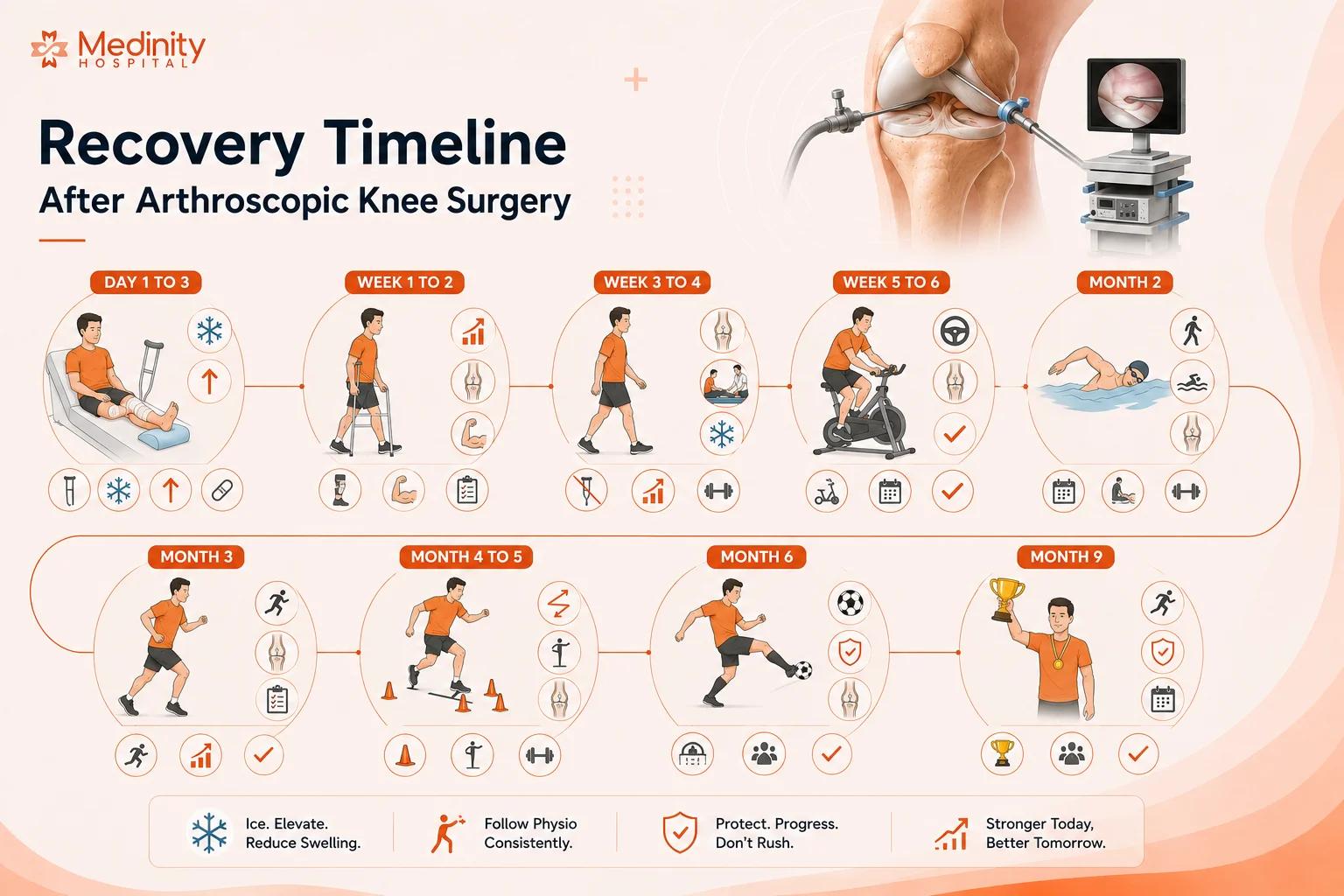
Day 1 to 3
Home on crutches if needed (procedure-dependent). Ice 15 to 20 minutes every 2 to 3 hours. Leg elevated above heart level when resting. Compression bandage stays on until follow-up. Begin foot and ankle pump exercises immediately to prevent blood clots. Pain medication as prescribed.
Week 1 to 2
Pain significantly reduces by day 4 to 7 for most patients. Swelling normal and expected. Walking distance increases daily. Home exercise programme: straight leg raises, quad sets, heel slides, knee extension stretches. Do not drive. No stairs without handrail.
Week 3 to 4
Transition off crutches for meniscectomy, loose body removal, and synovectomy. Range of motion improving. Swelling decreases after activity. Physiotherapy sessions at Medinity begin in this window. Ice after every physiotherapy session for the first 4 weeks.
Week 5 to 6
Most meniscectomy, loose body, and synovitis patients are at approximately 70 to 80% of normal activity. Driving discussed with Dr. R.P. Singh — typically cleared at 4 to 6 weeks when narcotics are stopped and emergency braking is pain-free. Stationary cycling often begins this week.
Month 2
Full daily activities for most simple-procedure patients. Light walking and swimming encouraged. Swelling after exercise still normal — continue icing after activity. Meniscus repair patients: continue protected physiotherapy. ACL patients: formal quad and hamstring strengthening programme well underway.
Month 3
ACL patients: running on flat ground usually starts in this window if quad strength is adequate on testing. Non-ACL patients: return to low-impact sport cleared in most cases at post-operative review. Any patient with stiffness at this stage needs physiotherapy review.
Month 4 to 5
ACL patients: agility and sport-specific drills begin. Balance and proprioception training intensifies. Running on uneven surfaces and direction-change drills. Meniscus repair patients: return to light jogging if strength is adequate.
Month 6
ACL patients: return to non-contact sport training sessions. Full practice with the team for cricket, football, and kabaddi begins. Formal strength testing at Medinity — must reach 90% of uninjured leg before clearance for contact.
Month 9
Full return to all contact sport and competition for most ACL patients who have followed the programme correctly. Some patients, particularly young athletes who were very deconditioned before surgery or who experienced complications, may need 12 months. Do not rush this milestone.
"The most common reason patients take longer to recover than expected is that they either start physiotherapy too late or they return to activity too early. Both errors are common. I tell every patient at Medinity Hospital: your physiotherapy is not optional, and the timeline I give you for return to sport is based on what your specific graft or repair needs to reach full strength — not on how good your knee feels. Feelings are not reliable indicators of tissue healing."
Arthroscopic surgery versus knee replacement: they are not the same thing
For patients with severe arthritis considering joint replacement, see our guides on total knee replacement in Lucknow and partial knee replacement in Lucknow.
Why patients choose Medinity Hospital for arthroscopic knee surgery in Lucknow
- ★Dr. R.P. Singh: MS Ortho (Gold Medalist), Fellowship Joint Reconstruction and Sports Injury, USA and Germany
- ★20+ years of orthopaedic practice, 2,000+ orthopaedic surgeries performed
- ★Dedicated arthroscopy OT at Medinity Hospital, Gomti Nagar
- ★NABH-accredited hospital | NABL-accredited diagnostics laboratory on campus
- ★Integrated in-house physiotherapy department — rehabilitation starts within days of surgery
- ★4.8-star rating from 246+ verified Google reviews
- ★Serving patients from Gomti Nagar, Indira Nagar, Aliganj, Hazratganj, Alambagh, Sitapur, Hardoi, Barabanki, Raebareli, Kanpur, Unnao
Consultation
Need arthroscopic knee surgery in Lucknow? Book an assessment at Medinity Hospital.
Whether you have an ACL tear, a meniscus injury, or unexplained knee locking, Dr. R.P. Singh at Medinity Hospital, Gomti Nagar, Lucknow, will assess the damage accurately, give you an honest recommendation on surgery versus rehabilitation, and guide your complete recovery.
- Emergency orthopaedic care 24/7
- Consultations 6 days a week
- Walk-in OPD available
CP-221, Hahnemann Medinity Hospital Road, Gomti Nagar, Lucknow 226010 · Walk-in OPD · 24/7 emergency
Frequently asked questions about arthroscopic knee surgery
Help centre
Frequently asked questions
Healing without surgery, recovery after arthroscopy, and when to seek care promptly.
Yes, some meniscus tears can heal with physiotherapy, particularly small tears in the outer red zone which has a good blood supply. Degenerative tears in patients over 40 who are not involved in high impact sport also often respond well to conservative treatment. However, tears that cause the knee to lock, or tears in the inner white zone which has no blood supply, usually require surgical repair. Dr. R.P. Singh at Medinity Hospital, Lucknow, will review your MRI and advise the best approach for your specific tear.
Most patients can walk with support within one to two days of arthroscopic meniscus surgery. Return to light daily activity takes 4 to 6 weeks. Return to sport takes approximately 3 to 6 months depending on whether the meniscus was trimmed or repaired, and how consistently you follow the rehabilitation programme at Medinity Hospital.
Arthroscopic keyhole meniscus surgery is performed under anaesthesia, so you feel nothing during the procedure. Post-operative pain is managed with medication and is typically well controlled. Most patients at Medinity Hospital find that the discomfort after surgery is more manageable than the pain they were experiencing from the tear itself, particularly if the knee was locking beforehand.
Arthroscopic meniscus surgery at Medinity Hospital is typically done as a one night admission. Most patients go home the day after surgery. Because the procedure uses keyhole technique with two small incisions rather than an open operation, recovery begins quickly and the wound heals faster.
Yes. A meniscus tear that is ignored and not treated, especially if you continue high impact activity on the injured knee, can worsen over time. A small, repairable tear can extend into a bucket handle tear. Continued loading on an unstable knee accelerates cartilage wear. Research shows that over 75% of patients with knee osteoarthritis have a history of meniscal injury. Early assessment and treatment prevents this progression.
Until you have been assessed by an orthopaedic specialist, avoid deep squats below 90 degrees, full knee bends, running on hard surfaces, and any pivoting or twisting movements. These load the meniscus unevenly and can extend a partial tear into a complete one. Walking on flat ground is generally safe. If your knee is locking, stop activity and see a doctor promptly.
Gentle walking may be beneficial during recovery, but excessive walking can worsen symptoms. The right amount depends on the severity and location of the tear.
Persistent swelling, knee locking, inability to straighten the knee, and ongoing pain are signs that the tear may require specialist evaluation.
Untreated tears can lead to persistent pain, recurrent swelling, knee instability, and accelerated cartilage damage over time.
Yes. Certain tear patterns can cause a piece of the meniscus to become trapped inside the joint, resulting in locking or restricted movement.
The cost depends on the procedure performed, hospital stay, implants (if required), and individual patient factors. A consultation and MRI evaluation help determine the most appropriate treatment plan.
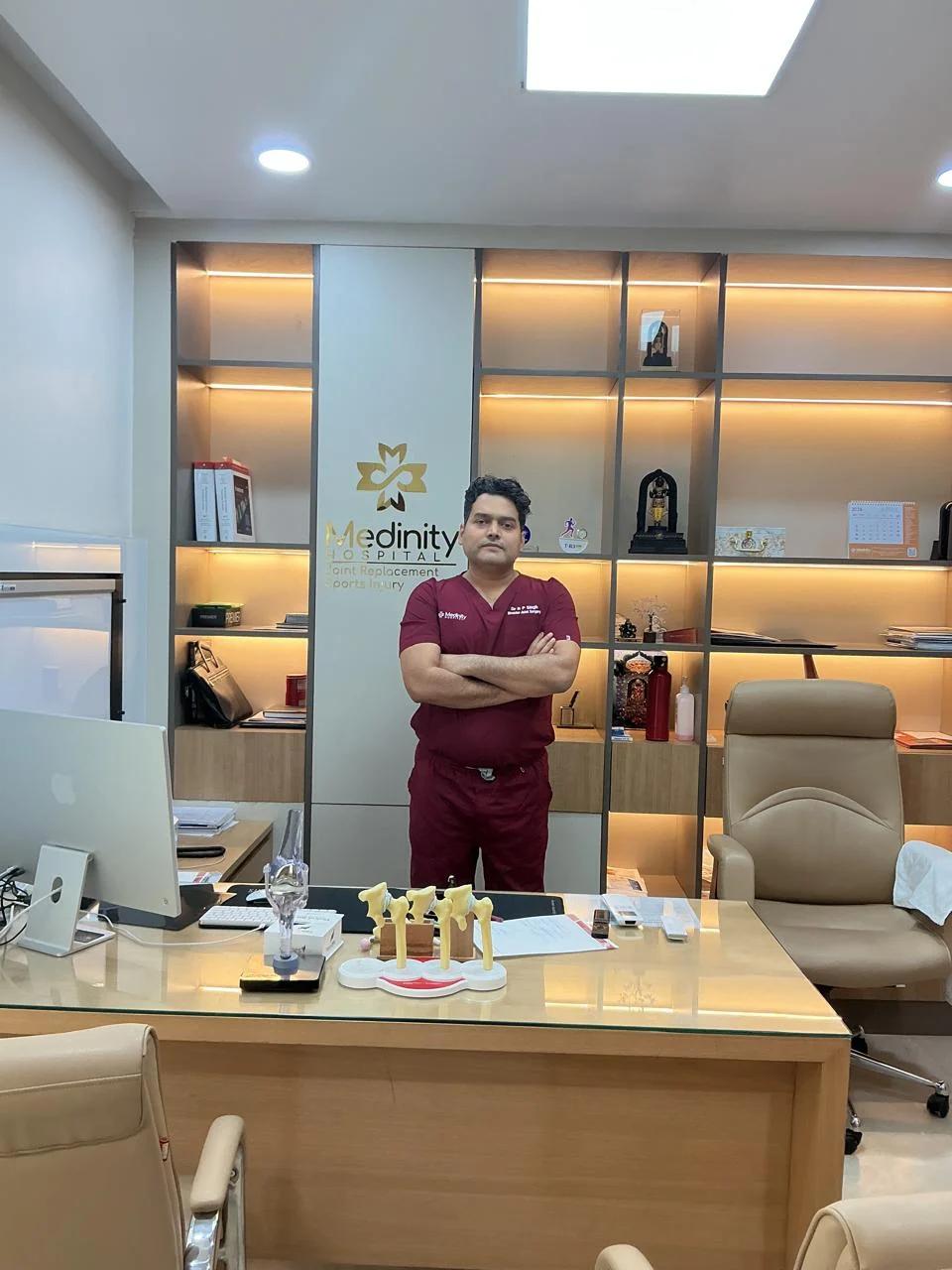
About the author
Dr. R.P. Singh
MS Ortho (Gold Medalist) · Fellowship Joint Reconstruction (USA, Germany) · Senior Orthopaedic Surgeon
- 20+ years experience
- 2,000+ surgeries
- Arthroscopic surgery expert
Dr. R.P. Singh is a Gold Medalist orthopaedic surgeon with over 20 years of experience. He specialises in arthroscopic ligament repairs (ACL, meniscus, shoulder instability) and joint replacement surgery, bringing advanced international techniques to athletes in Lucknow.
View full profile & credentialsMedical disclaimer: This article is for educational purposes and does not replace professional medical consultation. Arthroscopic knee surgery must be assessed by a qualified orthopaedic surgeon before any surgical decision is made.