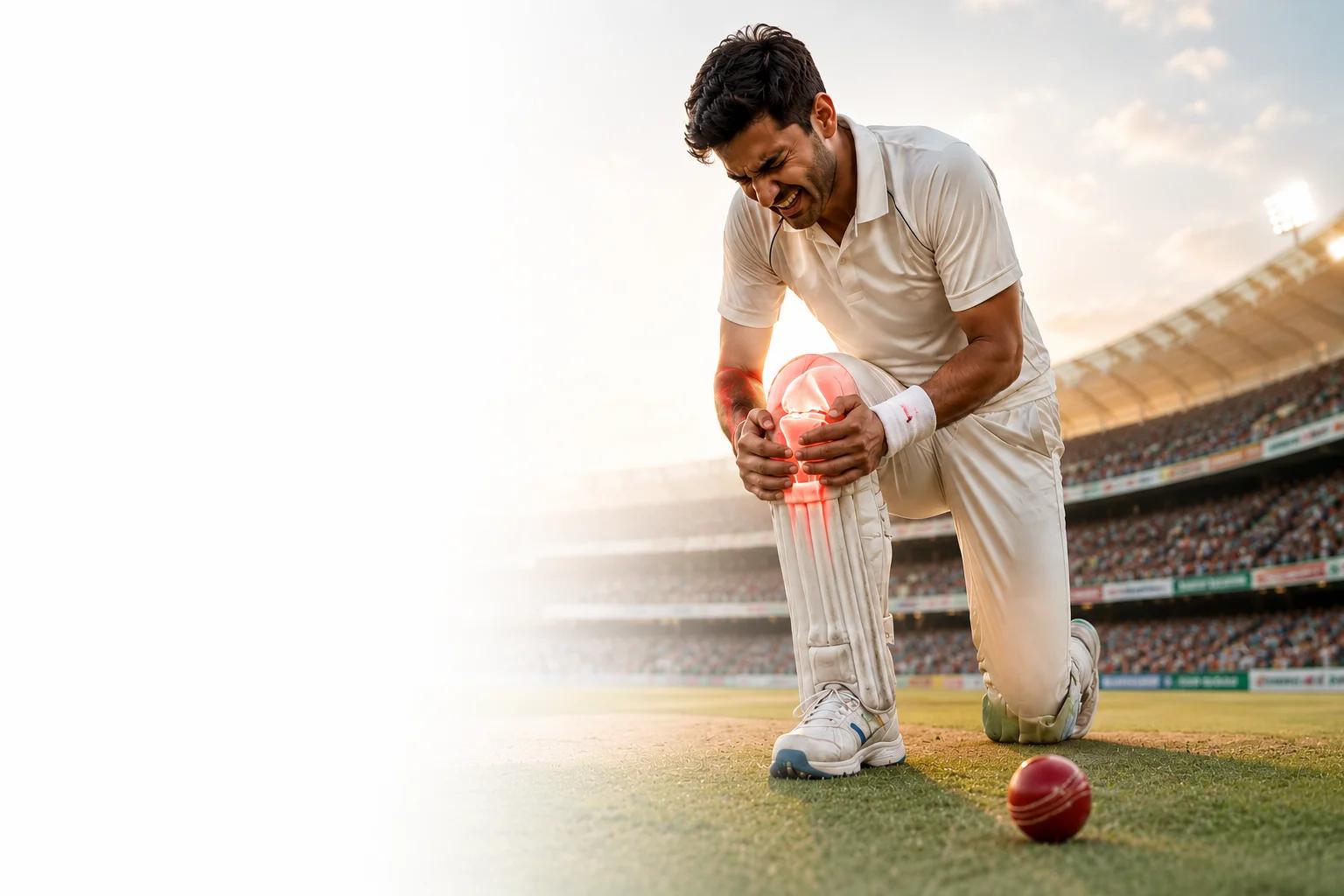
Cricket is one of the most physically demanding sports on the knee. A sudden pivot while bowling, a hard sprint chasing a ball to the boundary, or an awkward landing after a jump can tear the ACL completely, and often without any contact from another player at all. If you play cricket in Lucknow and felt a 'pop' in your knee followed by swelling and instability, you may have an ACL injury.
Dr. R.P. Singh, orthopaedic surgeon in Lucknow at Medinity Hospital, Gomti Nagar, has treated hundreds of cricketers and athletes across Uttar Pradesh over the past 20 years.
This article explains what an ACL tear is, how to recognise it, what your treatment options are, and what recovery actually looks like for a cricketer who wants to play again.
What is the ACL and why do cricketers tear it so often?
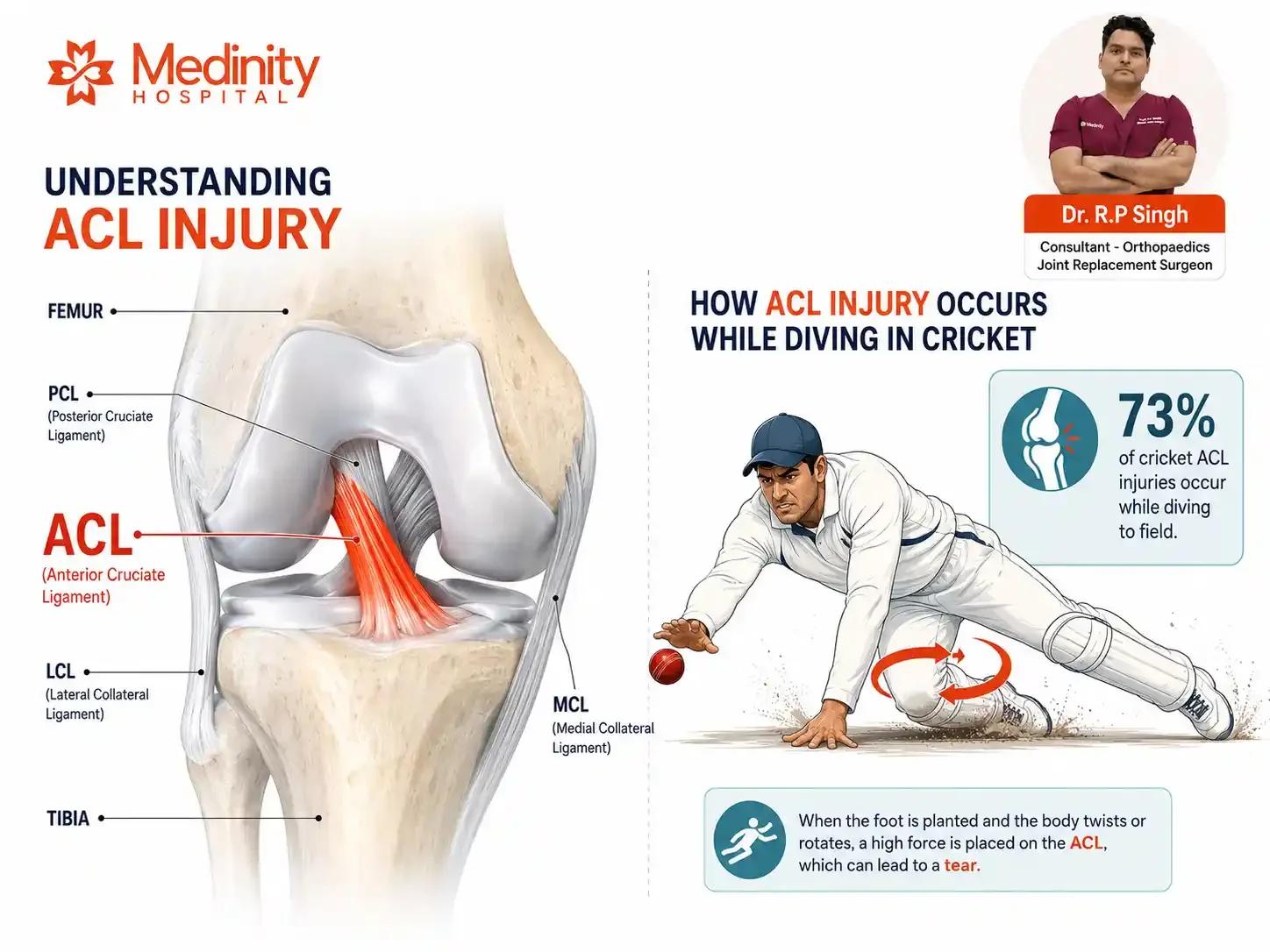
The anterior cruciate ligament, or ACL, is one of four major ligaments inside your knee joint. Think of it as a strong internal cable that connects your thigh bone to your shin bone and keeps the knee stable every time you change direction, land from a jump, or accelerate suddenly.
Cricket puts this ligament under serious stress in ways that many players do not realise. According to a published study on elite Indian athletes, 73% of cricket related ACL injuries happen while diving to field the ball, 25% during bowling, and just 2% while batting. The diving fielder plants a foot, twists sharply, and the ACL takes the full force of that rotation.
Other high risk movements include:
- Fast bowlers driving through the crease on hard, uneven ground
- Batsmen pushing off suddenly for a quick single
- Fielders changing direction at full sprint
India's cricket pitches and grounds are often harder than turf used in other countries, which means less natural shock absorption when the foot plants and the knee twists. This is one of the reasons ACL injuries are so common at the grassroots level in Uttar Pradesh and across the country.
If you are comparing pathways for assessment and rehab, read about sports injury treatment in Lucknow at Medinity Hospital.
The 5 signs of an ACL tear you should not ignore
The tricky thing about ACL tears is that the initial pain sometimes settles within a few hours. Some players try to walk it off and come back to practice within days. That is one of the most common mistakes Dr. R.P. Singh sees in his practice at the orthopaedics department at Medinity Hospital.
What happens if you ignore an ACL tear?
The ACL does not have its own blood supply. This means it cannot heal on its own the way a cut on your skin would. Ignoring the injury and continuing to play does not allow the ligament to repair itself. Instead, it creates a new set of problems.
When the ACL is torn and left untreated, the knee becomes unstable during sport. Every time you dive, sprint, or pivot on that unstable joint, the cartilage inside the knee absorbs the force that the ligament should be handling. Over months, this leads to meniscus tears, cartilage damage, and eventually, early onset knee arthritis.
ACL treatment options: surgery vs physiotherapy
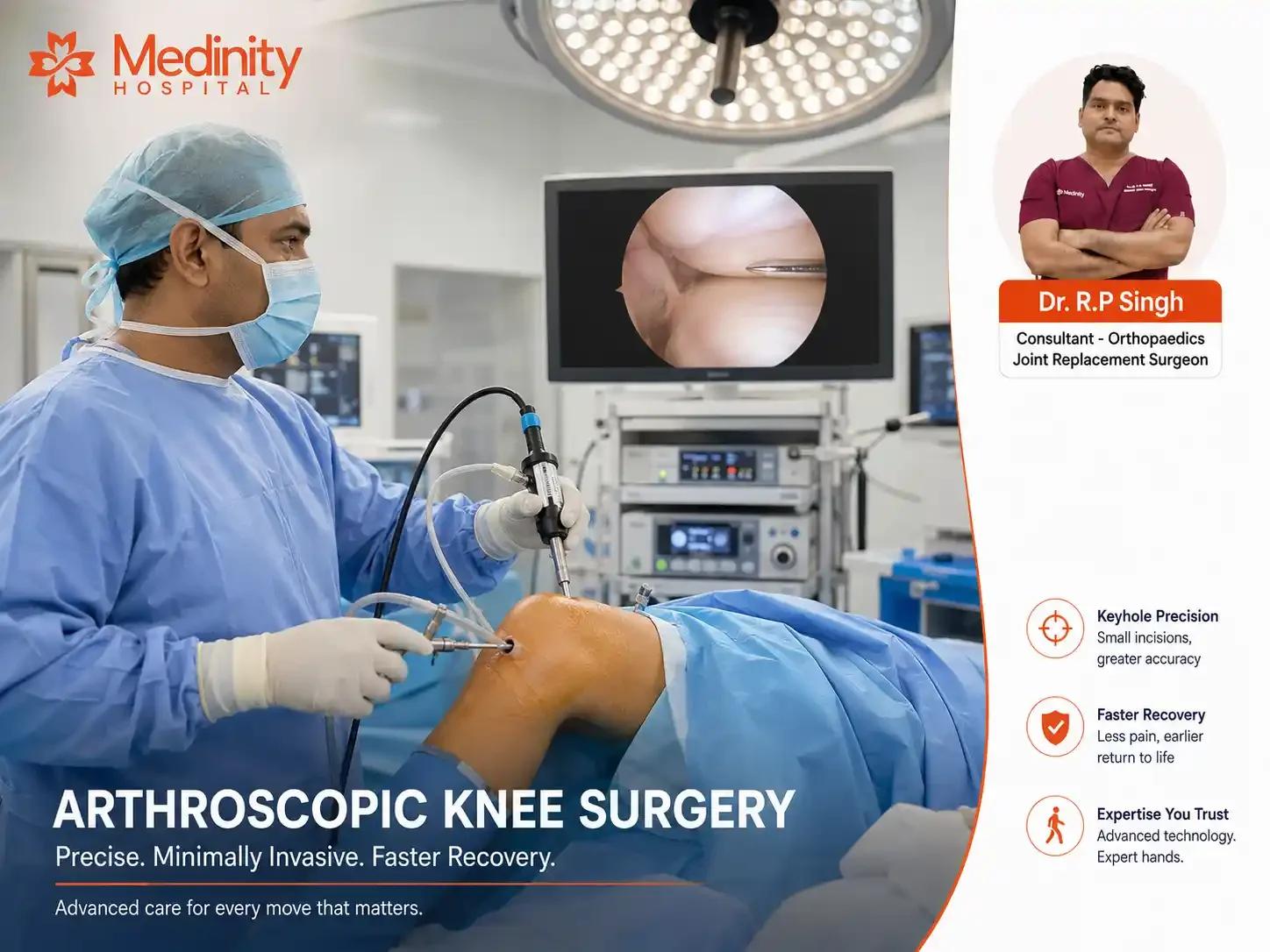
Not every ACL tear requires surgery. The right treatment depends on how complete the tear is, how active you are, and what you want to do with your knee.
For a cricketer who wants to bowl, field, or bat at full intensity again, ACL reconstruction surgery gives the best chance of a complete return to sport. Physiotherapy alone does not restore the mechanical stability needed for the pivoting, diving, and direction changes that cricket demands.
Dr. R.P. Singh performs ACL reconstruction at Medinity Hospital using arthroscopic technique, which means two small incisions instead of one large opening. This reduces blood loss, speeds up the early recovery phase, and leaves minimal scarring.
How long does ACL recovery take for a cricketer?
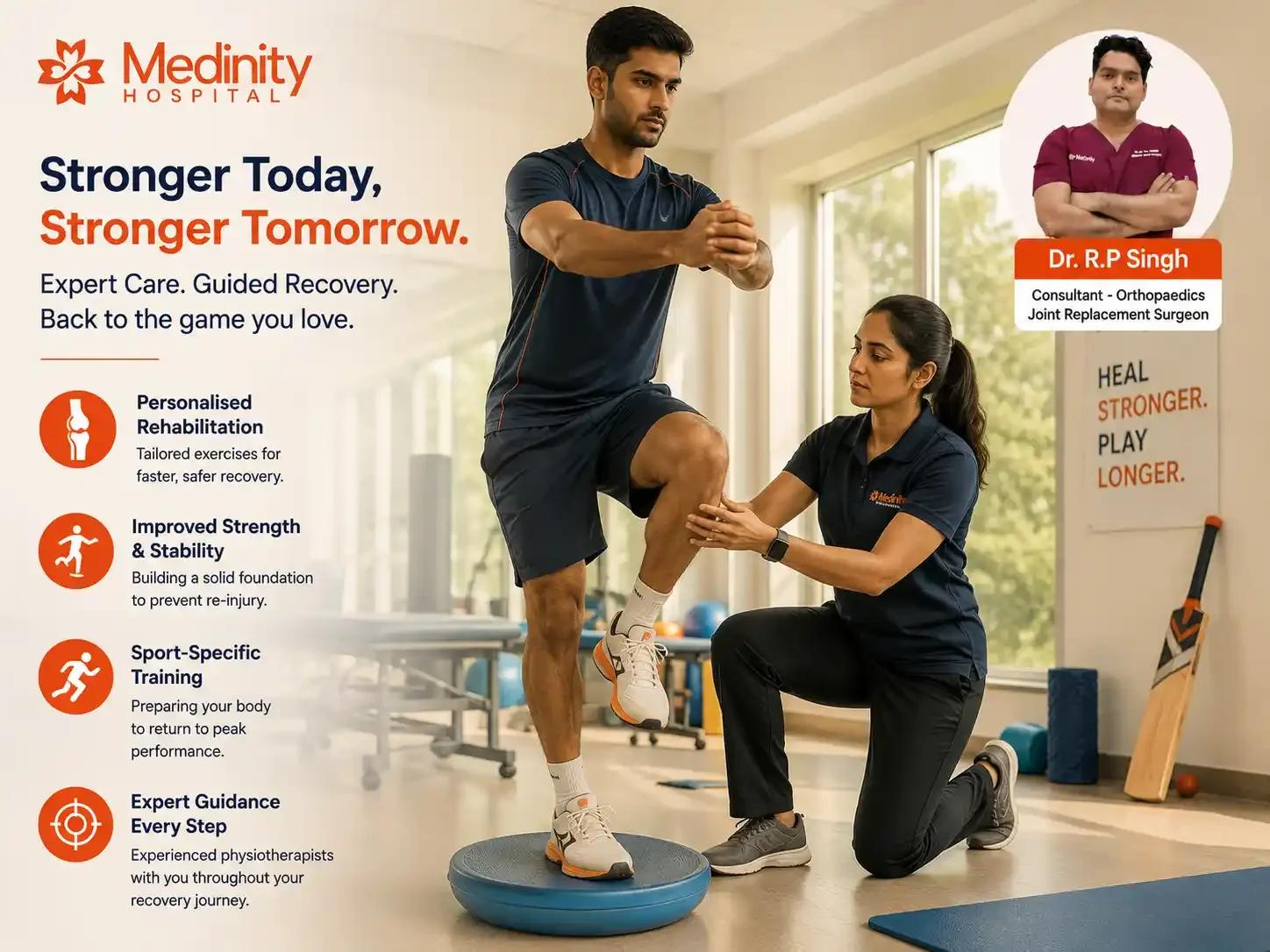
This is the question every injured cricketer asks first. The honest answer is that returning to full match play takes between 9 and 12 months from the date of surgery. This is not a conservative estimate. Research published in medical journals consistently shows that the ACL graft takes 9 to 12 months to fully integrate with the surrounding bone tissue, regardless of how well the patient feels. Rushing the return to sport before the graft has matured is the leading cause of ACL retears.
Why patients across Uttar Pradesh choose Dr. R.P. Singh for knee injuries
Dr. R.P. Singh is a Senior Orthopaedic Surgeon at Medinity Hospital, Gomti Nagar, Lucknow, with more than 20 years of clinical experience and over 2,000 orthopaedic surgeries performed. He holds an MS in Orthopaedics with a Gold Medal, and completed fellowship training in joint replacement surgery in both the United States and Germany, which is uncommon among practising surgeons in Lucknow.
His experience treating athletic knee injuries, including ACL reconstruction, meniscus repair, and sports related fractures, means he understands what a cricketer's knee goes through and what it needs to go through again. For department level care, visit the orthopaedics department at Medinity Hospital.
Patient story
“Mera accident 2022 mein hua tha, pura ligament damage ho gaya tha. Dr. R.P. Singh aur Dr. Mohit Pal ki wajah se main bilkul theek ho gaya.”
Patient story
“After 2 months I can stand on my own feet and work professionally.”
Medinity Hospital holds NABH-accredited standards of care and has a 4.8-star rating from more than 246 verified patients on Google.
If you or someone you know has had a knee injury while playing cricket in Lucknow, Sitapur, Hardoi, Barabanki, or anywhere across Uttar Pradesh, early consultation with an orthopaedic specialist is the most important first step.
Help centre
Frequently asked questions
Quick answers on ACL tears, surgery, cost, and return to cricket.
Yes. With proper surgery and a structured rehabilitation programme, most cricket players return to full match play within 9 to 12 months. Dr. R.P. Singh at Medinity Hospital, Lucknow, builds a sport specific return plan for every athlete from the day of surgery, working alongside the physiotherapy team to track progress at each stage.
The cost of ACL reconstruction in Lucknow depends on the technique used, the type of graft, and the duration of your hospital stay. It will also vary depending on whether you are using health insurance. To get a precise, written estimate tailored to your MRI and your specific injury, book a consultation with Dr. R.P. Singh at Medinity Hospital, Gomti Nagar, or call +91 94540 99331. There are no charges for the initial estimate.
The most common signs are a popping sound at the moment of injury, swelling that develops rapidly within a few hours, a feeling of the knee giving way, and difficulty bearing weight. However, these symptoms can also occur with other knee injuries. An MRI scan is the only way to confirm an ACL tear and understand how complete the damage is. If you suspect a knee injury after cricket, do not wait more than a week before getting it assessed.
For a partial tear in a patient who is not playing high intensity sport, physiotherapy and muscle strengthening can often restore enough stability for daily activity. For a complete ACL tear in a cricket player who wants to return to pivoting, sprinting, and diving, surgery gives significantly better long term outcomes. Dr. R.P. Singh will assess your MRI and your activity goals before recommending either path.
Most patients undergoing arthroscopic ACL reconstruction at Medinity Hospital stay for one to two nights. The keyhole technique used by Dr. R.P. Singh means less post operative pain, faster wound healing, and an earlier start to physiotherapy compared to open surgery.
A complete ACL tear does not heal on its own because the ligament has a limited blood supply. Some people with partial tears or lower activity levels may manage their symptoms with physiotherapy and muscle strengthening. However, for cricketers who want to return to running, pivoting, diving, and competitive play, ACL reconstruction surgery is often recommended to restore knee stability and reduce the risk of further damage to the meniscus or cartilage.
ACL reconstruction is one of the most successful orthopaedic procedures, with success rates generally reported above 85–90% when combined with proper rehabilitation. Most patients regain knee stability and return to sports, although the recovery process requires dedication to physiotherapy. Factors such as age, fitness level, associated injuries, and adherence to rehabilitation can influence the final outcome.
Most patients begin light jogging approximately 3 to 4 months after ACL reconstruction, provided the knee has regained adequate strength, stability, and range of motion. Returning to cricket-specific activities such as sprinting, cutting, bowling, and fielding typically occurs much later under the guidance of the treating surgeon and physiotherapy team.
Recovery depends on the severity of the injury and the treatment approach. Patients undergoing ACL reconstruction generally return to everyday activities within a few weeks, but returning to competitive cricket usually takes 9 to 12 months. A structured rehabilitation programme is essential to rebuild strength, balance, and confidence in the knee.
Ignoring a torn ACL can lead to ongoing knee instability, repeated episodes of the knee giving way, and an increased risk of meniscus tears and cartilage damage. Over time, these problems can accelerate wear and tear within the joint and increase the likelihood of developing early knee arthritis.
An MRI scan is the most reliable way to confirm an ACL tear and assess whether other structures such as the meniscus, cartilage, or collateral ligaments have also been injured. While a clinical examination can strongly suggest an ACL injury, MRI provides detailed information that helps guide treatment decisions.
About the author
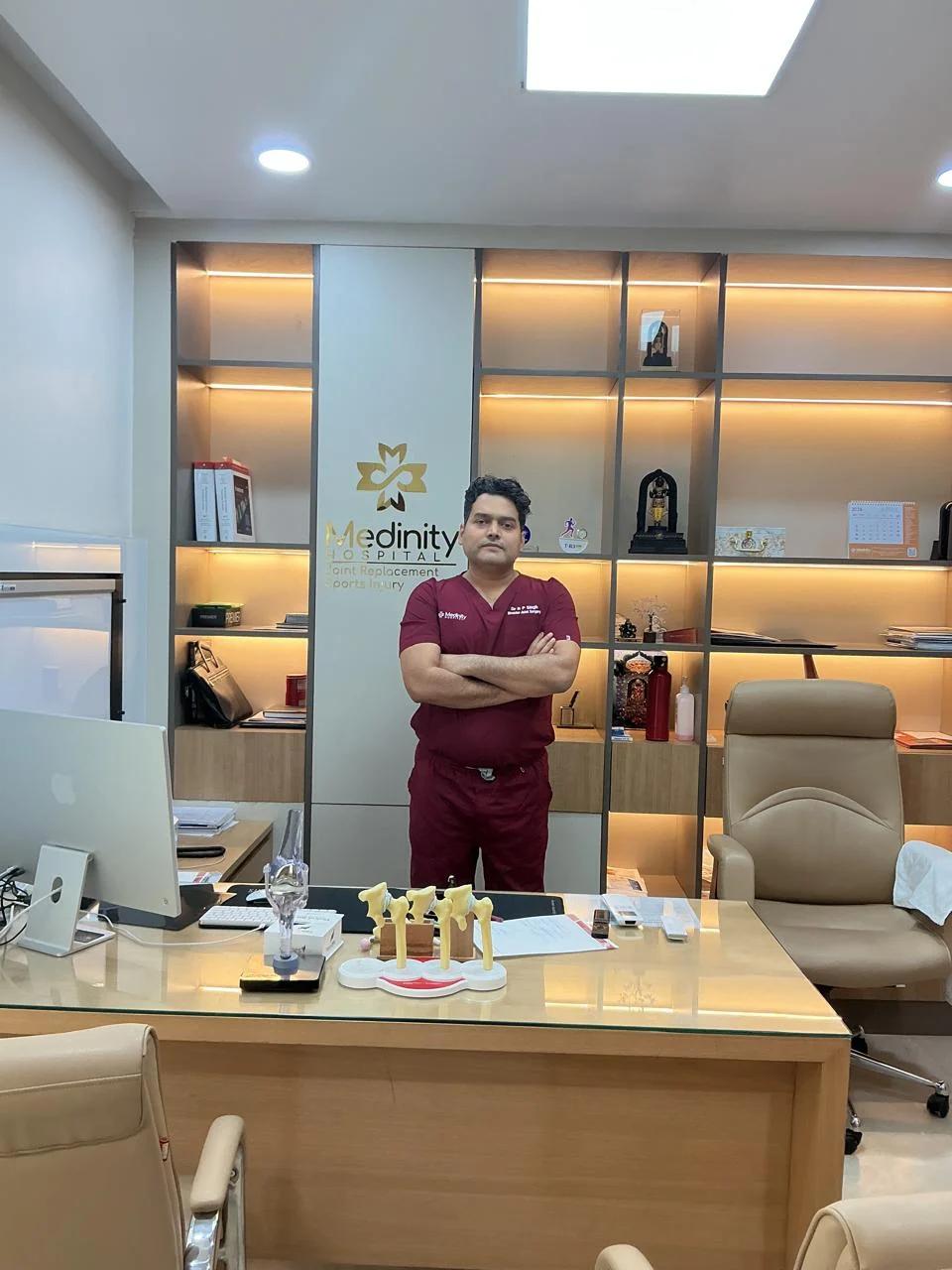
Dr. R.P. Singh
MS Ortho (Gold Medalist) · Fellowship Joint Replacement (USA, Germany) · Senior Orthopaedic Surgeon
- 20+ years experience
- 2,000+ surgeries
- ACL & sports knee care
Dr. R.P. Singh leads orthopaedics at Medinity Hospital, Gomti Nagar, with expertise in ACL reconstruction, arthroscopic knee surgery, and return to sport rehabilitation for cricketers and athletes across Uttar Pradesh.
View full profile & credentialsConsultation
Book a consultation at Medinity Hospital, Lucknow
If you felt a pop, your knee swelled after cricket, or your knee has felt unstable for weeks, do not wait. Dr. R.P. Singh will review your MRI, explain surgical and non surgical options, and outline a cricket specific recovery plan.
- Same orthopaedic team from first OPD visit through surgery and rehab
- Walk-in OPD and 24/7 emergency orthopaedic support at Gomti Nagar
CP-221, Hahnemann Medinity Hospital Road, Gomti Nagar, Lucknow 226010 · Walk-in OPD · 24/7 emergency