Quick answer: when is total knee replacement actually necessary?
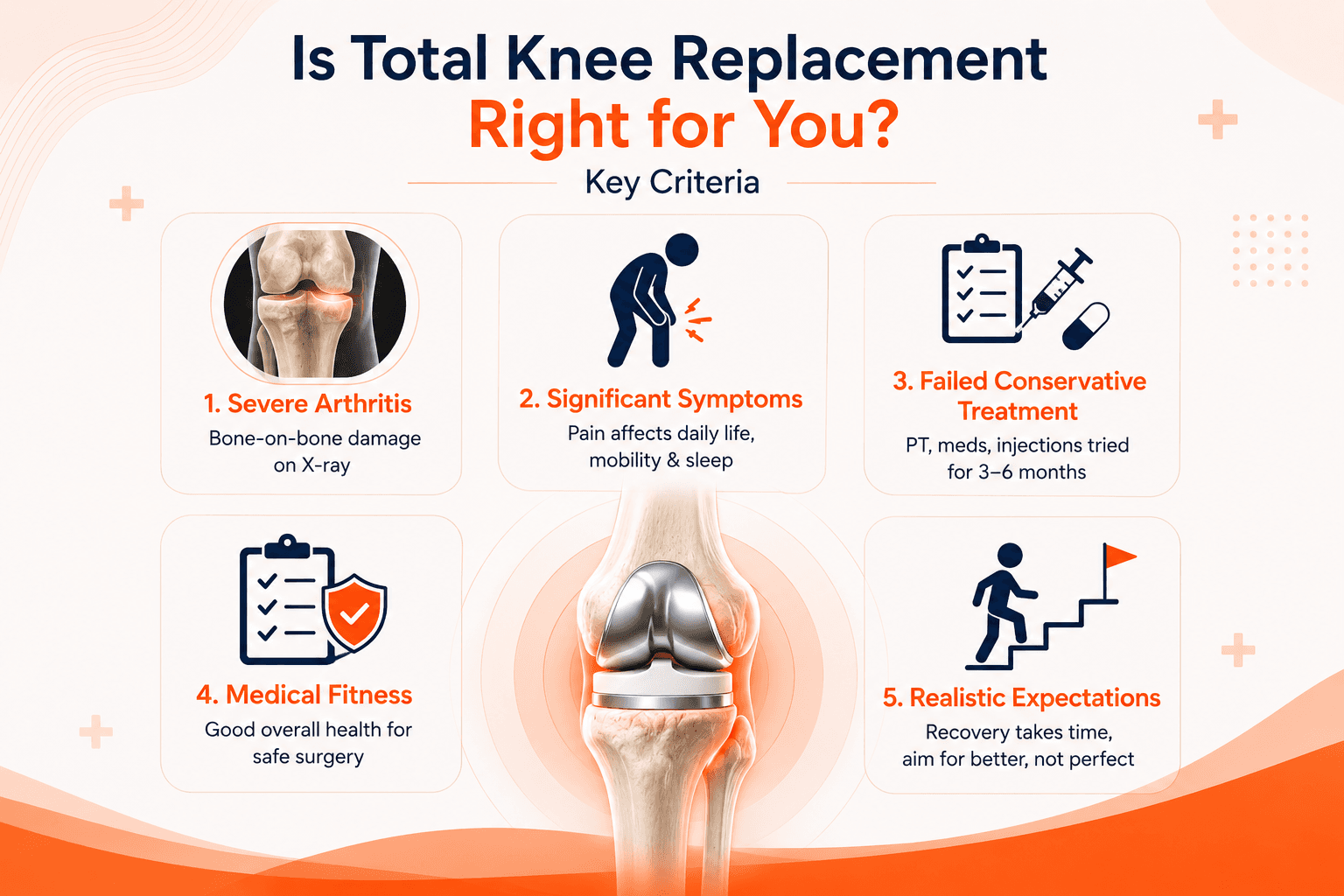
Total knee replacement (TKR) is generally recommended when:
- 1X-ray confirms severe arthritis with significant joint space narrowing or bone-on-bone contact.
- 2Pain consistently disrupts daily life including sleep, walking, and stairs.
- 3Non-surgical treatments including physiotherapy, medication, and injections have failed to provide lasting relief.
- 4There are no uncontrolled medical conditions making surgery unsafe.
- 5Note: Age alone is not a criterion. More than 90% of TKRs are still functioning well at 15 years per the AAOS.
Nobody truly needs a total knee replacement the way they need emergency surgery for a broken bone. But many patients with severe knee arthritis in Lucknow find that knee replacement changes their life in a way that no other treatment could. The question is not whether surgery exists. The question is whether you are the kind of patient for whom it genuinely makes sense.
Dr. R.P. Singh, Senior Orthopaedic Surgeon at Medinity Hospital, Gomti Nagar, Lucknow, uses a structured set of criteria before recommending total knee replacement to any patient. This article explains those criteria, the alternatives to surgery, what happens on the day, the week-by-week recovery, costs in Lucknow, and the latest technologies honestly assessed.
What is total knee replacement and when does a surgeon actually recommend it?
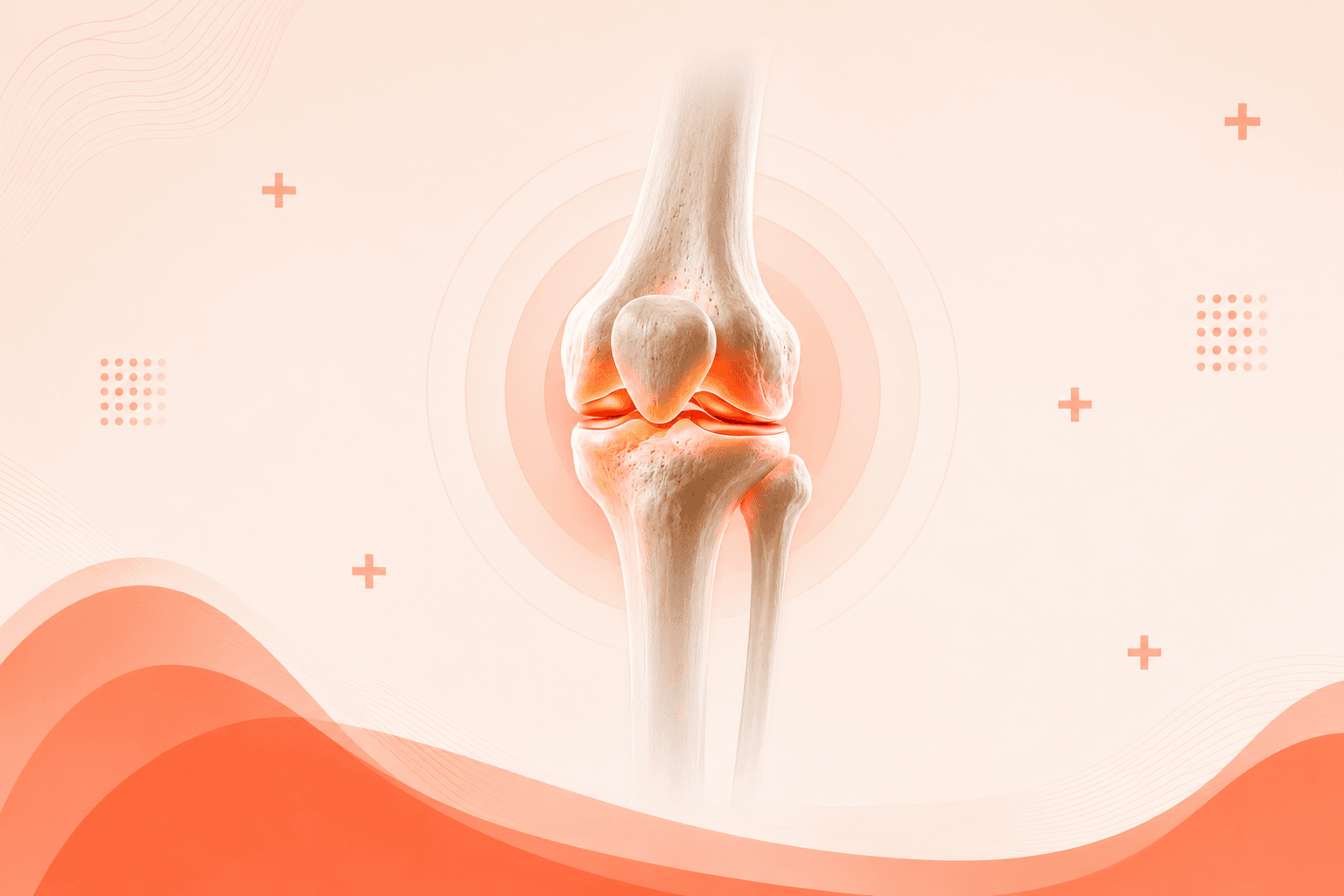
Total knee replacement is a resurfacing, not a removal. A thin layer of damaged cartilage and a few millimetres of bone are removed from the end of the thigh bone, the top of the shin bone, and the back of the kneecap. These surfaces are then capped with metal and plastic components that move smoothly against each other, eliminating the painful bone-on-bone friction of advanced arthritis. Your ligaments, tendons, and muscles stay intact.
Criterion for TKR
Consultation
Not sure if you meet the criteria?
CP-221, Hahnemann Medinity Hospital Road, Gomti Nagar, Lucknow 226010 · Walk-in OPD · 24/7 emergency
The 5 signs that mean you have waited long enough for knee replacement
What are the alternatives to total knee replacement?
Every patient who reaches the surgical discussion should have genuinely tried conservative options first. Here is an honest assessment of what each alternative can and cannot do:
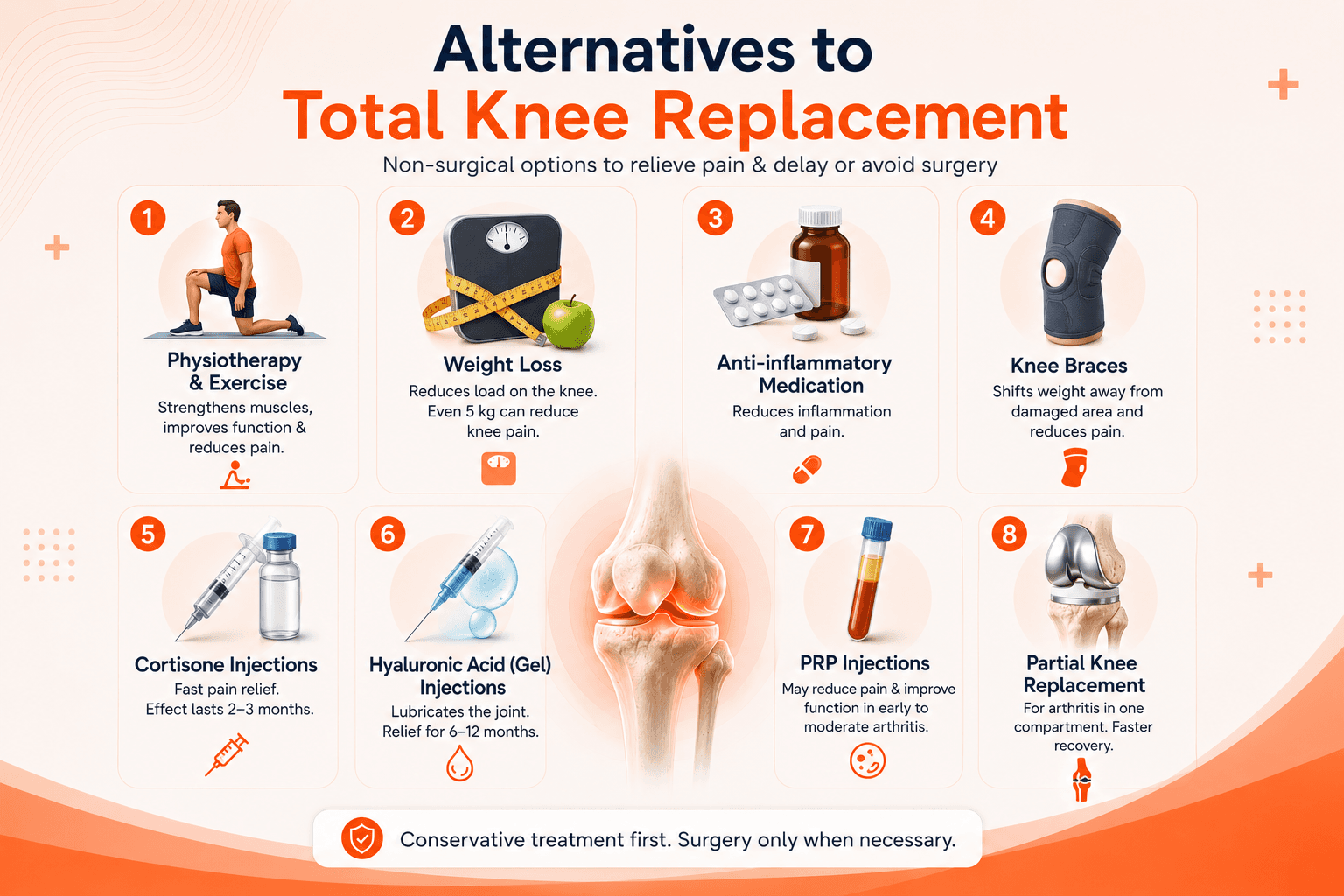
If non-surgical treatments no longer control your pain and daily activities are significantly affected, total knee replacement generally provides the most reliable long-term improvement in pain and function. The decision to proceed should be made jointly by patient and surgeon after conservative options have been genuinely tried.
What Dr. R.P. Singh checks before putting a patient on the surgical list
Prehabilitation, meaning exercises done before surgery to improve strength, is one of the most modifiable factors in TKR recovery. Straight leg raises done 3 days a week for 4 to 6 weeks before surgery consistently improve recovery speed. Dr. R.P. Singh provides this programme to every surgical candidate at the pre-operative consultation.
What happens on surgery day at Medinity Hospital, Lucknow: step by step
Recovery after total knee replacement: milestones at every stage
Recovery from total knee replacement is not a straight line. There will be good days and bad days, especially in the first 6 weeks. The following table summarises what most patients at Medinity Hospital experience at each stage:
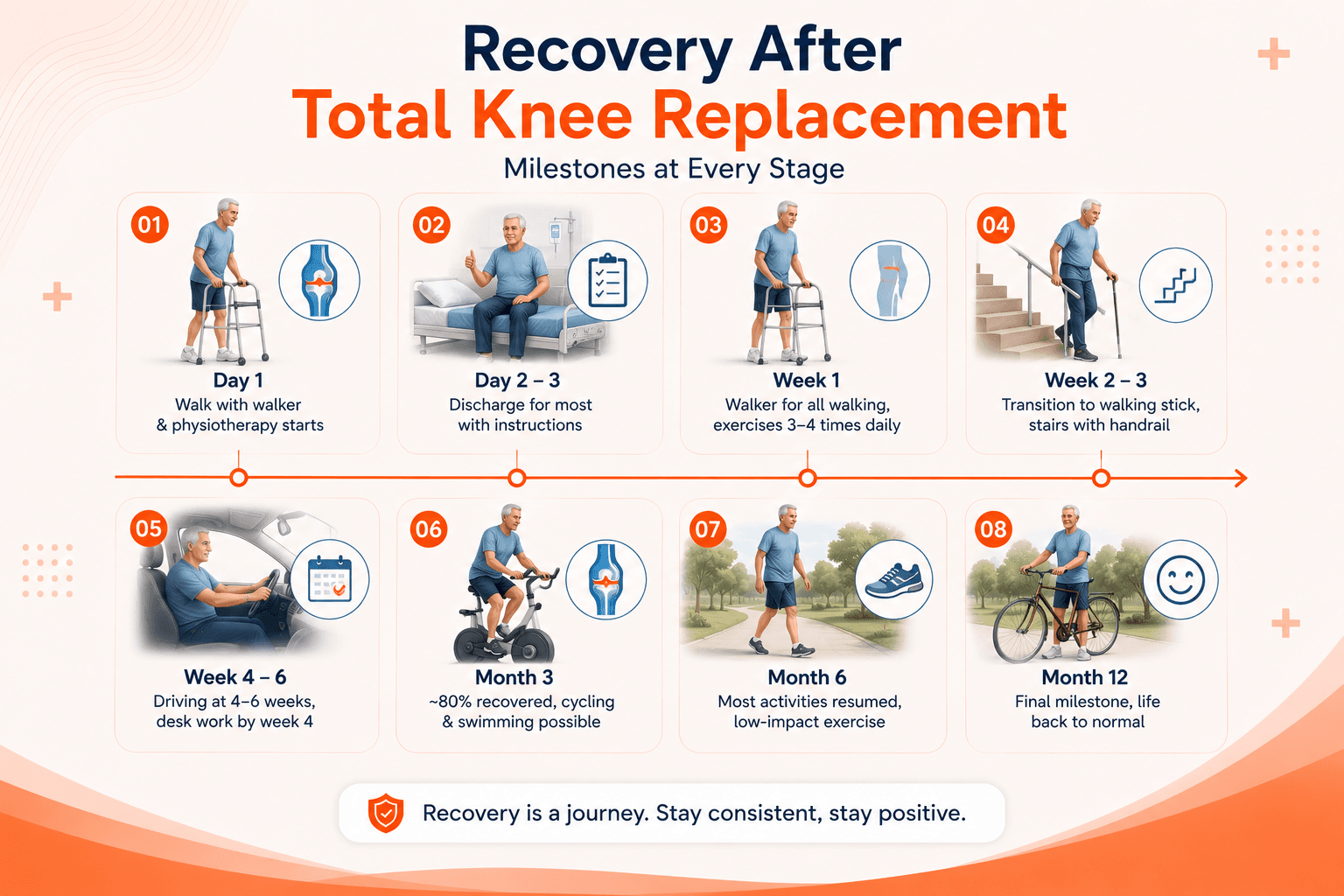
Three recovery principles that apply throughout all phases:
- 1Range of motion first: The greatest window for regaining knee bend is weeks 0 to 6. After week 12, gaining more movement becomes very difficult. Do not miss this window.
- 2Strength second: Quadriceps strength can continue building for months and years. Do not panic if progress is slow in the early weeks.
- 3Stamina last: If walking distance is limited in the first months, that is expected. Focus on range of motion and strength first. Stamina follows naturally.
Latest knee replacement technologies: what patients in Lucknow should know
Computer navigation, robotic surgery, and patient-specific instrumentation are being marketed by hospitals across Lucknow as reasons to choose one centre over another. Here is what the published evidence actually says about each technology, explained without marketing language:
The honest conclusion on TKR technology
Modern technologies may improve surgical precision or workflow in selected patients. However, current evidence consistently shows that long-term success depends primarily on correct patient selection, surgeon experience, accurate implant positioning, rehabilitation quality, and adherence to physiotherapy. No technology replaces these fundamentals. When evaluating a surgeon or hospital for total knee replacement in Lucknow, ask about their patient outcome scores, complication rates, and rehabilitation protocols, not just whether they have a robotic arm.
Bilateral total knee replacement (both knees at once): when is it the right choice?
Total knee replacement cost in Lucknow: what determines the final cost?
Cost is one of the first questions patients ask, and one of the least transparently answered by hospitals. Here is a clear framework for understanding what drives the final cost of total knee replacement in Lucknow:
Insurance guidance
Most cashless health insurance policies in India cover total knee replacement surgery as a recognised procedure for severe knee arthritis. Pre-authorisation from your insurer is required before admission. Medinity Hospital works with major insurance providers. Call +91 94540 99331 to confirm whether your insurer is a network provider and what documentation is required for pre-authorisation.
Medinity Hospital provides a written, itemised cost estimate before any surgical commitment. To receive a cost framework specific to your X-rays, diagnosis, and insurance situation, call +91 94540 99331 or book a consultation with Dr. R.P. Singh at Gomti Nagar, Lucknow.
Consultation
Want a written cost estimate for your specific case?
CP-221, Hahnemann Medinity Hospital Road, Gomti Nagar, Lucknow 226010 · Walk-in OPD · 24/7 emergency
Why patients in Lucknow choose Dr. R.P. Singh for total knee replacement
- ★MS Ortho (Gold Medalist), Fellowship Joint Replacement, USA and Germany
- ★20+ years of orthopaedic practice, 2,000+ orthopaedic surgeries performed
- ★NABH-accredited hospital with verified standards of surgical care
- ★NABL-accredited diagnostics laboratory for pre- and post-operative investigations
- ★Dedicated integrated physiotherapy from day 1 post-surgery
- ★4.8-star rating from 246+ verified patient reviews on Google
- ★Patients served from Lucknow, Sitapur, Hardoi, Barabanki, Raebareli, Kanpur, Unnao and across UP
- ★Transparent, written cost estimates before any surgical commitment
Help centre
Frequently asked questions about total knee replacement in Lucknow
Candidacy, alternatives, recovery, and cost.
Yes. Total knee replacement is a significant surgical procedure under anaesthesia, involving bone resurfacing and implant placement. It requires hospital admission of 3 to 5 days, 6 to 12 weeks of physiotherapy, and full recovery over 3 to 12 months. However, it is one of the most standardised and widely performed elective surgeries in the world, with well-established safety protocols and a 90 to 95% patient satisfaction rate in appropriately selected patients.
The first 2 to 4 weeks are the most demanding. Pain and swelling are at their highest, sleep is often disrupted, and the exercises required for a good outcome are uncomfortable to do. The difficulty is that this is also the most critical window for regaining range of motion: weeks 0 to 6 offer the best opportunity to recover knee bend, and patients who rest too much during this period often end up with permanently limited motion. The hard truth is that pushing through the early discomfort, with proper pain management, is what produces the best long-term outcome.
Sitting cross-legged is generally not recommended after total knee replacement, particularly in the first 3 to 6 months. The crossed-leg position requires significant internal rotation and flexion of the knee, which can stress the implant components and, in the early recovery period, risk dislocation or implant loosening. After full recovery, some patients can manage this position with care, but it is not standard medical advice to routinely sit cross-legged with a knee replacement. Dr. R.P. Singh will advise at your follow-up consultations.
Indian-style squatting toilets require deep knee flexion beyond 120 degrees and are generally not recommended after total knee replacement, especially in the first 6 months. Dr. R.P. Singh advises all TKR patients to use a raised western-style toilet seat. This reduces the risk of implant stress during deep flexion and protects the long-term integrity of the knee components. Arranging a western commode at home before surgery is strongly recommended.
Most patients can sleep on their side with a pillow between their knees from approximately 6 weeks after surgery, once wound healing is complete and the knee has sufficient stability. In the first few weeks, sleeping on your back with the leg elevated is preferred to reduce swelling and maintain a straight knee position. Sleeping with the knee bent for extended periods in the early weeks can contribute to a flexion contracture (inability to fully straighten the knee), which is why positioning matters during this phase.
Contact Medinity Hospital or attend emergency care if you experience: fever above 38 degrees Celsius, increasing redness, warmth, or swelling around the wound that is getting worse rather than better, wound discharge that is thick, cloudy, or has an odour, sudden severe increase in knee pain after a period of improving, the knee gives way or feels unstable when standing, calf pain and swelling (possible deep vein thrombosis), or shortness of breath or chest pain (possible pulmonary embolism). These symptoms warrant urgent assessment, not a wait-and-see approach.
High-impact activities are generally not recommended after total knee replacement because they accelerate implant wear and increase the risk of early revision surgery. These include: running, jogging, jumping, contact sports, racquet sports played at high intensity, heavy squatting with weights, and kneeling on the operated knee repeatedly. Activities that are safe and encouraged include walking, cycling, swimming, golf (walking the course), and light hiking. Most patients are pleasantly surprised by how active they can be within these guidelines.
Patients who are generally not good candidates include those with: active infection in the knee joint or elsewhere in the body (surgery must be deferred until infection is cleared); poorly controlled diabetes (HbA1c above 8 is a relative contraindication); very poor bone quality that cannot support the implant; BMI above 40 with additional risk factors; severe heart or lung disease that significantly increases anaesthetic risk; peripheral vascular disease affecting the leg; and patients with mild arthritis and minimal symptoms where the risk of surgery is not justified by the level of benefit expected. Age alone is not an exclusion criterion.
Delaying surgery when it is genuinely needed carries real consequences. Patients who delay until they are using a cane or walker have greater muscle wasting and longer, harder recoveries. Significant bow-legged or knock-kneed deformity can develop as cartilage is lost and bone erodes, making surgery more complex and the outcome potentially less precise. The opposite knee and the hip on the same side are also at higher risk of damage from the compensatory loading patterns that develop around a severely arthritic knee. If conservative treatment is no longer adequate and arthritis is severe on X-ray, delaying further rarely helps and often causes additional harm.
Short-term studies show robotic-assisted TKR produces more precisely aligned implants on X-ray measurements. However, long-term survivorship data at 10 or more years equivalent to conventional TKR datasets is not yet available. Current evidence does not establish robotic TKR as superior in patient-reported outcomes or long-term implant survival compared to conventional surgery performed by an experienced surgeon. Robotic systems also add significantly to procedure cost, which is passed on to the patient. When evaluating your options, ask your surgeon about their long-term patient outcome scores rather than their technology.
At Medinity Hospital, a primary total knee replacement takes approximately 60 to 90 minutes. The total time from anaesthesia to recovery room, including pre-surgical preparation and immediate post-operative assessment, is typically 2 to 3 hours. Bilateral surgery takes correspondingly longer and is assessed on a case-by-case basis.
More than 90% of total knee replacements are still functioning well at 15 years per the AAOS AAOS OrthoInfo 2024. At 25 years, approximately 82% are still functioning. Younger patients (under 60) show 90.6 to 99% survival at 10 years in recent literature ScienceDirect 2024. Longevity depends on patient weight, activity level, implant type, and surgical technique.
Bone-on-bone means cartilage has worn away completely and the ends of the thigh and shin bones are in direct contact. This is seen on a standing weight-bearing X-ray. It is a strong indicator that surgical assessment is appropriate, but surgery is not automatic. It depends on whether your symptoms are significant enough and whether conservative treatments have been genuinely tried. Some patients with bone-on-bone contact manage adequately with medication and activity modification.
Yes, but diabetes must be well-controlled. HbA1c above 8 significantly increases infection risk, impairs wound healing, and slows recovery. Dr. R.P. Singh works with the patient's physician to optimise blood glucose before scheduling surgery. Patients with well-controlled diabetes undergoing TKR at Medinity Hospital achieve outcomes equivalent to non-diabetic patients in published studies.
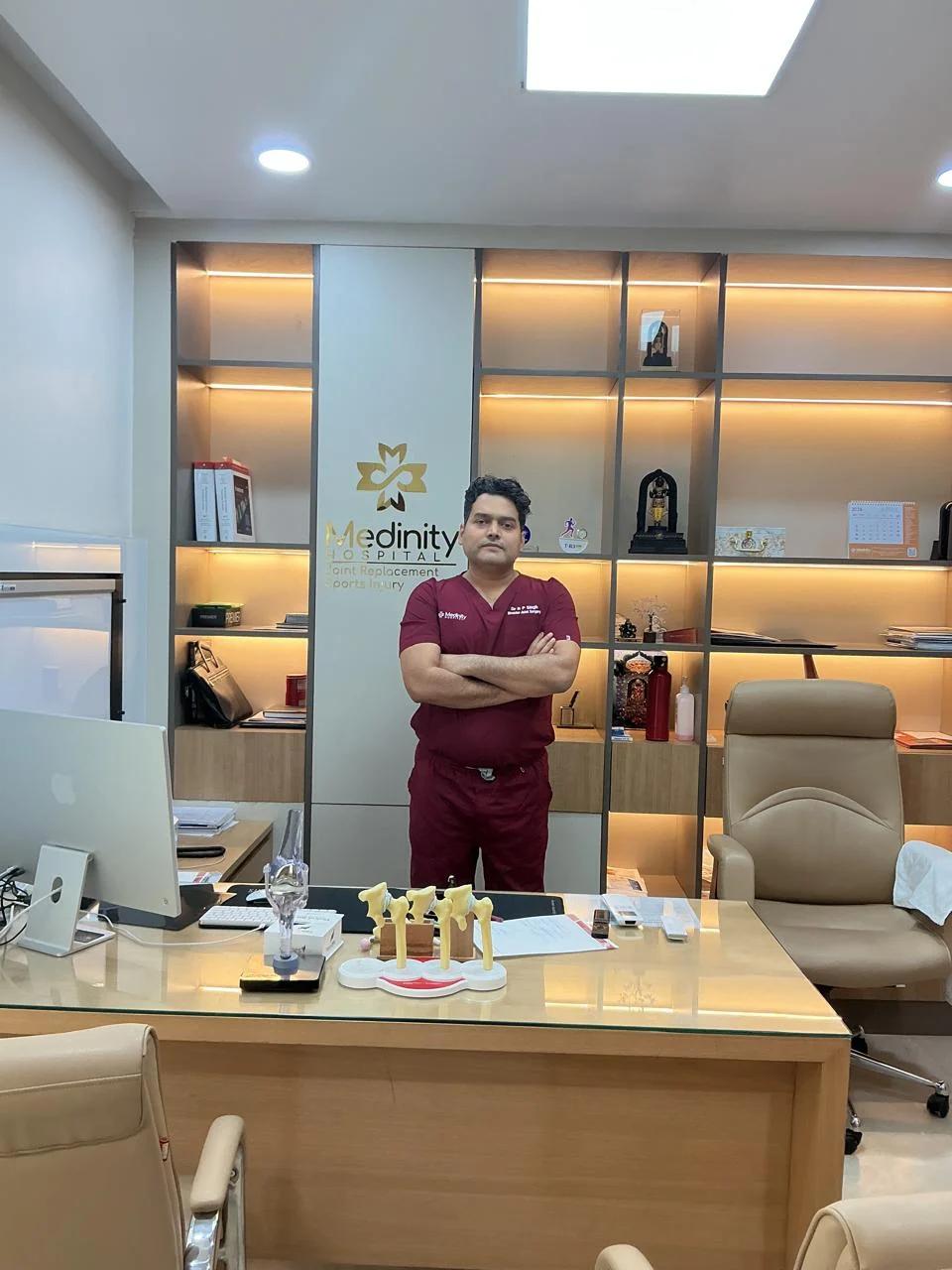
About the author
Dr. R.P. Singh
MS Ortho (Gold Medalist) · Fellowship Joint Reconstruction (USA, Germany) · Senior Orthopaedic Surgeon
- 20+ years experience
- 2,000+ surgeries
- Partial & total knee replacement
Dr. R.P. Singh leads orthopaedics at Medinity Hospital, Gomti Nagar. He specialises in both joint preservation and replacement, bringing international, evidence-based surgical standards to Lucknow.
View full profile & credentials