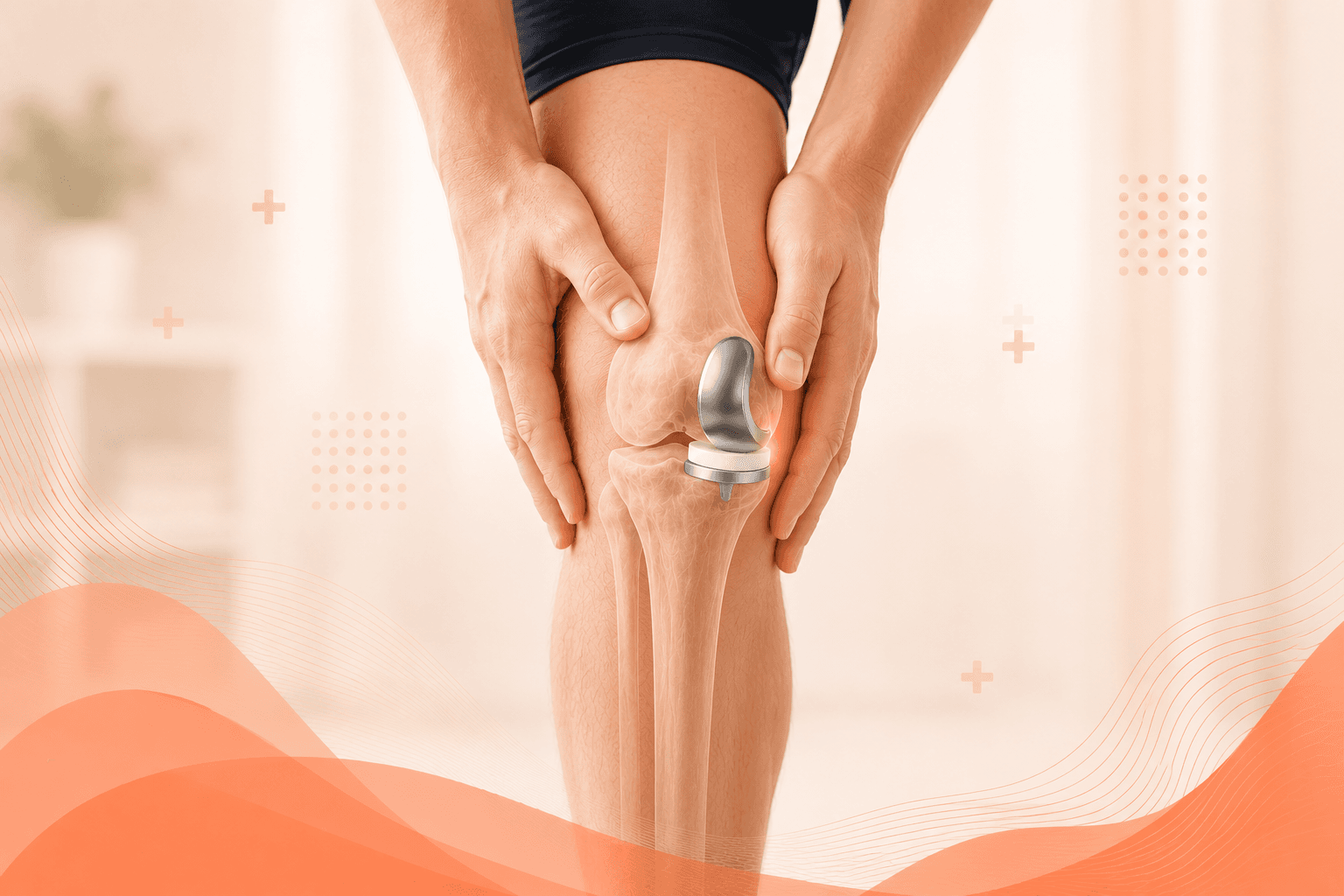
If your doctor has said the words 'knee replacement', you have probably had one thought: do I really need the whole knee replaced? For many patients in Lucknow, the answer is no. Dr. R.P. Singh, Senior Orthopaedic Surgeon at Medinity Hospital, Gomti Nagar, regularly performs partial knee replacement in Lucknow, a procedure that preserves the healthy parts of your joint and offers faster recovery than total replacement. Here is what every patient considering knee surgery in Lucknow should know.
Partial knee replacement goes by several names: unicompartmental knee replacement, unicondylar knee replacement, or half knee replacement. They all describe the same procedure: replacing only the damaged compartment of the knee while leaving the rest of the joint completely untouched.
Quick answer: who is a good candidate for partial knee replacement?
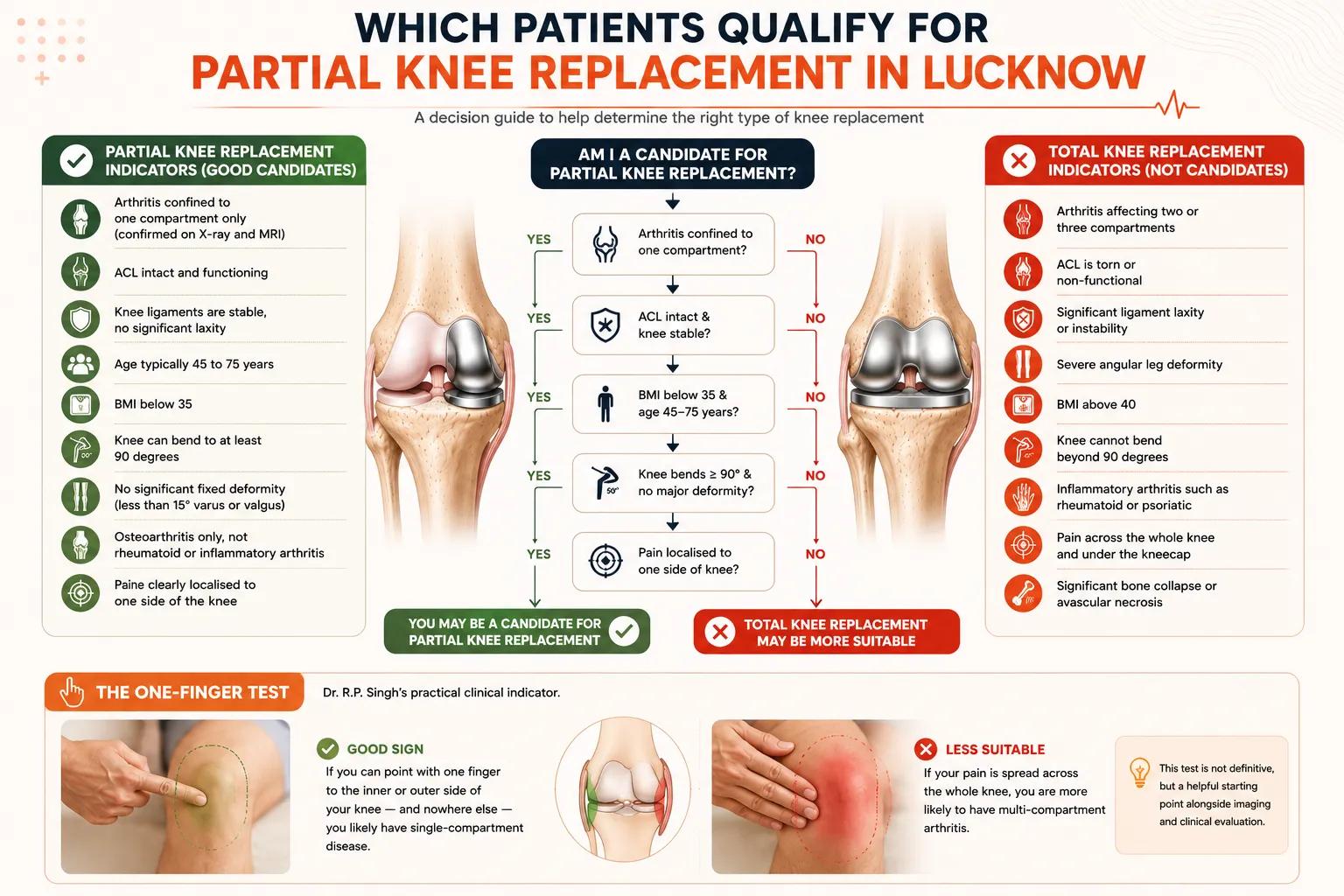
A good candidate for partial knee replacement is a patient who:
Ideal candidate profile
- 1Has osteoarthritis confirmed to one compartment of the knee only.
- 2Has an intact, functioning ACL.
- 3Has no significant knee deformity (less than 15 degrees varus or valgus).
- 4Has a BMI below 35.
- 5Is aged between 45 and 75 years.
- 6Has knee pain clearly localised to one side.
Patients with arthritis in multiple compartments, a torn ACL, or inflammatory arthritis such as rheumatoid are usually better served by total knee replacement.
Partial knee replacement at a glance
90%
Survivorship at 10 to 15 years
24 hrs
Walking begins after surgery
4–6 wks
Return to daily activity
⅓
Only this fraction of the knee is replaced
ACL
Preserved, unlike total knee
Smaller
Incision than total replacement
9/10
Patients rate it 'very natural'
20+
Years Dr. R.P. Singh's experience
7 signs you may need partial knee replacement
Most patients come to Dr. R.P. Singh at Medinity Hospital after months or years of knee pain that has stopped responding to medication, injections, or physiotherapy. These are the seven signs that suggest your knee arthritis may have progressed to the point where partial knee replacement is worth a proper evaluation:
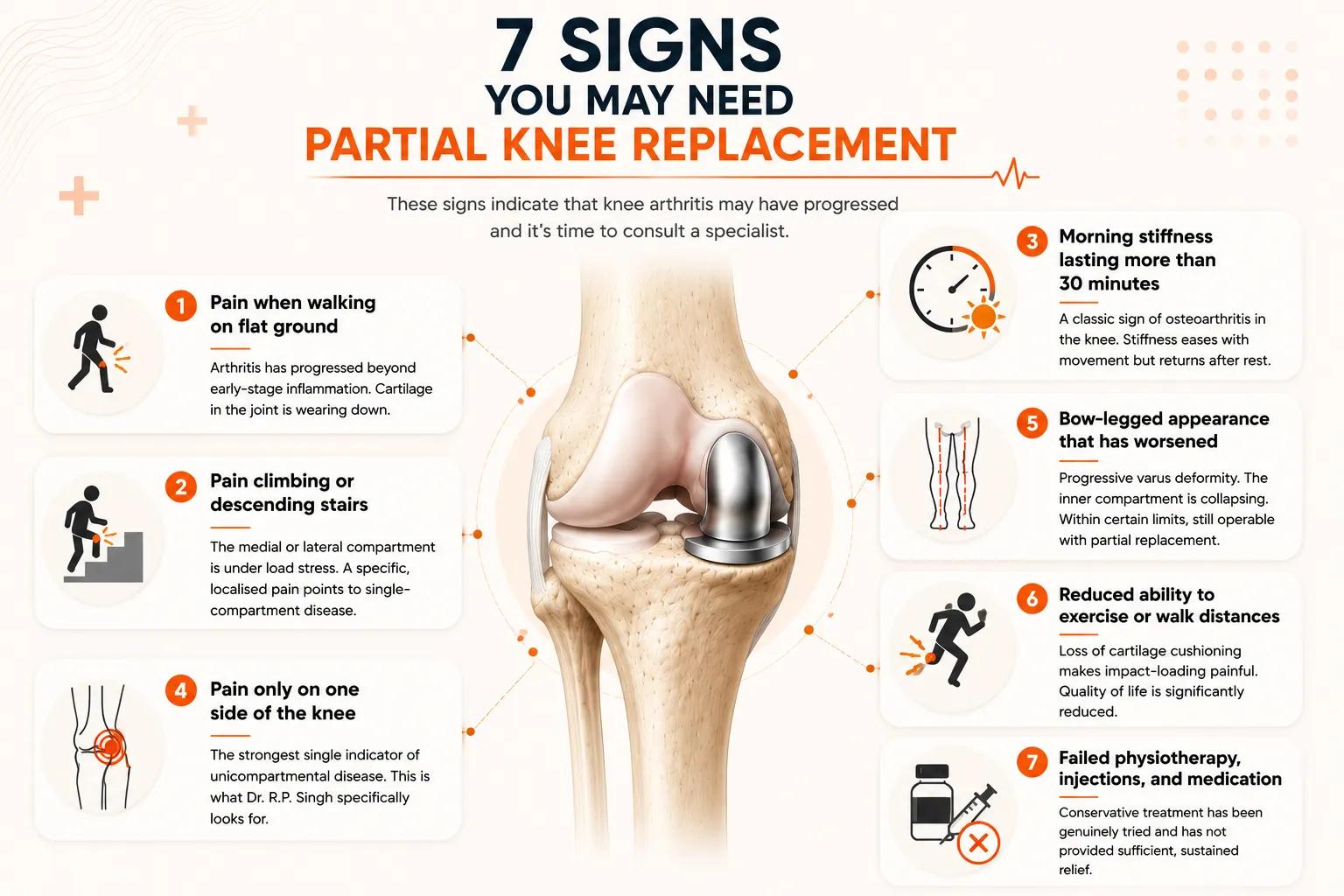
You do not need to have all seven signs. Many patients who are excellent candidates for partial knee replacement in Lucknow present with just two or three of these. The combination of one-sided knee pain and failed conservative treatment is often enough to justify a weight-bearing X-ray and consultation.
Are you experiencing one-sided knee pain that is not responding to treatment?
Consult Dr. R.P. Singh at Medinity Hospital, Lucknow. Call: +91 94540 99331
Book an appointmentWhat is partial knee replacement and how is it different from total?
Your knee has three compartments: the medial (inner side), the lateral (outer side), and the patellofemoral joint underneath your kneecap. In many patients with knee arthritis treatment Lucknow, only one of these compartments is badly damaged. The other two remain healthy.
Total knee replacement removes cartilage and bone from all three surfaces, including the kneecap, and also removes the ACL. Partial knee replacement replaces only the worn compartment, leaving your ACL, your PCL, the other compartment's cartilage, and the kneecap joint completely intact. Roughly 85% of partial knee replacements target the medial (inner) compartment.
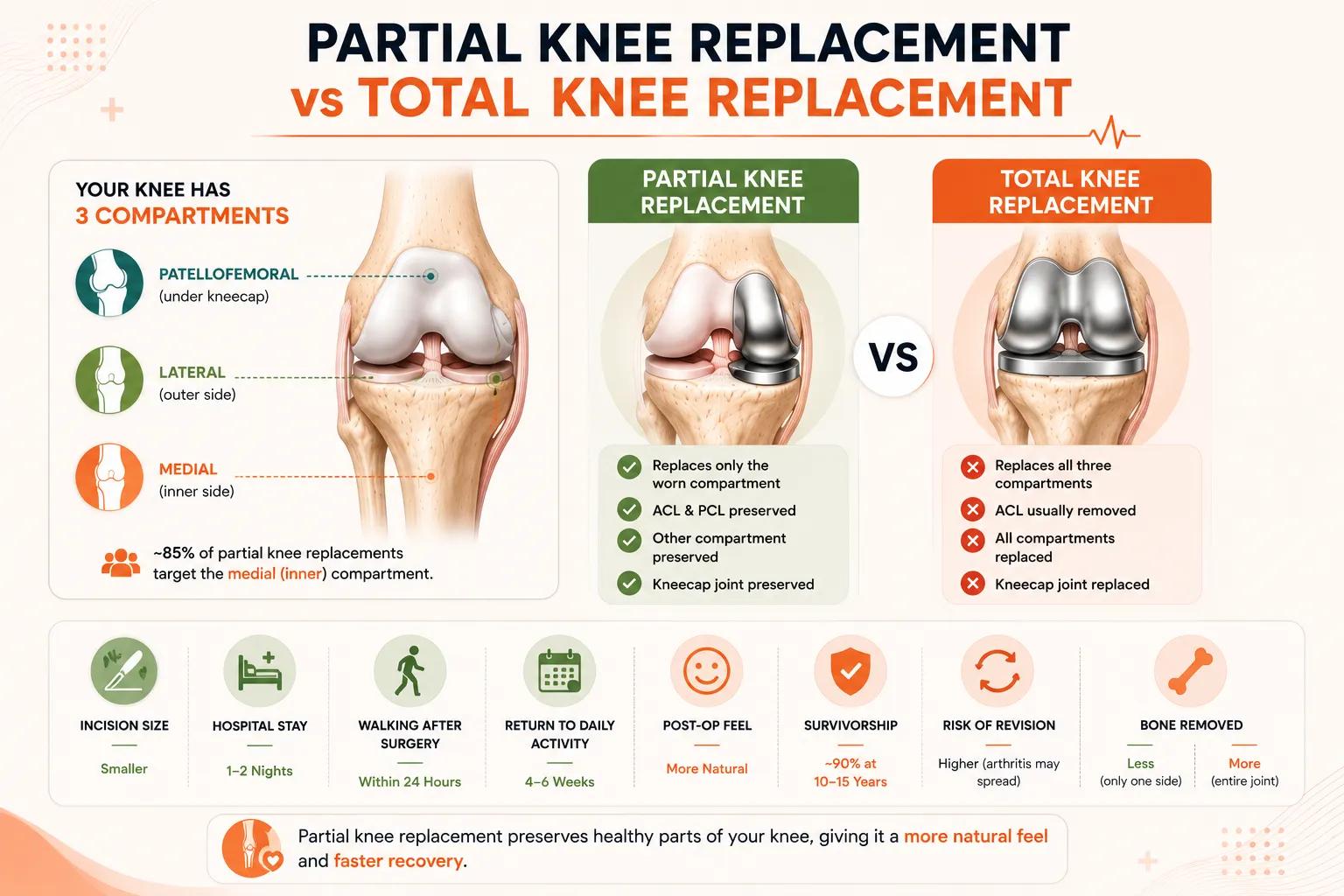
Patients who have had a total knee replacement on one side and a partial on the other consistently report that the partial knee feels more natural. The reason is straightforward: less of the original joint was replaced. The ACL and the remaining cartilage continue to give the knee its proprioceptive signals, which is why partial replacement patients often say it 'feels like my own knee again'.
Which patients qualify for partial knee replacement in Lucknow and which do not?
This is the most important decision in the entire process, and where surgical experience separates good outcomes from poor ones. Based on clinical criteria published in peer-reviewed orthopaedic literature, including Hospital for Special Surgery and NIH-registered partial knee arthroplasty trials, the following guidelines apply:
The one-finger test
A practical clinical indicator Dr. R.P. Singh uses: he asks patients to use one finger to point to where the knee hurts most. Patients who point confidently and specifically to the inner or outer side of the knee, and nowhere else, are demonstrating a strong clinical signal for single-compartment disease. Patients who sweep across the whole knee are more likely to have multi-compartment arthritis. This is not a definitive test, but it is a reliable starting point alongside imaging.
The 3 things Dr. R.P. Singh checks before recommending partial over total
After 20 years of performing joint replacement surgery and more than 2,000 orthopaedic procedures at Medinity Hospital, the assessment before recommending partial over total comes down to three non-negotiable checks:
Weight-bearing X-ray
What is assessed
Both knees are X-rayed in a standing, full weight-bearing position. This shows actual compartment wear under load rather than at rest.
Why it matters for your outcome
An MRI taken lying down can underestimate compartment damage. The standing X-ray is the international gold standard for candidacy. Incorrect patient selection from sitting-position imaging is the most common cause of early revision in partial replacement.
ACL integrity
What is assessed
Lachman test and pivot shift test in clinic, confirmed by MRI review. The ACL must be functioning, not just structurally present.
Why it matters for your outcome
Partial knee replacement depends entirely on an intact ACL for joint stability. A non-functional ACL is an absolute contraindication, even if structurally visible on MRI.
Compartment isolation
What is assessed
The patient's pain must be clearly localisable to one compartment. The knee must have functional range of motion with no fixed flexion deformity.
Why it matters for your outcome
Operating on the wrong compartment, or missing multi-compartment disease, is the leading cause of early revision in partial knee replacement globally. This check is where surgical experience determines outcome.
Dr. R.P. Singh holds MS Ortho with a Gold Medal and completed fellowship training in joint replacement surgery in both the United States and Germany. This international training informs his candidacy assessment, which follows internationally validated criteria rather than convenience-based surgical selection.
Unsure whether you need partial or total knee replacement?
Consult Dr. R.P. Singh at Medinity Hospital, Lucknow. Call: +91 94540 99331
Book an appointmentWhat happens during your first consultation for knee replacement at Medinity Hospital?
Many patients delay seeking help because they are not sure what to expect when they walk into an orthopaedic consultation. Here is exactly what happens during your first appointment with Dr. R.P. Singh at Medinity Hospital, Gomti Nagar, Lucknow, so there are no surprises:
Consultations at Medinity Hospital are available 6 days a week. Patients come from across Lucknow, including Gomti Nagar, Indira Nagar, Aliganj, Jankipuram, and Hazratganj, as well as from neighbouring districts including Sitapur, Barabanki, Hardoi, Raebareli, and Kanpur. If you are travelling from outside Lucknow, the team can arrange same-day X-ray and consultation so your visit is completed in one trip.
Ready to find out if you qualify for partial knee replacement?
Consult Dr. R.P. Singh at Medinity Hospital, Lucknow. Call: +91 94540 99331
Book an appointmentRecovery after partial knee replacement: what to expect in week 1, week 4 and month 3
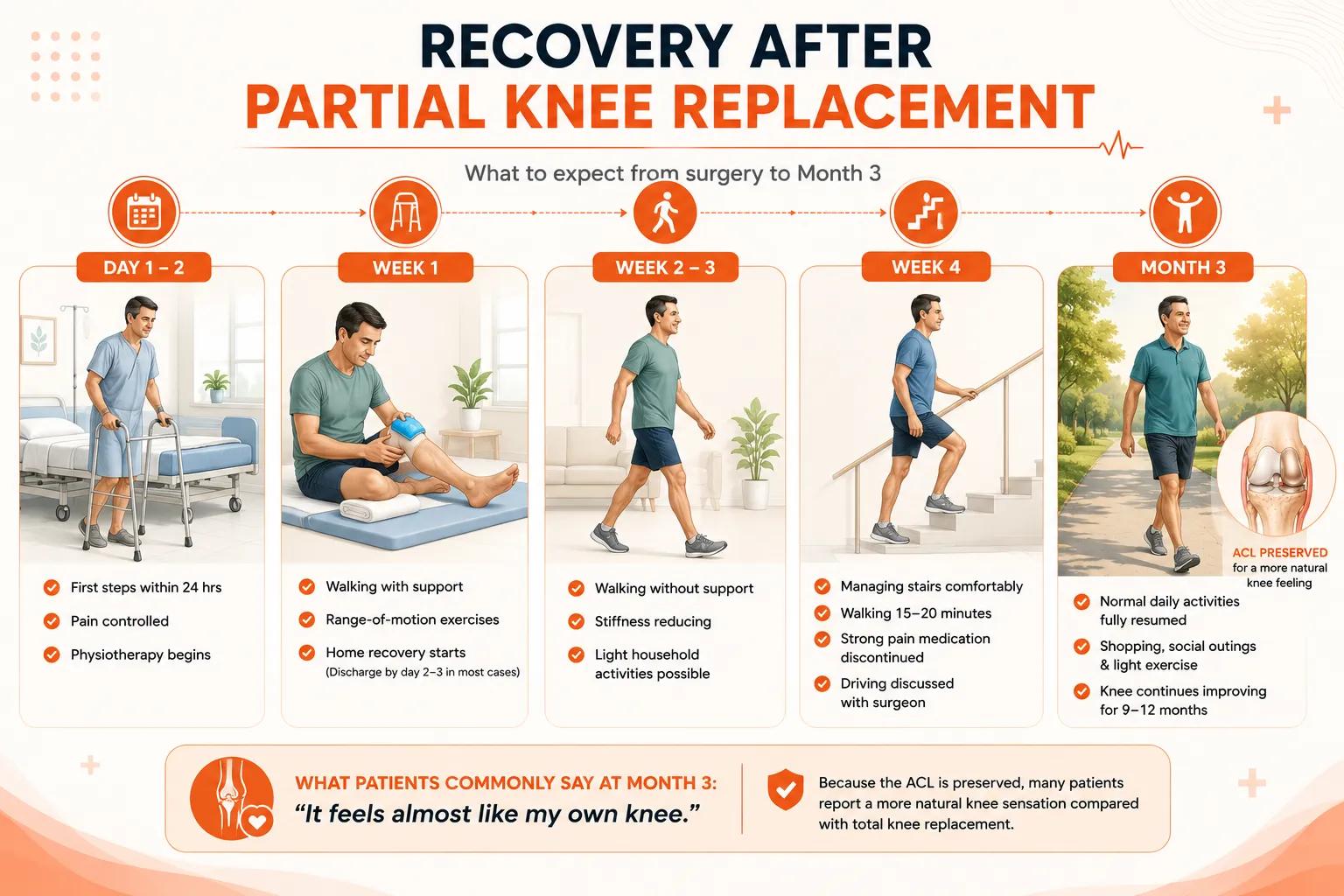
Recovery after partial knee replacement is meaningfully faster than after total knee replacement, but it is still a significant surgical procedure. Here is an honest, milestone-based timeline based on what patients at Medinity Hospital typically experience:
Day 1 to 2
Most patients stand and take first steps within 24 hours of surgery using a walking frame. Pain is managed with medication. Physiotherapy begins on day 1 or day 2.
Week 1
Walking short distances with support. Range-of-motion exercises begin. Most patients are discharged by day 2 to 3. Ice and elevation manage swelling.
Week 2 to 3
Walking without a support device in most cases. Stiffness reducing. Physiotherapy 2 to 3 times weekly. Light household activities possible.
Week 4
Managing stairs comfortably. Walking 15 to 20 minutes. Strong pain medication discontinued. Knee still swollen but functional. Driving discussed with surgeon.
Month 3
Normal daily activities fully resumed: walking, shopping, social events, light exercise. The knee continues improving for 9 to 12 months as swelling fully resolves and muscle strength builds.
One observation Dr. R.P. Singh consistently hears from patients at their 3-month review: the knee feels more natural than they expected. Unlike total knee replacement, where patients can notice a slight mechanical sensation, most partial replacement patients describe the result as 'almost my own knee'. This is directly attributable to the preserved ACL, which continues to provide natural proprioceptive feedback to the brain.
Why patients delay knee replacement surgery, and why they often should not
Dr. R.P. Singh regularly sees patients at Medinity Hospital who have been living with significant knee pain for two, three, or even five years before seeking a surgical consultation. Here are the most common reasons for delay, and the honest clinical answer to each:
Delaying surgery when it is genuinely needed does not preserve the knee. It worsens it. Every month of unprotected loading on a compartment with no cartilage causes additional bone wear, muscle weakness around the joint, and compensation patterns in the other knee and hip. Patients who come to Medinity Hospital after years of delay often have more complex findings on X-ray than they would have had with earlier surgical assessment.
Partial knee replacement at Medinity Hospital, Gomti Nagar: what the procedure involves
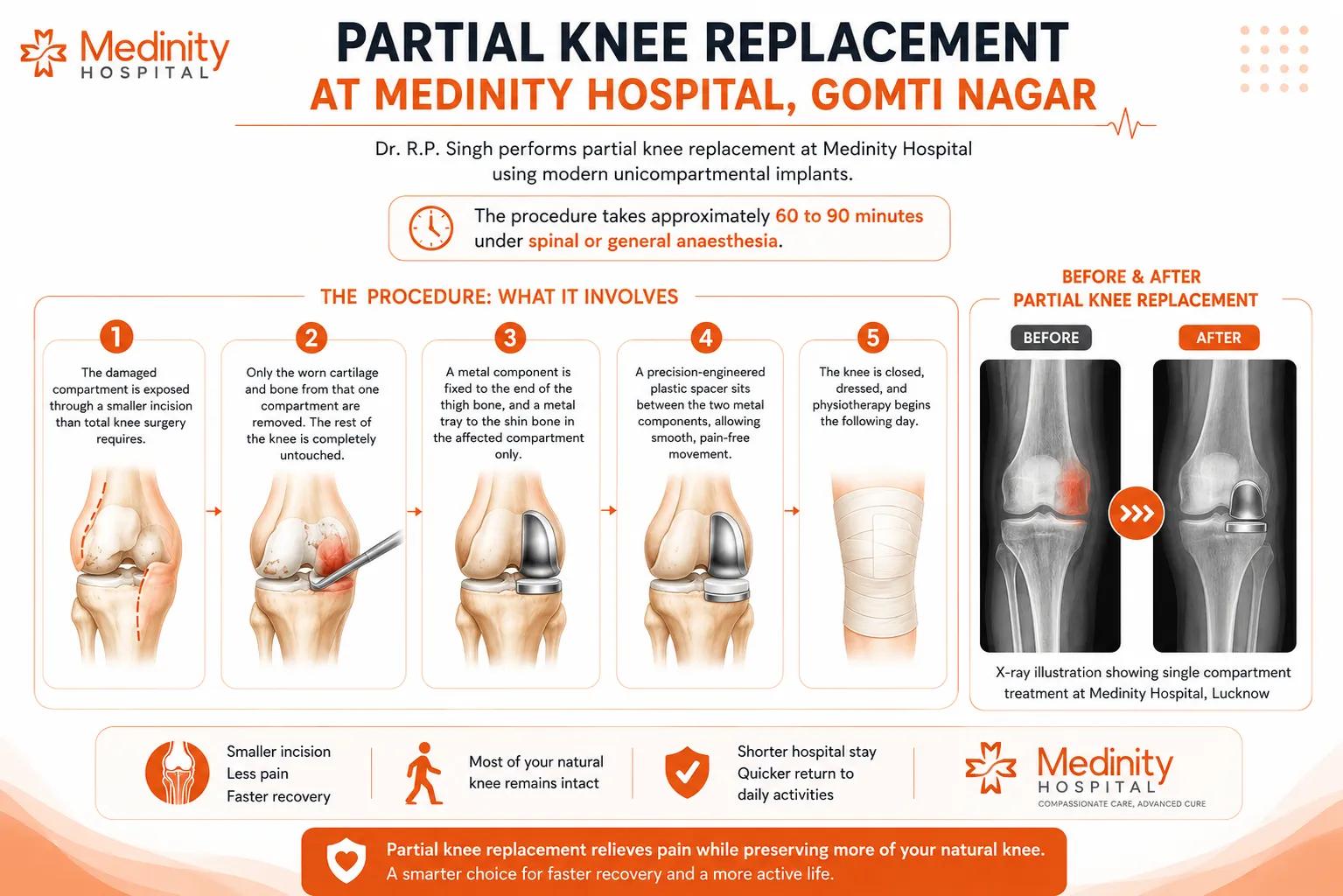
Dr. R.P. Singh performs partial knee replacement at Medinity Hospital using modern unicompartmental implants. The procedure takes approximately 60 to 90 minutes under spinal or general anaesthesia.
- The damaged compartment is exposed through a smaller incision than total knee surgery requires
- Only the worn cartilage and bone from that one compartment are removed. The rest of the knee is completely untouched
- A metal component is fixed to the end of the thigh bone, and a metal tray to the shin bone in the affected compartment only
- A precision-engineered plastic spacer sits between the two metal components, allowing smooth, pain-free movement
- The knee is closed, dressed, and physiotherapy begins the following day
Why patients choose Medinity Hospital for knee replacement
- ★NABH-accredited hospital with verified standards of care
- ★NABL-accredited diagnostics laboratory for all pre- and post-operative investigations
- ★Dr. R.P. Singh: 20+ years of orthopaedic experience, 2,000+ surgeries performed
- ★MS Ortho Gold Medalist with fellowship training in the USA and Germany
- ★Dedicated physiotherapy department with integrated post-surgical rehabilitation
- ★4.8-star rating from 246+ verified patient reviews on Google
- ★Patients served from Lucknow, Kanpur, Sitapur, Hardoi, Barabanki, Raebareli and across Uttar Pradesh
- ★Transparent cost estimates provided before any surgical decision is made
Why surgeon selection and patient assessment determine outcomes in partial knee replacement
Partial knee replacement has a higher technical demand than total knee replacement. The reason is precision. When you replace only one compartment, every degree of alignment matters. A component that is even slightly off-axis puts abnormal load on the preserved cartilage in the adjacent compartment, accelerating its wear and leading to early revision surgery.
Multiple peer-reviewed studies have found that the single most important predictor of long-term success in partial knee replacement is correct patient selection combined with precise surgical technique. This is why Dr. R.P. Singh's fellowship training from joint replacement centres in the United States and Germany is not just a credential on paper. International fellowship training in joint reconstruction means exposure to high-volume, protocol-driven surgical practice that is not replicated in general orthopaedic residency training.
When evaluating a surgeon for partial knee replacement in Lucknow, patients should ask: How many partial knee replacements have you performed? What criteria do you use to select candidates? What is your revision rate? A surgeon with clear, evidence-based answers to these questions is the right choice. To learn more about our procedures, visit our joint replacement surgery Lucknow page.
Help centre
Frequently asked questions about partial knee replacement in Lucknow
Candidacy, cost, recovery, and what to expect after surgery.
The decision is based on how many compartments of your knee are affected by arthritis. If only one side is damaged and your ACL is intact, you may be a candidate for partial replacement. A weight-bearing X-ray and MRI are required to make this assessment accurately. Dr. R.P. Singh at Medinity Hospital, Lucknow, conducts a detailed clinical and imaging review before recommending either procedure.
The cost depends on the implant type, hospital stay duration, and whether you are using health insurance. Most major insurance policies cover knee replacement surgery in India. To receive a detailed, written cost estimate specific to your MRI and diagnosis, call Medinity Hospital on +91 94540 99331 or book a consultation with Dr. R.P. Singh at Gomti Nagar, Lucknow.
The typical age range for partial knee replacement is 45 to 75 years. Younger patients may be candidates if the arthritis is genuinely confined to one compartment, though the risk of requiring revision surgery over a lifetime increases with younger age. Older patients with good bone quality and single-compartment disease are often excellent candidates. Age is one factor in a broader assessment, not a standalone criterion.
Long-term studies show approximately 90% of partial knee replacements are still functioning well at 10 to 15 years. The most common reason for revision is the development of arthritis in the other compartments over time, not implant failure. If revision becomes necessary, conversion to a total knee replacement is a well-established procedure. This is a straightforward operation in experienced hands and is not considered a surgical failure.
For some patients, yes. When arthritis is genuinely limited to one compartment and is treated with a partial replacement before spreading further, the procedure can delay or prevent the need for total replacement by many years. However, this depends on individual progression of arthritis, which varies between patients. A partial replacement is not a guarantee against future surgery, but it is a tissue-preserving first option for those who qualify.
Most patients at Medinity Hospital can manage stairs with a handrail by the end of the first week. Stair climbing without a railing becomes comfortable for most patients by week 3 to 4. Full stair function without any discomfort is typically achieved by month 2 to 3.
Bilateral simultaneous partial knee replacement is possible in carefully selected patients with good general health, but it is not standard practice. Most surgeons, including Dr. R.P. Singh, prefer to stage the procedures with 6 to 12 weeks between sides. Staged surgery reduces anaesthetic risk, allows rehabilitation of the first knee before operating on the second, and gives a more predictable recovery.
Formal physiotherapy at Medinity Hospital typically continues for 6 to 8 weeks post-surgery, with sessions 2 to 3 times per week. Home exercise programmes continue for 3 to 6 months. The physiotherapy team works directly with Dr. R.P. Singh and progress is reviewed at each follow-up appointment.
Yes, most health insurance policies in India that cover hospitalisation and surgical procedures will cover knee replacement surgery, including partial knee replacement. Coverage depends on your specific policy terms, waiting periods, and whether the hospital is on your insurer's network. Medinity Hospital works with major insurance providers and can assist with pre-authorisation. Call +91 94540 99331 to discuss your insurance coverage before booking a consultation.
The procedure is performed under anaesthesia so there is no pain during surgery. Post-operative pain is managed with medication and is generally reported as less severe than after total knee replacement. Most Medinity Hospital patients find the discomfort well-controlled and significantly more manageable than the chronic arthritis pain they lived with before surgery.
In most cases, a functioning ACL is required for the stability of a partial knee replacement. Patients with a torn or non-functional ACL are usually better candidates for total knee replacement. In elderly patients with long-standing chronic ACL deficiency who have stable, well-adapted knees, an experienced surgeon may consider partial replacement on a very selective case-by-case basis.
Most patients can return to driving at 4 to 6 weeks after surgery, once they can safely perform emergency braking without hesitation or pain. This depends on which leg was operated on and your individual recovery. Dr. R.P. Singh will advise specifically at your follow-up consultation.
They are the same procedure. Unicompartmental knee replacement, unicondylar knee replacement, half knee replacement, and partial knee replacement all refer to replacing one compartment of the knee. The term 'partial' is used in patient-facing communication because it is the most intuitive description of what the surgery involves.
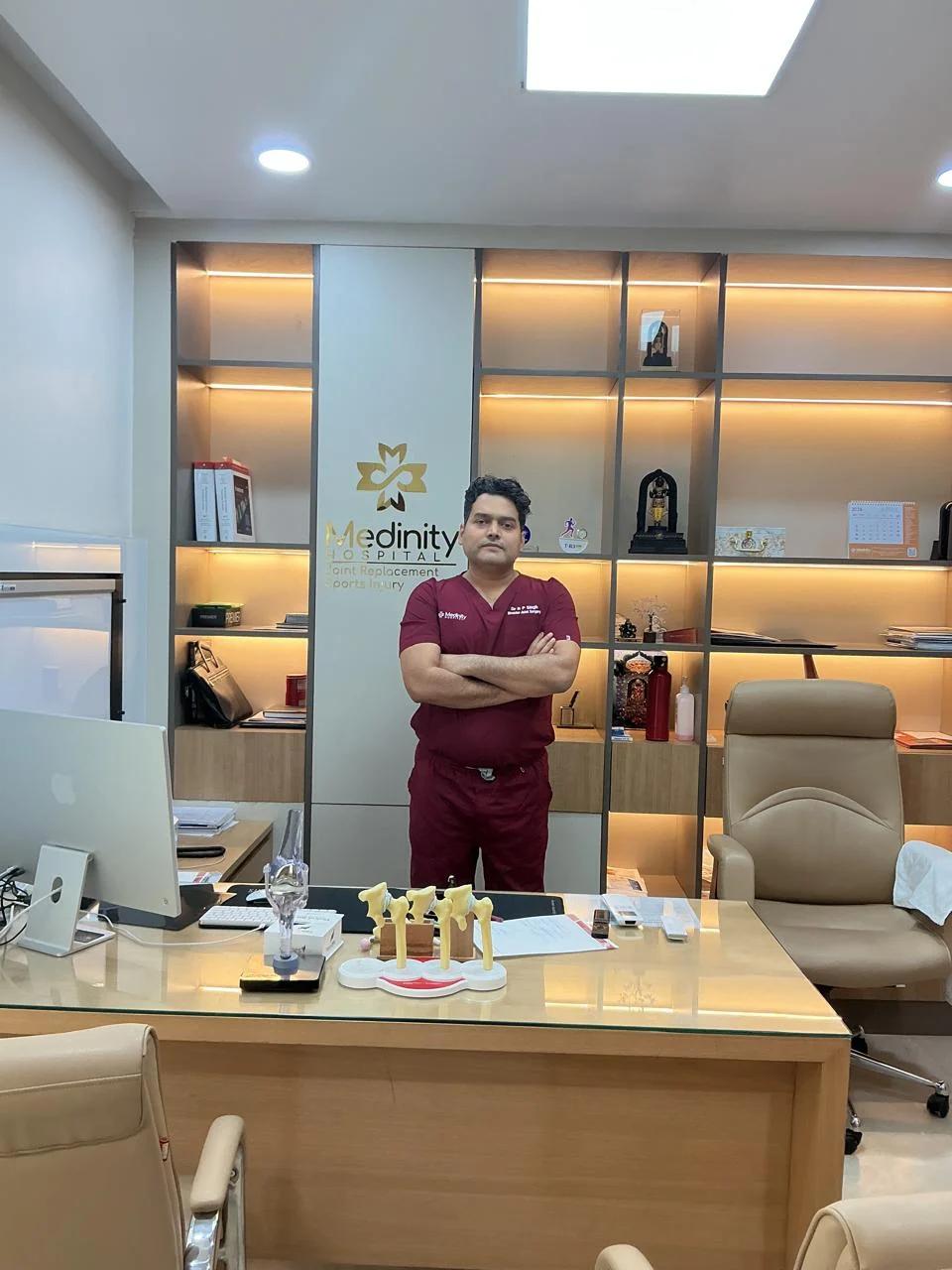
About the author
Dr. R.P. Singh
MS Ortho (Gold Medalist) · Fellowship Joint Reconstruction (USA, Germany) · Senior Orthopaedic Surgeon
- 20+ years experience
- 2,000+ surgeries
- Partial & total knee replacement
Dr. R.P. Singh leads orthopaedics at Medinity Hospital, Gomti Nagar. He specialises in both unicompartmental and total knee replacement, bringing international, evidence-based surgical standards to Lucknow.
View full profile & credentialsConsultation
Book a consultation at Medinity Hospital, Lucknow
If you have knee arthritis that is not responding to physiotherapy, injections, or medication, the next step is a proper assessment. Dr. R.P. Singh will review your X-rays and MRI, assess your candidacy for partial knee replacement, and give you a clear, written recommendation with no pressure to commit.
- NABH-accredited hospital with a 4.8-star rating from 246+ verified patients
- Walk-in OPD available. Emergency orthopaedic care 24 hours a day, 7 days a week
CP-221, Hahnemann Medinity Hospital Road, Gomti Nagar, Lucknow 226010 · Walk-in OPD · 24/7 emergency