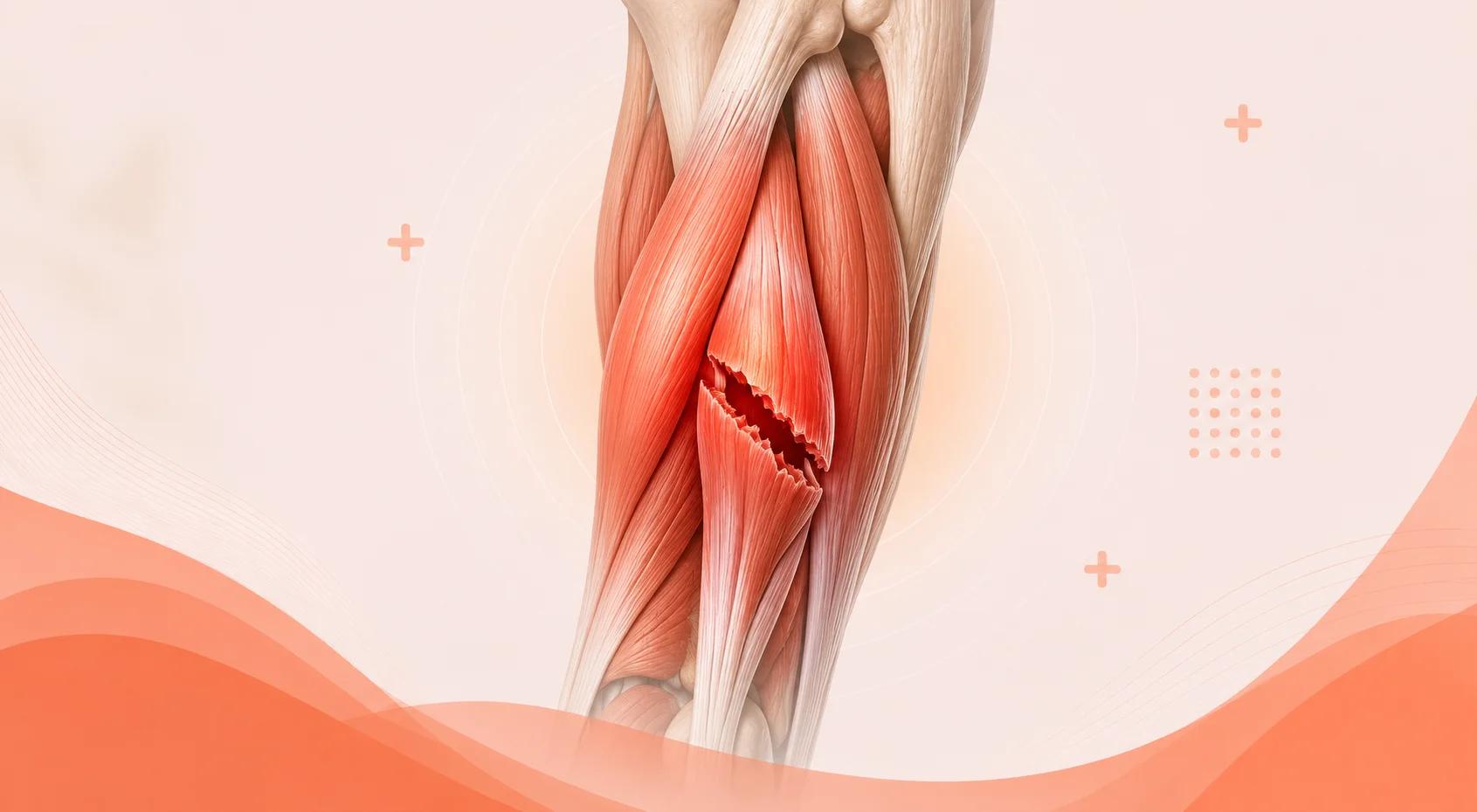
Quick answer: what is a hamstring tear?
A hamstring tear is a partial or complete rupture of one of the three muscles at the back of the thigh: semimembranosus, semitendinosus, or biceps femoris. It is graded 1 (mild strain), 2 (partial tear), or 3 (complete tear). Hamstring tears are among the most common sports injuries in cricketers, footballers, and sprinters in India. Most Grade 1 and 2 tears heal with physiotherapy alone. Grade 3 tears may need surgical assessment. Dr. R.P. Singh treats hamstring tears at Medinity Hospital, Gomti Nagar, Lucknow.
Key takeaways
- ✓Hamstring injuries range from mild strains (Grade 1) to complete tears (Grade 3). The exact grade requires clinical assessment and, for significant injuries, imaging.
- ✓Sudden posterior-thigh pain, weakness, bruising, or a popping sensation during a sprint can indicate a significant hamstring injury.
- ✓Grade 2 and Grade 3 injuries often require imaging and specialist assessment, particularly when there is significant weakness, functional loss, bruising, suspected tendon involvement, or failure to improve.
- ✓Recovery time varies according to injury severity, location, and rehabilitation progress. Timelines in this article are approximate ranges, not fixed clearance dates.
- ✓Returning to sport should depend on functional recovery — strength, range of motion, and sport-specific testing — rather than the calendar alone.
- ✓Recurrent hamstring injuries deserve careful reassessment and a revised rehabilitation protocol, not just more rest.
A hamstring tear is an injury to one or more muscles at the back of the thigh. It can range from a mild strain to a complete rupture. Common symptoms include sudden pain at the back of the thigh, weakness, swelling or bruising, and difficulty walking or running. Treatment depends on the severity and location of the injury and may include activity modification, progressive rehabilitation, and in selected severe cases, surgical assessment.
Hamstring tears are among the most common sports injuries treated by Dr. R.P. Singh at Medinity Hospital, Gomti Nagar, Lucknow — and they are often underestimated. Many patients walk it off, return to sport too soon, and risk recurrent injury. If you have suffered a hamstring injury in Lucknow, an orthopaedic assessment helps determine whether imaging or specialist rehabilitation is needed. For broader sports injury treatment at Medinity Hospital, early diagnosis protects long-term joint health.
Why hamstring injuries are so common in cricket
Cricket involves repeated acceleration, sprinting, sudden changes of direction, and high-speed running, all of which can place substantial load on the hamstrings. Fast bowlers are at highest risk because the delivery action requires maximum hip flexion at high speed, generating peak eccentric hamstring demand. Fielders diving and sprinting between the wickets face similar risk. Cricket is the sport Dr. R.P. Singh sees most often for hamstring tears at Medinity Hospital, from fast bowlers to fielders.
What is a hamstring tear?
The hamstrings are three muscles at the back of the thigh: semimembranosus, semitendinosus, and biceps femoris. They control knee bending and hip extension during running, jumping, and sprinting.
Hamstring tears happen when the muscle is suddenly overloaded — most commonly during explosive acceleration or maximum sprint. Dr. R.P. Singh sees this regularly in cricketers, kabaddi players, and gym-goers during deadlifts or sprint intervals.
Hamstring tear symptoms: how do you know you have one?
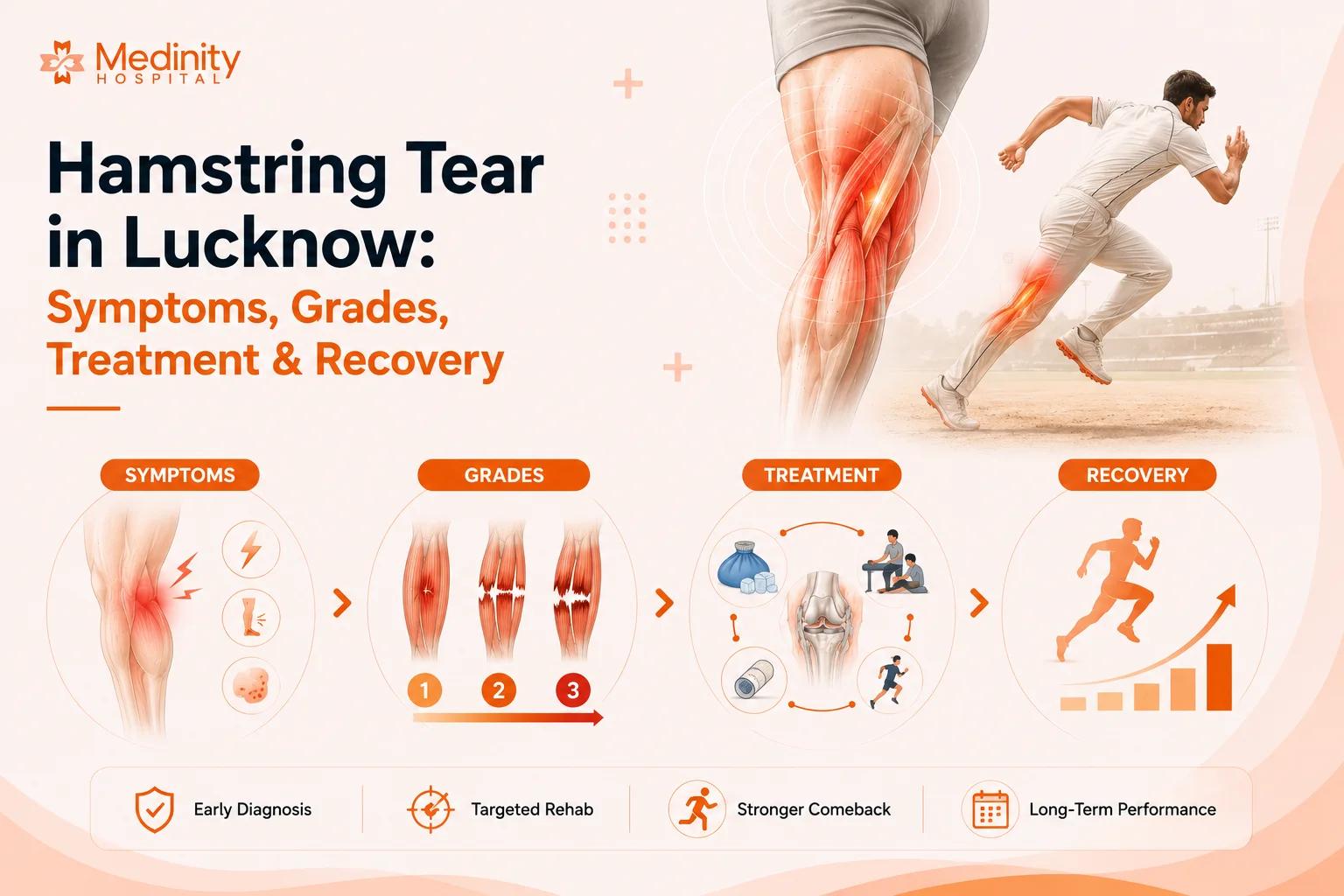
The most common description in Dr. R.P. Singh's OPD at Medinity Hospital: "I was running and felt a sudden sharp pain at the back of my thigh — like something snapped." In milder tears, patients describe a sudden tightening or pull. In complete Grade 3 tears, the pain is severe enough to cause immediate collapse.
Common symptoms of a hamstring tear:
- ✓ Sudden sharp pain or pop at the back of the thigh during a sprint, jump, or lunge
- ✓ Pain when trying to straighten or bend the knee immediately after injury
- ✓ Swelling and bruising appearing within 24 to 48 hours, sometimes tracking toward the back of the knee
- ✓ Visible dip or gap in the muscle belly (Grade 3 complete tears only)
- ✓ Tenderness when pressing on the back of the thigh or at the buttock crease
- ✓ Pain when sitting that radiates into the buttock (suggests proximal tendon involvement)
- ✓ Weakness when bending the knee against resistance
Where does a hamstring tear hurt?
Location helps identify the type of injury:
Can you walk with a hamstring tear? Grade 1: yes, with mild pain. Grade 2: slowly and painfully with a limp. Grade 3: severely impaired or impossible without support.
⚠ Complete inability to weight-bear after injury
⚠ Visible deformity or gap in the muscle belly
⚠ Numbness or tingling down the back of the leg
⚠ Severe buttock pain at the sitting bone (possible proximal avulsion)
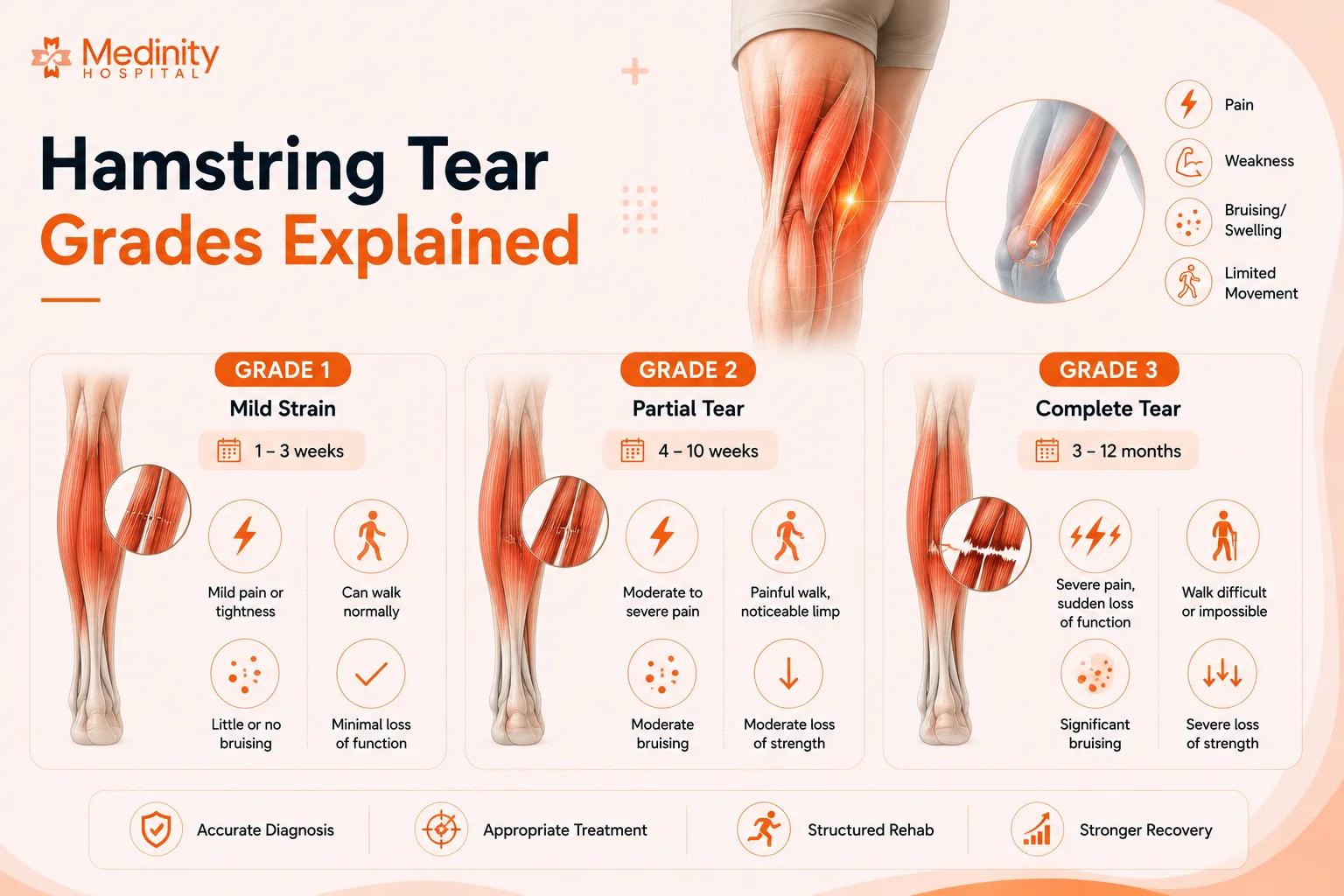
Grade 1, Grade 2 and Grade 3 hamstring tears: what each grade means
Hamstring tears are classified into three grades based on the extent of structural disruption and functional loss. Multiple clinical and MRI-based classification systems exist. The exact grade and prognosis depend on the injury location, tissue involved, clinical examination, and imaging findings — not the grade label alone. For other severe ligament injuries, compare with ACL tear treatment in Lucknow.
Grade 1 — Mild strain
1 to 3 weeksWhat it means: Minimal structural damage with mild pain and little or no loss of function. The muscle-tendon unit remains intact.
Pain level: Mild aching or tightness. You may be unsure whether to stop playing.
Can you walk? Yes, with mild pain or tightness.
Bruising/swelling: Minimal or absent in the first 24 hours.
Grade 2 — Partial tear
4 to 10 weeksWhat it means: Partial disruption of the muscle fibres, usually with significant pain, weakness, and functional limitation. The muscle-tendon unit is partially intact.
Pain level: Significant pain with a visible limp. Pain when bending the knee against resistance.
Can you walk? Slowly and painfully. Noticeable limp.
Bruising/swelling: Moderate bruising and swelling within 24 to 48 hours.
Grade 3 — Complete tear
3 to 12 monthsWhat it means: Complete disruption of the muscle-tendon unit, often with substantial weakness and significant functional loss.
Pain level: Severe. Immediate significant pain and loss of function.
Can you walk? Severely impaired or impossible without support.
Bruising/swelling: Significant bruising, often tracking down the posterior thigh.
Hamstring injuries can be classified using different clinical and MRI-based systems. The grades above reflect widely used clinical descriptions. The exact grade and prognosis depend on the injury location, tissue involved (muscle belly, myotendinous junction, or tendon), clinical examination findings, and imaging. Grade alone should not be used to determine return-to-sport date.
Why Grade 2 hamstring tears need careful rehabilitation
Grade 2 is clinically important to manage correctly. Patients often feel noticeably better after 2 to 3 weeks and are tempted to return to cricket or kabaddi before the muscle is structurally ready. Premature return to sport is an important contributor to recurrent hamstring injury. The appropriate return-to-sport decision involves strength, running capacity, symptoms, and sport-specific testing — not a fixed number of weeks.
Hamstring strain vs tear: what is the difference?
Medically, strain and tear describe the same injury at different severities. The term does not change management — the grade, location, and imaging findings do.
If you have been told you have a hamstring strain but are still in significant pain at 2 to 3 weeks, it is worth requesting an MRI to confirm the grade. A Grade 2 partial tear managed as a Grade 1 strain will not recover on the same timeline.
How is a hamstring tear diagnosed?
Accurate diagnosis requires clinical evaluation combined with diagnostic imaging when indicated. Compare with diagnostic protocols for knee ligament injuries in Lucknow.
Suspected hamstring tear in Lucknow?
Book an assessment with Dr. R.P. Singh at Medinity Hospital, Gomti Nagar.
Hamstring tear treatment: does it always need surgery?
The vast majority of hamstring tears — including most Grade 2 partial tears — do not require surgery. The exception is a complete Grade 3 proximal avulsion tear, where the tendon pulls away from the sitting bone (ischial tuberosity), which may need surgical repair in active patients. For conservative protocols, explore non-surgical sports injury management at Medinity Hospital.
Non-surgical treatment for Grade 1 and most Grade 2 tears:
- •POLICE protocol (first 48 to 72 hours): Protection, Optimal Loading (gentle movement after 48 hours), Ice (20 minutes on/off), Compression bandage, Elevation.
- •Physiotherapy — three phases: Phase 1 (acute, week 1 to 2): gentle range of motion, pain control, light isometric contraction. Phase 2 (sub-acute, week 2 to 6): progressive strengthening, with exercises performed at longer muscle-tendon lengths being particularly important. Phase 3 (return-to-sport, week 6 onwards): sport-specific loading, sprint mechanics, agility.
- •PRP injections: Platelet-rich plasma has been studied as an adjunct for hamstring injuries, but evidence regarding its effectiveness remains mixed. It should not be considered a routine replacement for structured rehabilitation. See our guide on emerging soft-tissue treatments including PRP.
- •NSAIDs: Anti-inflammatory medication for the first 48 hours only. Prolonged use may impair muscle fibre regeneration.
When surgery is considered — Grade 3 proximal avulsion:
Surgical evaluation for Grade 3 tears is typically reserved for key structural scenarios:
- • Complete tear with significant tendon retraction confirmed on MRI
- • Active patients who need to return to full sport
- • Non-surgical management has not restored adequate function at 12 or more weeks
For details on keyhole surgical interventions, see our overview of arthroscopic sports surgery at Medinity Hospital.
Hamstring tear recovery time: how long does it take?
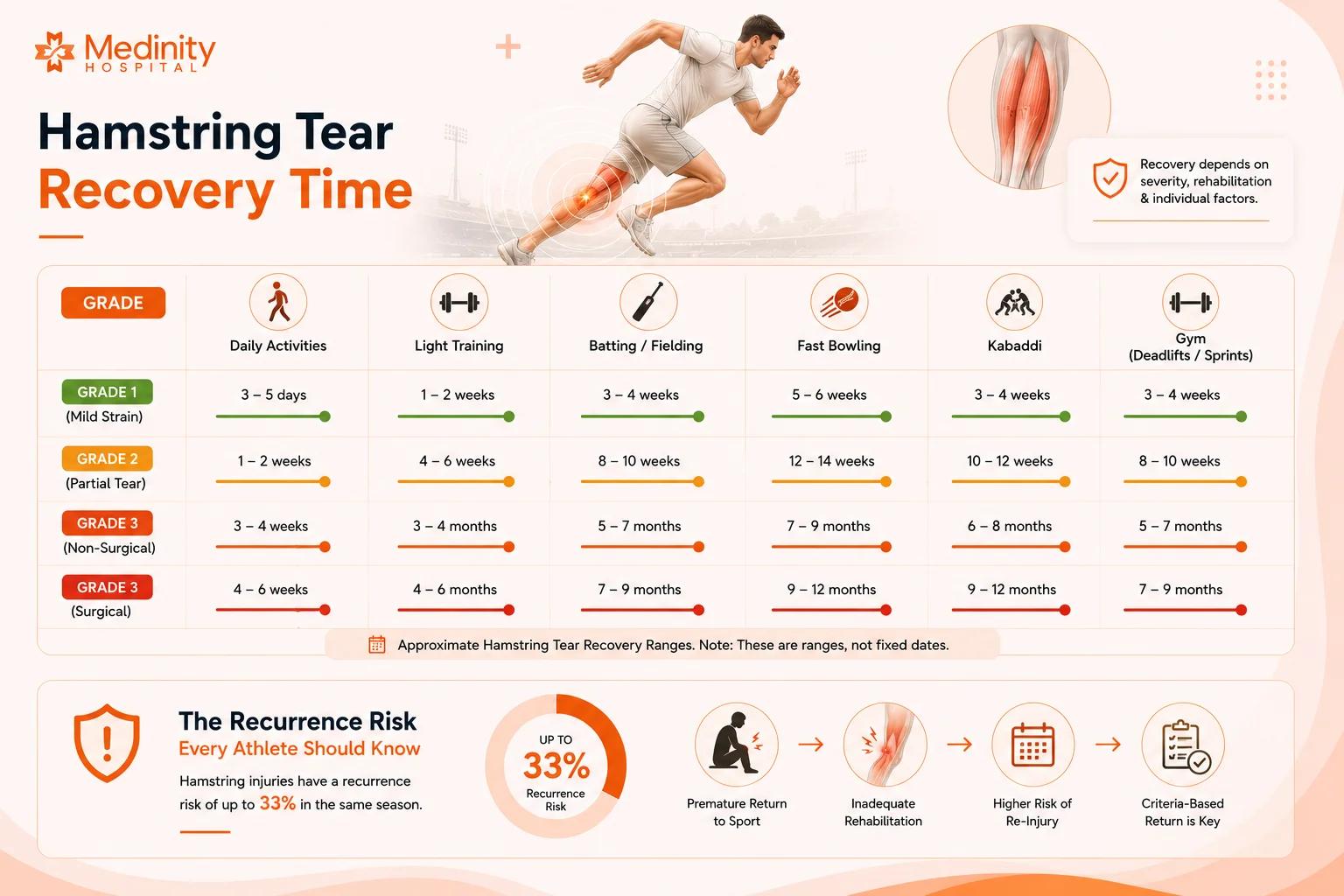
Recovery varies considerably between patients. The timelines below are approximate ranges based on published evidence, not fixed return-to-sport clearance dates. Return to sport should be based on clinical recovery, strength, running capacity, and sport-specific testing rather than time alone.
The recurrence risk every athlete in Lucknow should know
Hamstring injuries have a substantial risk of recurrence, with some studies reporting rates of up to 33% during the same season (Ekstrand et al., 2023, BJSM). Premature return to sport and inadequate rehabilitation can contribute to this risk — though the relationship is multi-factorial. A criteria-based, individualised return-to-sport process is preferable to relying on a calendar date alone.
When can you return to cricket, kabaddi or the gym after a hamstring tear?
A calendar-based return to sport is the wrong approach for hamstring injuries. Return-to-sport decisions should consider multiple factors including hamstring strength, running capacity, symptoms, and sport-specific testing — all interpreted in the context of the individual athlete and the demands of their sport.
Fast bowlers: sport-specific progression, not a fixed timeline
The fast bowling action requires high-speed running and maximum hip flexion, generating peak eccentric hamstring demand. Fast bowlers may require a longer, sport-specific progression than batters or fielders, because of these unique hamstring demands. Return to bowling should follow successful full-speed running and sport-specific testing rather than a fixed additional number of weeks. The exact timeline depends on the individual athlete's recovery progress.
"The question I ask before clearing any cricketer from a hamstring tear is not whether they feel ready — it is whether their hamstring can handle a maximum-effort sprint. Those are not the same thing."
When should you see an orthopaedic specialist for a hamstring tear in Lucknow?
Not every hamstring strain requires a surgeon. Here are the specific signs that make specialist assessment necessary:
See Dr. R.P. Singh at Medinity Hospital if:
- ✓ You heard or felt a pop and cannot walk without significant pain
- ✓ Bruising or significant swelling appeared within hours of the injury
- ✓ Pain has not improved after 2 weeks of rest and basic first aid
- ✓ This is a second or third hamstring injury in the same location
- ✓ Your imaging confirms a Grade 2 or Grade 3 tear
- ✓ You are a competitive athlete needing structured return-to-sport clearance
- ✓ You are considering whether surgical repair is needed for a complete tear
First aid while waiting — POLICE: Protection (avoid painful activities). Optimal Loading (gentle movement after 48 hours). Ice (20 minutes on/off). Compression bandage. Elevation.
Hamstring tear or persistent muscle pain in Lucknow?
Book a sports injury assessment at Medinity Hospital, Gomti Nagar.
Hamstring tear assessment at Medinity Hospital, Gomti Nagar, Lucknow
Dr. R.P. Singh at Medinity Hospital, Gomti Nagar, provides specialist orthopaedic assessment for hamstring tears. The assessment includes clinical examination to grade the injury, imaging to confirm grade and rule out proximal avulsion, and a structured rehabilitation plan with criteria-based return-to-sport clearance.
Why athletes from Lucknow and across UP choose Medinity Hospital for sports injuries
- ★Dr. R.P. Singh: MS Ortho (Gold Medalist), Fellowship Sports Injury and Joint Reconstruction, USA and Germany
- ★20+ years of orthopaedic practice, 2,000+ orthopaedic surgeries performed
- ★Cricket-specific return-to-sport protocols: sport-specific capacity testing, not calendar alone
- ★NABH-accredited hospital | NABL-accredited diagnostics
- ★4.8-star rating from 246+ verified Google reviews
- ★Regional trust: Patients from Lucknow, Sitapur, Hardoi, Barabanki, Raebareli, Kanpur and across Uttar Pradesh
Help centre
Frequently asked questions
Quick answers on hamstring tear symptoms, grades, recovery, and treatment in Lucknow.
Grade 1: yes, with mild pain. Grade 2: slowly and painfully with a limp. Grade 3: severely impaired or impossible without support. If you cannot put weight through your leg normally after a hamstring injury, see a specialist.
Most patients describe a sudden sharp pain or snapping sensation at the back of the thigh during a sprint, lunge, or explosive movement. Immediately after, there is tightness, pain, and weakness. Bruising typically appears 24 to 48 hours later. In Grade 3 tears, some patients feel or see a visible gap in the muscle.
Grade 2 involves partial disruption of the muscle fibres, usually with significant pain, a visible limp, swelling and bruising within 24 hours, and pain when bending the knee against resistance. An MRI helps confirm the extent of injury and rules out a Grade 3 complete tear. Do not manage a Grade 2 tear as a Grade 1 strain — the rehabilitation protocol and return-to-sport timeline are significantly different.
The initial healing phase typically takes 4 to 8 weeks, but return to sport should not happen until strength, range of motion, running capacity, and sport-specific testing all indicate readiness — which typically takes 8 to 10 weeks. These are approximate ranges. Returning to cricket or kabaddi before clinical readiness is an important contributor to recurrent hamstring injury.
No — most do not. Grade 1 and Grade 2 tears heal with physiotherapy alone in the vast majority of patients. Surgery is considered for Grade 3 complete proximal avulsion tears in active patients who need to return to full sport. Dr. R.P. Singh at Medinity Hospital assesses each case individually based on MRI findings, the patient's age, and activity goals.
The POLICE protocol for the first 48 to 72 hours, followed by structured physiotherapy with progressive strengthening including exercises at longer muscle-tendon lengths. NSAIDs for the first 48 hours only — prolonged use may impair muscle healing. Grade 3 tears need specialist assessment. Return to sport should be criteria-based.
Yes — Grade 1 and most Grade 2 tears heal without surgery when managed correctly. Grade 3 tears can sometimes heal without surgery but may result in reduced strength and higher recurrence risk. MRI assessment helps determine whether surgical repair is appropriate.
Approximate ranges: Grade 1 — batting and fielding in 3 to 4 weeks. Grade 2 — batting and fielding in 8 to 10 weeks. Grade 3 after surgery — 7 to 12 months. Fast bowlers require a sport-specific progression because of the high hamstring demands of the bowling action — return to bowling should follow successful full-speed running and sport-specific testing. These are ranges, not fixed clearance dates.
Hamstring injuries have a substantial risk of recurrence, with some studies reporting rates of up to 33% during the same season (Ekstrand et al., BJSM, 2023). Premature return to sport and inadequate rehabilitation can contribute to this risk. A criteria-based, individualised return-to-sport process is preferable to relying on a calendar date alone.
MRI can help determine the location and extent of a hamstring injury and identify tendon involvement or suspected proximal avulsion. The final assessment combines imaging with clinical examination and functional findings — classification and prognosis are not determined by imaging alone. Dr. R.P. Singh at Medinity Hospital reviews MRI findings alongside clinical assessment to design the appropriate rehabilitation protocol.
Swimming may be possible during rehabilitation once pain-free movement is restored, but the appropriate timing depends on the injury severity, the swimming stroke, and your rehabilitation progress. Breaststroke may place additional load on the hamstrings. Ask Dr. R.P. Singh at Medinity Hospital, Lucknow, when swimming is appropriate for your specific injury.
See Dr. R.P. Singh at Medinity Hospital, Gomti Nagar, if: you cannot walk normally after the injury, pain has not improved after 2 weeks of rest, this is a recurrent injury, you have a confirmed Grade 2 or Grade 3 tear, or you are an athlete needing return-to-sport clearance. Call +91 94540 99331 or book online at medinityhospital.com.
About the author
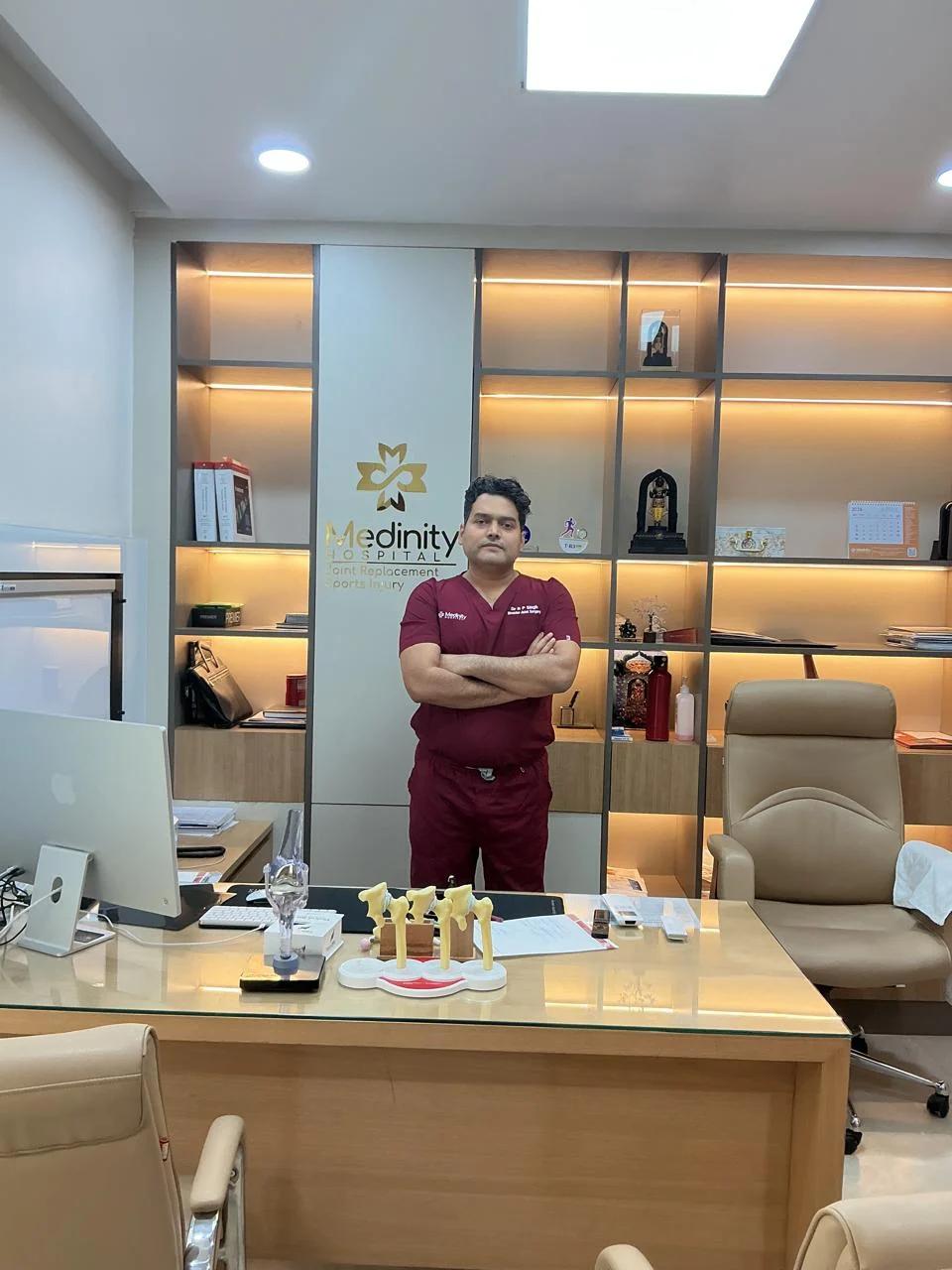
Dr. R.P. Singh
MS Ortho (Gold Medalist) · Fellowship Joint Reconstruction & Sports Injury (USA, Germany) · Senior Orthopaedic Surgeon
- 20+ years experience
- 2,000+ surgeries
- Sports injury specialist
Dr. R.P. Singh is Senior Orthopaedic Surgeon at Medinity Hospital, Gomti Nagar, Lucknow. MS Orthopaedics with Gold Medal. Fellowship in joint reconstruction and sports injury, USA and Germany. 20+ years clinical experience. 2,000+ orthopaedic surgeries. Specialises in sports injury management, hamstring tears, ligament reconstruction, and keyhole arthroscopic surgery.
View full profile & credentialsHamstring tear in Lucknow? Book a sports injury assessment at Medinity Hospital, Gomti Nagar.
Whether you are a cricketer, kabaddi player, or gym-goer with a hamstring tear, Dr. R.P. Singh at Medinity Hospital, Gomti Nagar, Lucknow, will assess the injury accurately, confirm the grade with imaging, and give you a structured rehabilitation plan with criteria-based return-to-sport clearance — not just a calendar estimate.
CP-221, Hahnemann Medinity Hospital Road, Gomti Nagar, Lucknow 226010 | Consultations 6 days a week. Walk-in OPD available. Emergency orthopaedic care 24/7.