
Quick answer: when is hip replacement surgery needed?
Hip replacement is typically recommended when conservative measures no longer work. Here are the three primary indicators:
When is it needed?
- 1Hip pain significantly affects walking, sleeping, or daily activities.
- 2Physiotherapy and rehabilitation, medication, and injections have failed to provide adequate relief after 3 to 6 months.
- 3Imaging confirms advanced osteoarthritis or avascular necrosis (AVN).
The two most common reasons for hip replacement in India are osteoarthritis and AVN, with AVN particularly affecting patients aged 30 to 55. Hip replacement has a 90 to 95% patient satisfaction rate and is one of the most successful procedures in orthopaedic surgery globally.
Source: Dr. R.P. Singh, Medinity Hospital, Lucknow. Supporting data: Mayo Clinic, PubMed hip arthroplasty survivorship studies.
Hip pain that stops you from walking, wakes you at night, or has made climbing stairs a daily ordeal is not something you should simply accept. In many cases it is a treatable condition with a well-understood surgical solution. Dr. R.P. Singh, Senior orthopaedic surgeon in Lucknow at Medinity Hospital, Gomti Nagar, has performed over 2,000 orthopaedic surgeries across 20+ years of practice and regularly sees patients from across Lucknow, Sitapur, Hardoi, Barabanki, Raebareli, Kanpur, and Unnao who have been living with hip pain far longer than necessary.
This complete guide covers everything you need to know before making a decision: the signs that surgery is needed, what the operation involves, which implant is right for your age, a week-by-week recovery plan, the risks you should know about, and the full cost picture for hip replacement in Lucknow in 2026.
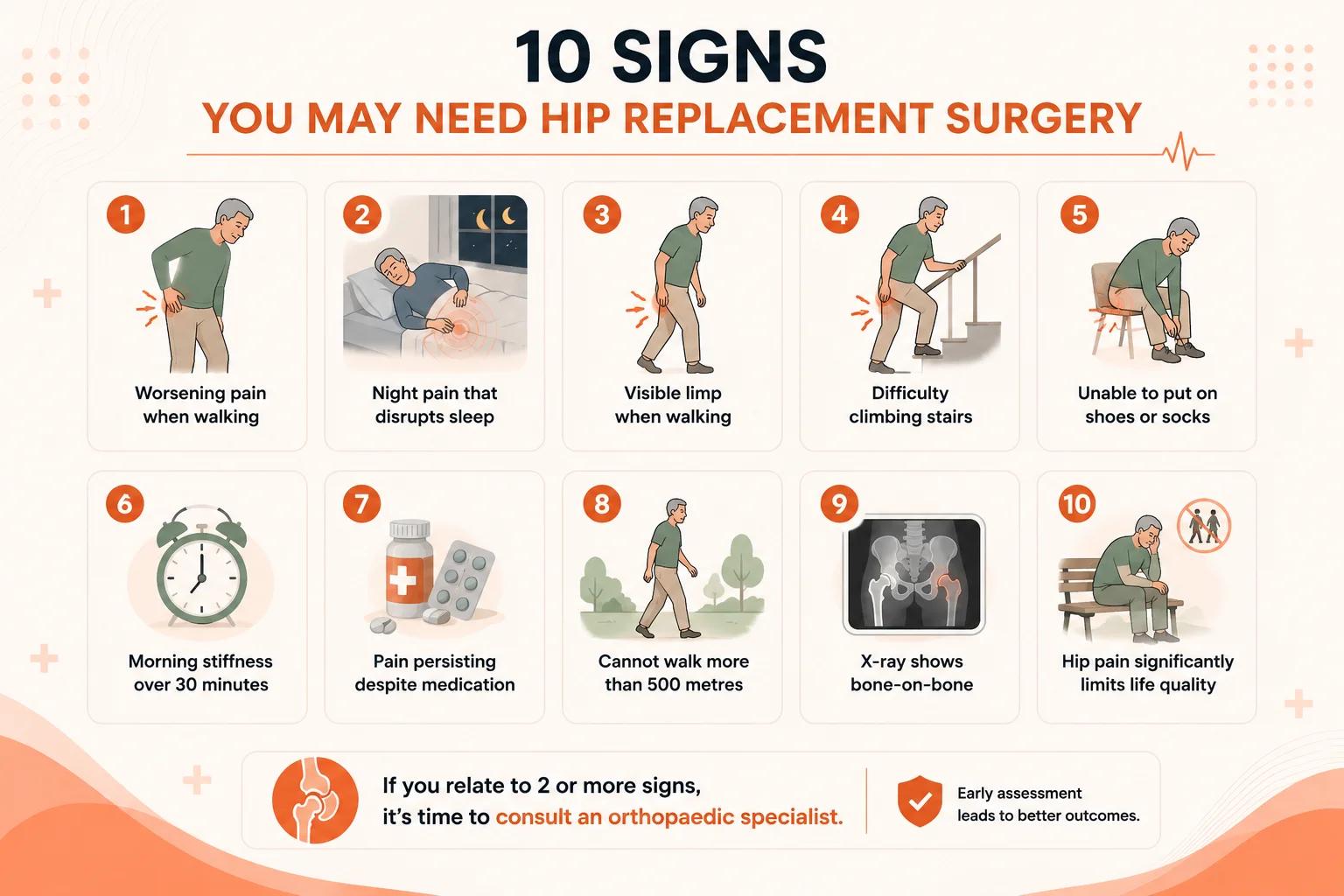
10 signs you may need hip replacement surgery
Most patients spend months or years managing hip pain before considering surgery. These are the ten signs that suggest the pain has progressed beyond what conservative treatment can reliably address:
Consultation
Has hip pain been affecting your daily life for more than 3 months?
CP-221, Hahnemann Medinity Hospital Road, Gomti Nagar, Lucknow 226010 · Walk-in OPD · 24/7 emergency
What causes hip pain severe enough to need replacement?
Two conditions account for the majority of hip replacements performed at Medinity Hospital, Lucknow. Understanding them helps patients know what they are dealing with:
Osteoarthritis
Avascular Necrosis (AVN)
Rheumatoid Arthritis
Hip fracture (elderly)
Avascular necrosis affects younger patients in India at a significantly higher rate than in Western countries. This is largely due to higher rates of corticosteroid use for tuberculosis, skin disorders, and asthma. Long-term alcohol use is another major cause. If you are under 55 with progressive hip pain and no clear injury history, specifically ask your doctor about AVN. Catching it at Stage 1 or 2 changes the treatment pathway entirely. Learn more about AVN treatment in Lucknow.
Your hip replacement journey at Medinity Hospital, Lucknow
Many patients delay seeking help because they do not know what to expect. Here is every step of your journey at Medinity Hospital, from the first phone call to your 3-month review:
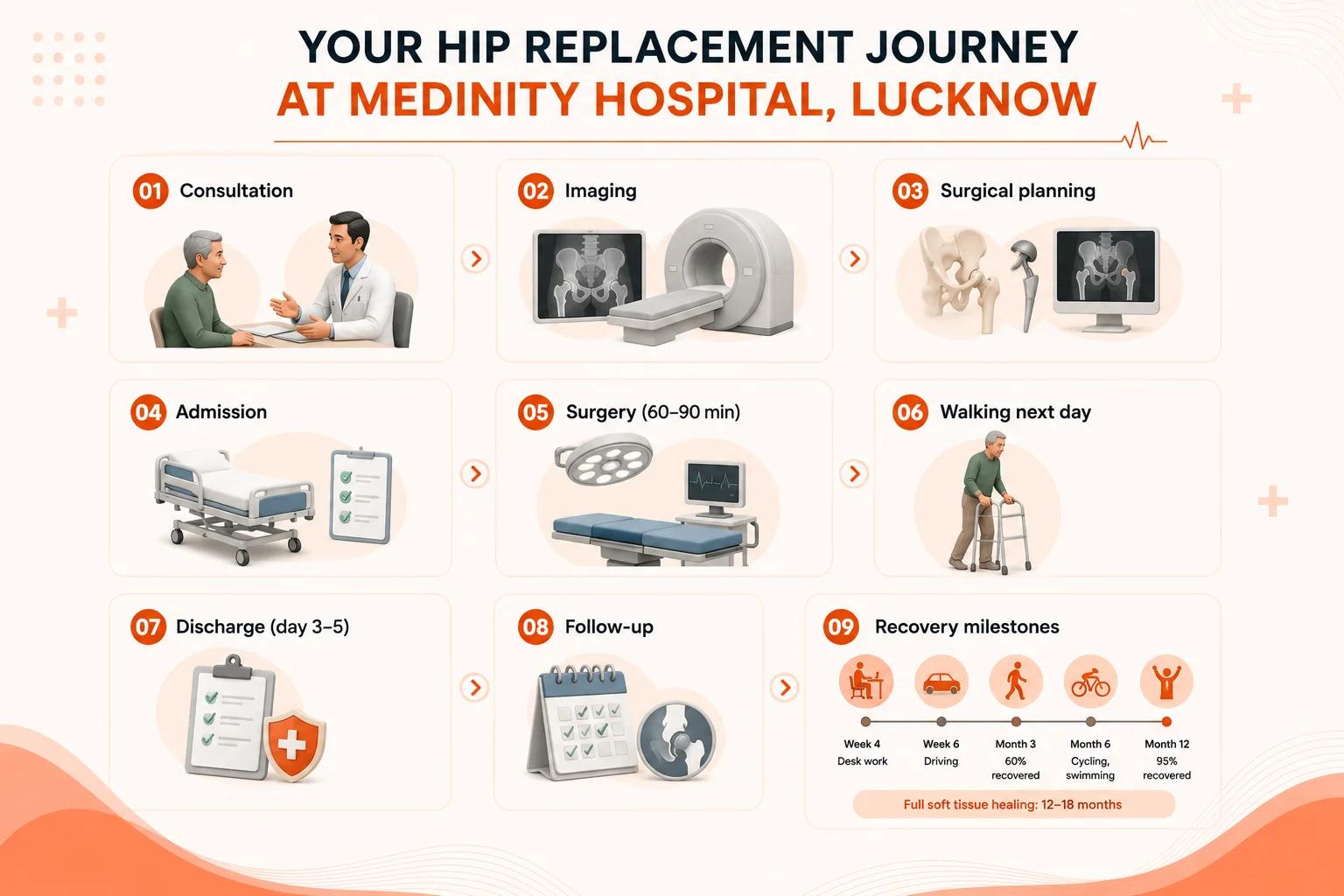
01 Consultation
Dr. R.P. Singh reviews your full medical history, the pattern of your hip pain, what treatments have been tried, and how your daily life has been affected. This is a discussion, not a commitment.
02 Imaging
Weight-bearing X-rays of both hips are taken at Medinity's NABL-accredited diagnostics centre, usually the same day. An MRI is ordered if soft tissue or AVN staging detail is needed.
03 Surgical planning
Dr. R.P. Singh reviews your imaging and selects the appropriate implant type, surgical approach, and anaesthesia plan based on your age, bone quality, and activity level.
04 Admission
You are admitted to Medinity Hospital, Gomti Nagar, the day before or the morning of surgery. Pre-operative blood tests, ECG, and anaesthesia assessment are completed.
05 Surgery (60 to 90 min)
Performed under spinal anaesthesia in most cases. The damaged hip joint is removed and replaced with the selected implant components. You are monitored throughout.
06 Walking next day
Physiotherapy begins within 24 hours. Most patients stand and take first steps with a walker on day 1 or day 2 after surgery.
07 Discharge (day 3 to 5)
Most patients are discharged 3 to 5 days after surgery. Wound care instructions, exercise protocol, and follow-up appointment are given in writing.
08 Follow-up
First follow-up at 2 weeks for wound review. Second at 6 weeks for walking and range of motion assessment. Third at 3 months for functional review.
09 Recovery milestones
Week 4: desk work possible. Week 6: driving cleared. Month 3: 60% recovered. Month 6: cycling, swimming. Month 12: 95% recovered. Full soft tissue healing at 12 to 18 months.
What happens during hip replacement surgery at Medinity Hospital?
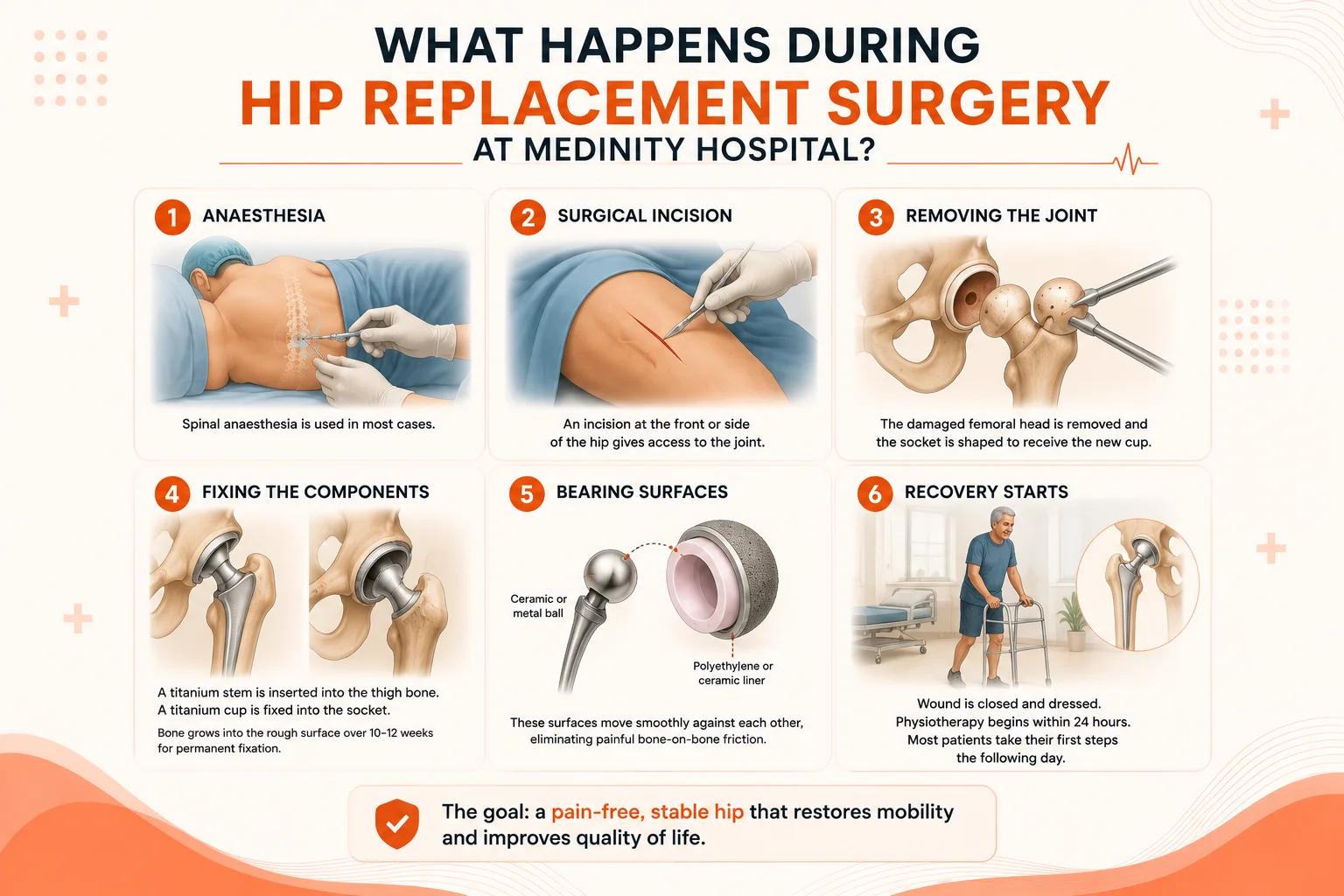
Hip replacement surgery, also called joint replacement surgery in Lucknow and specifically total hip arthroplasty, involves removing the damaged ball and socket of the hip joint and replacing them with precision-engineered artificial components. The procedure takes 60 to 90 minutes at Medinity Hospital, Gomti Nagar:
- 1
Anaesthesia
Spinal anaesthesia is used in most cases. Numbing medication placed in the lower back makes the legs numb during surgery. Avoids a breathing tube and is associated with lower complication rates than general anaesthesia.
- 2
Surgical incision
An incision at the front or side of the hip gives access to the joint. Dr. R.P. Singh works between muscles where possible to reduce tissue damage and support faster recovery.
- 3
Removing the joint
The damaged femoral head is removed. The socket surface is cleared and shaped to receive the new titanium cup. In AVN cases, often only the ball side is severely damaged.
- 4
Fixing the components
A titanium stem is inserted into the thigh bone. A titanium acetabular cup with a rough outer surface is fixed into the socket. Bone grows into this rough surface over 10 to 12 weeks for permanent fixation.
- 5
Bearing surfaces
A ceramic or metal ball is placed on the femoral stem. A polyethylene or ceramic liner sits inside the titanium cup. These surfaces move smoothly against each other, eliminating the painful bone-on-bone friction.
- 6
Recovery starts
Wound is closed and dressed. Physiotherapy begins within 24 hours. Most patients take their first steps the following day.
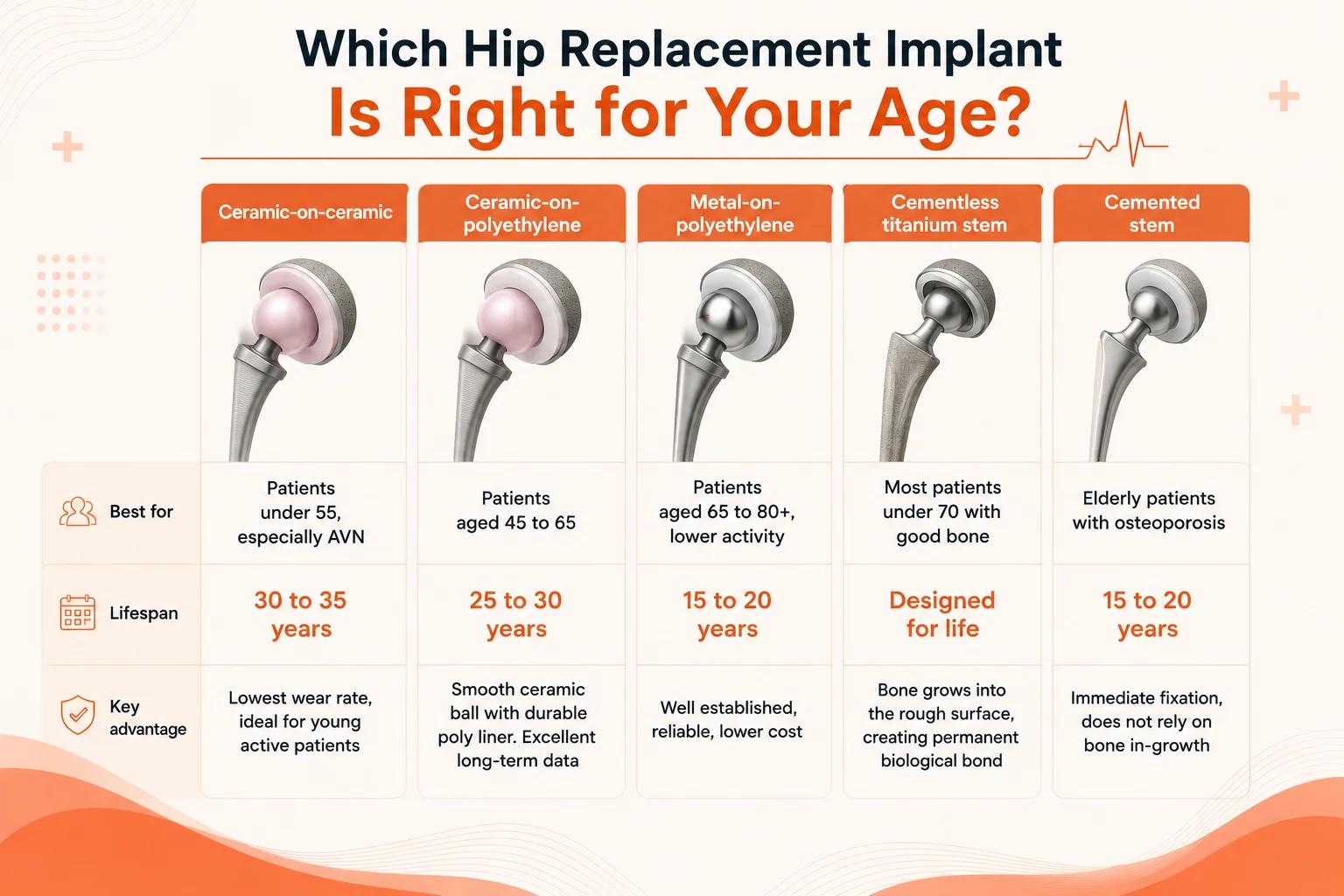
Which hip replacement implant is right for your age?
The implant choice has a direct effect on how long your hip replacement lasts. Dr. R.P. Singh selects the implant based on your age, activity level, bone quality, and the specific condition being treated:
Recovery timeline: walking, stairs, driving and returning to life
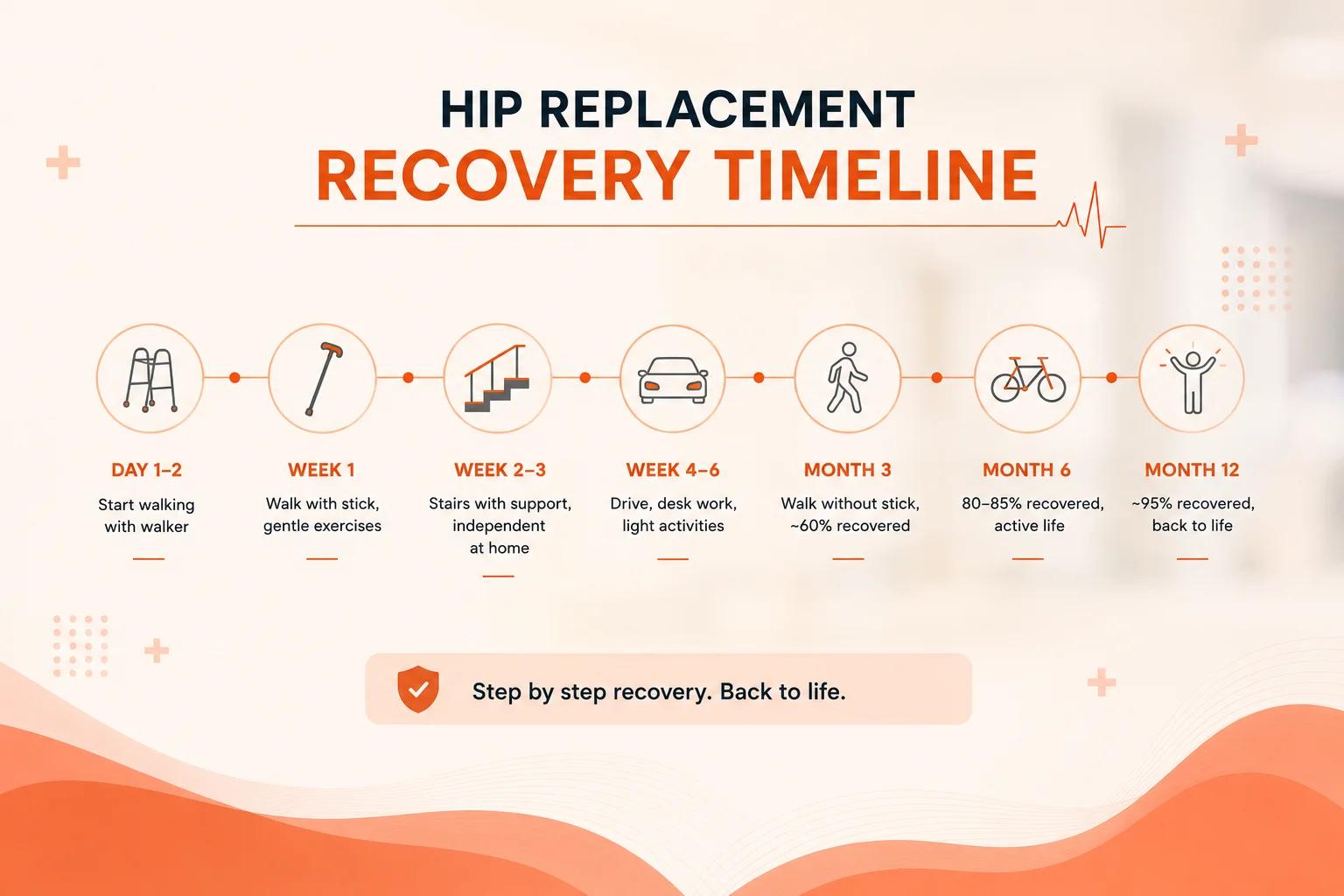
Day 1 to 2
Standing and walking with a walker begins within 24 hours. Physiotherapy starts. Pillow between legs to prevent the hip rotating inward. Pain managed with medication.
Week 1
Increasing walking with walker, switching to a stick by day 5 to 7. Discharged day 3 to 5. Gentle ankle pump and quad exercises. Sleep on back or unoperated side with pillow between knees.
Week 2 to 3
Stairs: good (unoperated) leg goes up first, operated leg comes down first. Walking stick used for balance. Most patients are independent at home.
Week 4 to 6
Approximately 40 to 50% recovered. Desk work possible at week 2 to 4. Driving cleared at week 4 to 6 once pain medication stopped. Gentle stationary cycling begins. Avoid deep bending and leg crossing.
Month 3
Approximately 60% recovered. Walking without a stick for most. Physiotherapy continues. Hip precautions still apply: no deep squatting, no Indian toilet, raised seat required.
Month 6
80 to 85% recovered. Swimming, cycling, and walking freely permitted. Standing work manageable.
Month 12
Approximately 95% recovered. Full soft tissue healing. Normal daily activities fully resumed. High-impact sports not recommended for most patients long-term.
- 1Never cross your legs or sit cross-legged.
- 2Avoid Indian-style toilet seats or deep squatting at all times. Use a raised western commode.
- 3Climbing stairs: always go up with your good leg and come down with your operated leg. Follow these for the first 3 months. Dr. R.P. Singh will advise when specific precautions can be relaxed at your follow-up.
What are the risks of hip replacement surgery? An honest guide
Hip replacement is one of the safest elective surgical procedures performed today. Its 90 to 95% satisfaction rate is among the highest in all of surgery. But like any major operation, risks exist and patients deserve to understand them clearly. Here is what the published orthopaedic literature reports, alongside how these risks are managed at Medinity Hospital:
Infection (deep or superficial)
Published risk: Approximately 0.5 to 1% for primary surgery
Deep vein thrombosis (DVT)
Published risk: Without prevention: 40 to 60%. With prevention: under 5%
Hip dislocation
Published risk: Approximately 1 to 3% in the first year
Implant loosening
Published risk: Less than 1% at 10 years with modern cementless implants
Leg length difference
Published risk: Minor differences in up to 2 to 3% of cases
Revision surgery (long-term)
Published risk: Approximately 10% require revision at 15 years
The risk of serious complication from hip replacement is significantly lower than the long-term risk of living with untreated advanced arthritis or AVN, which includes chronic pain, progressive muscle weakness, falls, loss of independence, and psychological impact. The decision to proceed with surgery should balance surgical risk against the risk of not operating.
Consultation
Want to discuss your individual risk profile with Dr. R.P. Singh?
CP-221, Hahnemann Medinity Hospital Road, Gomti Nagar, Lucknow 226010 · Walk-in OPD · 24/7 emergency
Hip replacement cost in Lucknow (2026): what you need to know
Cost is one of the first questions patients ask and one of the least transparently answered by hospitals. Here is a clear, honest framework for hip replacement surgery costs in Lucknow in 2026, along with what to ask before committing to any hospital:
What affects your final cost most: The single biggest cost variable is the implant. A ceramic-on-ceramic implant from an international brand can cost ₹80,000 to ₹1,50,000 for the implant alone. An Indian-manufactured metal-on-polyethylene implant may cost ₹25,000 to ₹50,000. For a 40-year-old with AVN, the ceramic implant is the right clinical choice despite the higher cost, because it is likely the only surgery they will ever need. For a 75-year-old, a reliable Indian implant may be entirely appropriate.
Finances
Insurance and payment questions
Yes. Most cashless health insurance policies in India cover hip replacement surgery as it is a recognised medical procedure for osteoarthritis, AVN, and fracture. Pre-authorisation from your insurer is required before admission.
Medinity Hospital works with major insurance providers. Call +91 94540 99331 to confirm whether your specific insurer is a network provider before booking.
Your policy number, photo ID, diagnosis letter from the referring doctor, X-ray and MRI reports, and the surgeon's treatment plan. Medinity Hospital's team can assist with documentation.
Ask the Medinity Hospital finance team at the time of consultation. Options vary and are discussed individually. Call +91 94540 99331 for a financial discussion before booking.
Consultation
Want a written cost estimate for your specific condition?
CP-221, Hahnemann Medinity Hospital Road, Gomti Nagar, Lucknow 226010 · Walk-in OPD · 24/7 emergency
Quick reference
Common questions answered
These are the specific questions patients in Lucknow most commonly search before booking a hip replacement consultation. Each answer is designed to give you a clear, honest, evidence-based response.
Hip replacement surgery at Medinity Hospital takes 60 to 90 minutes. Complex cases, including revisions or patients with significant deformity, may take longer. Total time from anaesthesia to recovery room is typically 2 to 3 hours. Most patients are in the ward and alert within 3 to 4 hours of the procedure.
Hip replacement has a 90 to 95% patient satisfaction rate in published orthopaedic studies, making it one of the most successful elective surgical procedures in medicine. Approximately 90% of implants are still functioning well at 15 years. Outcomes depend heavily on correct patient selection, surgical technique, and implant choice for age.
Most patients describe post-operative pain as manageable and, importantly, different from the chronic arthritis pain they experienced before surgery. Pain is actively controlled with medication from day one. By week 2 to 3, most patients have reduced pain medication significantly. The majority report that recovery is more comfortable than they expected.
Most patients take their first steps with a walker within 24 hours of surgery at Medinity Hospital. Physiotherapy begins on day 1 or day 2. Most patients are walking with a walking stick by day 5 to 7 and are home by day 3 to 5. Independent walking without a stick is typically achieved between week 2 and week 4.
Dr. R.P. Singh generally clears patients for driving at 4 to 6 weeks after surgery, once they can perform emergency braking without hesitation or pain and have stopped taking narcotic pain medication. The specific clearance depends on which leg was operated on and your individual recovery progress at the follow-up appointment.
Modern hip replacements typically last 15 to 35 years depending on implant type and patient factors. Ceramic-on-ceramic implants can last 30 to 35 years and are preferred for patients under 55. Ceramic-on-polyethylene implants last 25 to 30 years. Metal-on-polyethylene implants last 15 to 20 years. Weight, activity level, and surgical technique all influence longevity.
Hip replacement at Medinity Hospital, Gomti Nagar: why patients travel from across Uttar Pradesh
Dr. R.P. Singh's orthopaedic practice at Medinity Hospital, Gomti Nagar, serves patients from across Lucknow, including Indira Nagar, Aliganj, Jankipuram, Hazratganj, and Alambagh. Patients also regularly travel from Sitapur, Hardoi, Barabanki, Raebareli, Kanpur, and Unnao for consultations and surgery. Many come specifically because complex AVN cases or younger patients requiring premium long-life implants need a surgeon with fellowship-level joint reconstruction training.
Help centre
Frequently asked questions about hip replacement surgery in Lucknow
Candidacy, cost, recovery, and what to expect after surgery.
The clearest signal is when hip pain significantly affects your daily life and conservative treatments including physiotherapy, medication, and injections have failed to provide adequate relief after 3 to 6 months. A weight-bearing X-ray confirming advanced joint space narrowing or bone-on-bone contact is the key imaging indicator. Dr. R.P. Singh at Medinity Hospital, Lucknow, will review your X-rays and clinical history before recommending any surgical path.
In early and moderate stages of hip arthritis or AVN, yes. Stem cell or PRP injections, physiotherapy, anti-inflammatory medication, activity modification, and weight management can delay the need for surgery by months or years. However, when cartilage is gone and the X-ray shows bone-on-bone contact, no conservative treatment can regenerate cartilage. At that point, surgery offers the only reliable path to pain relief and restored function.
Avascular necrosis (AVN) occurs when blood supply to the femoral head is disrupted, causing the bone tissue to die and the ball to eventually collapse. In India, AVN is more prevalent than in Western populations due to higher rates of corticosteroid use for conditions including tuberculosis, skin disorders, and asthma, and alcohol-related causes. It typically affects patients aged 30 to 55. Early stages (1 to 2) can sometimes be treated with core decompression. Stages 3 and 4 typically require hip replacement.
There is no single best implant. The right choice depends on your age. For patients under 55, particularly AVN patients, ceramic-on-ceramic implants are preferred because of their 30 to 35 year lifespan. For patients aged 45 to 65, ceramic-on-polyethylene gives excellent long-term results. For patients over 65 with lower activity levels, metal-on-polyethylene is reliable and cost-effective. Dr. R.P. Singh will recommend the appropriate implant after assessing your age, bone quality, and activity goals.
Bilateral simultaneous hip replacement is possible in carefully selected patients with good general health and significant disease in both hips. However, most surgeons including Dr. R.P. Singh prefer staged surgery, replacing one hip and waiting 6 to 12 weeks before operating on the second. Staged surgery reduces anaesthetic risk, allows rehabilitation of the first hip before the second, and gives a more predictable recovery on each side.
Yes. Age alone is not a contraindication. Published studies consistently show that patients in their 70s, 80s, and even 90s report 90 to 95% satisfaction rates equivalent to younger patients. The key pre-operative considerations are cardiovascular health, diabetes control, and bone quality, not age itself. Delaying surgery in the elderly often leads to deconditioning, muscle weakness, and falls, which carry their own significant risks.
Yes, but diabetes should be well-controlled before surgery. Poorly controlled diabetes increases the risk of wound infection, impairs healing, and reduces immune response. Patients with HbA1c above 8 are generally advised to optimise their diabetes management before surgery. Dr. R.P. Singh works with the patient's physician to ensure blood glucose is well-controlled in the pre-operative period. This significantly reduces surgical risk.
Dr. R.P. Singh generally clears patients for air travel at 4 weeks after surgery. When flying, wearing compression stockings throughout the flight is essential to reduce the risk of deep vein thrombosis (DVT). During longer flights, perform ankle pump exercises regularly and walk briefly when the flight allows. For travel within 4 weeks, discuss specifically with your surgeon.
Yes. Most major cashless health insurance policies in India cover hip replacement surgery as it is a recognised procedure for osteoarthritis, AVN, and fracture. Pre-authorisation from your insurer is required before admission. Medinity Hospital works with major insurance providers. Call +91 94540 99331 to confirm whether your insurer is a network provider before booking.
Protein-rich foods support muscle and tissue repair: eggs, dal, paneer, chicken, fish, and legumes. Calcium and vitamin D support bone health: dairy, ragi, leafy greens, and sunlight exposure. Iron-rich foods help recover from surgical blood loss: spinach, lentils, and dates. Avoid excessive salt and processed foods, which increase inflammation. Your physiotherapist and Dr. R.P. Singh's team will provide specific nutrition guidance based on your recovery progress.
Most patients at Medinity Hospital can manage stairs with a handrail by the end of week 1. The technique matters: always go up with your good (unoperated) leg first, and come down with your operated leg first. Use the handrail and your walking stick together. Stair climbing without a railing becomes comfortable for most patients by week 3 to 4.
Yes. The metal components of a hip replacement will trigger metal detectors at airports. Most orthopaedic surgeons provide a medical implant card or letter confirming you have a joint replacement. Carry this with you when travelling. Full body scanners used in modern airports are safe with orthopaedic implants and do not affect the implant in any way.
Formal physiotherapy at Medinity Hospital typically continues for 6 to 8 weeks after surgery with sessions 2 to 3 times per week. Home exercise programmes continue for 3 to 6 months. The physiotherapy team works directly with Dr. R.P. Singh, and progress is reviewed at each follow-up appointment. The physiotherapy programme is critical for regaining full strength and range of motion.
Completely normal. Hip replacement recovery is not a straight upward line. Most patients experience periods of improvement followed by days where the hip feels more sore or fatigued, especially after a more active day than usual. This is part of normal soft tissue healing and does not indicate a problem. The overall trajectory over weeks and months is consistently upward.
Total hip replacement (THR) replaces both the femoral head (ball) and the acetabulum (socket). Hemiarthroplasty replaces only the femoral head, leaving the socket intact. Hemiarthroplasty is typically used in elderly patients with a hip fracture where rapid mobility restoration is the priority. For arthritis and AVN, total hip replacement gives superior long-term outcomes and is the standard procedure at Medinity Hospital.
Desk job: 2 to 4 weeks. Standing or light-duty work: 4 to 6 weeks. Heavy manual work: 8 to 12 weeks minimum. Dr. R.P. Singh will advise based on your specific job requirements and your recovery at each follow-up appointment.
Safe exercises include walking on flat ground, stationary cycling with a high seat and low resistance (from week 4), and swimming (once the wound has healed at 4 to 6 weeks). High-impact activities including running, jumping, and contact sports are not recommended. The goal is consistent low-impact activity that maintains muscle strength and joint health without putting excessive load on the implant.
Deep squatting and sitting cross-legged are not recommended after hip replacement as these positions can risk dislocation of the new joint. A raised toilet seat or western-style commode should be used, especially in the first 3 to 6 months. Many hip precautions are relaxed after 6 to 12 months with Dr. R.P. Singh's specific clearance, but Indian-style squatting is generally discouraged long-term to protect the implant.
Positive recovery signs include: pain reducing week over week, walking distance increasing, being able to manage stairs comfortably by week 3 to 4, no fever or wound discharge, and swelling gradually reducing. Contact Medinity Hospital if you develop: sudden increase in pain, redness or warmth around the wound, fever above 38 degrees, or the leg feels unstable. These may indicate infection or dislocation and need prompt assessment.
Minimally invasive approaches use smaller incisions and aim to work between muscles rather than cutting through them, reducing tissue trauma and potentially shortening early recovery. Robotic assistance helps optimize implant positioning and leg length alignment during surgery. Dr. R.P. Singh will discuss the planned surgical approach at your consultation based on your specific anatomy, condition, and the type of implant being used.

About the author
Dr. R.P. Singh
MS Ortho (Gold Medalist) · Fellowship Joint Reconstruction (USA, Germany) · Senior Orthopaedic Surgeon
- 20+ years experience
- 2,000+ surgeries
- Partial & total knee replacement
Dr. R.P. Singh leads orthopaedics at Medinity Hospital, Gomti Nagar. He specialises in both unicompartmental and total knee replacement, bringing international, evidence-based surgical standards to Lucknow.
View full profile & credentialsConsultation
Book a consultation at Medinity Hospital, Lucknow
If you have hip arthritis or AVN that is not responding to physiotherapy, injections, or medication, the next step is a proper assessment. Dr. R.P. Singh will review your X-rays and MRI, assess your candidacy for hip replacement, and give you a clear, written recommendation with no pressure to commit.
- NABH-accredited hospital with a 4.8-star rating from 246+ verified patients
- Walk-in OPD available. Emergency orthopaedic care 24 hours a day, 7 days a week
CP-221, Hahnemann Medinity Hospital Road, Gomti Nagar, Lucknow 226010 · Walk-in OPD · 24/7 emergency