A ligament tear does not always announce itself loudly. Sometimes patients walk away from an injury thinking it was just a sprain, only to come back weeks later with a knee that keeps giving way. If your knee swelled up after a fall or a sports incident and has not felt 'right' since, there is a real chance a ligament was injured.
Here is how to tell what is happening and what to do next, explained by Dr. R.P. Singh, Senior Orthopaedic Surgeon at Medinity Hospital, Lucknow.
What are the ligaments in the knee and what do they do?
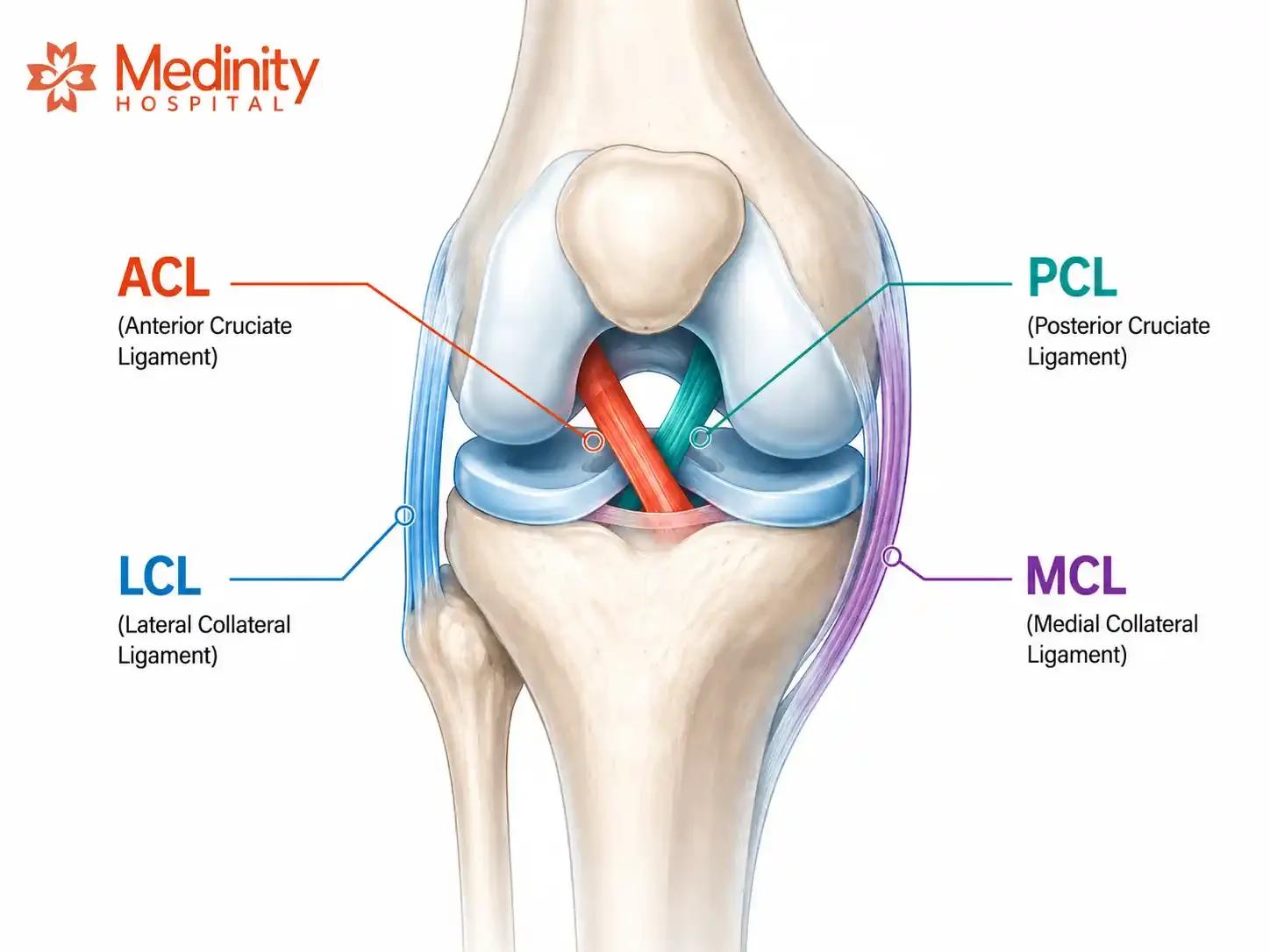
Your knee is held together by four strong bands of tissue called ligaments. Think of them as elastic cables, each running in a different direction, working together to keep the knee joint stable when you walk, run, twist, or land from a jump.
Without these cables, the knee would move in directions it is not supposed to. Each of the four ligaments has a specific job:
- The ACL and PCL sit inside the joint and control forward and backward movement of the shin bone
- The MCL runs along the inner side of the knee and stops it from bending inward
- The LCL runs along the outer side and stops the knee from bending outward
When any one of these ligaments is stretched or torn, the knee loses some or all of its stability, and that is when problems begin.
Signs that your ligament tear is more than just a sprain
The difference between a mild ligament sprain and a serious tear is not always obvious in the first few hours. Pain may settle quickly, the swelling may seem manageable, and many patients convince themselves to rest for a day and see how it feels. That is when the damage gets worse.
Ligament injuries are graded from 1 to 3. Knowing which grade you are dealing with determines whether rest is enough or whether you need medical attention:
Warning signs of a Grade 2 or Grade 3 tear
ACL, PCL, MCL, LCL: which one is injured?
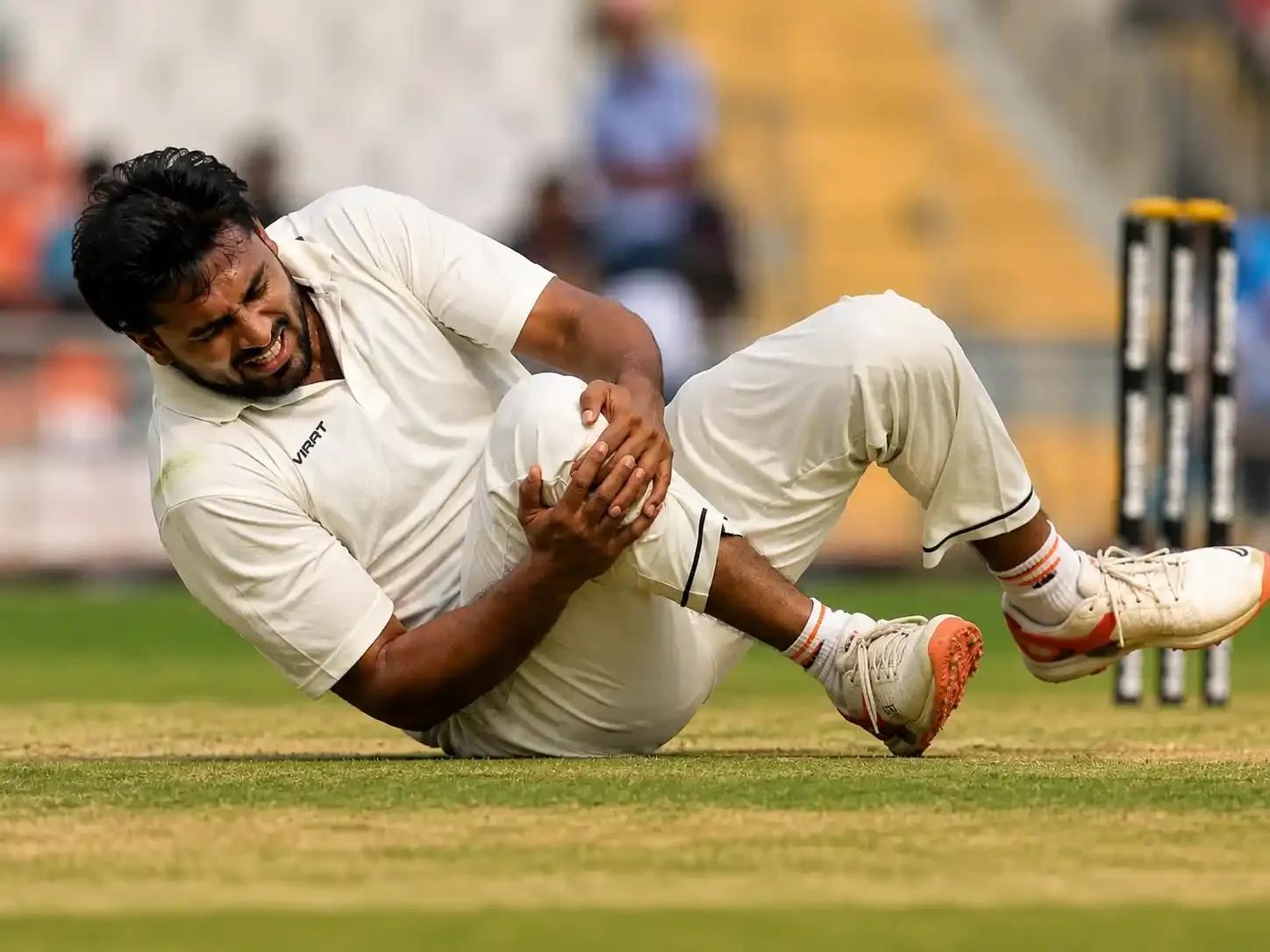
The four knee ligaments get injured in very different ways. Knowing which one is affected helps you understand how serious the injury is and what treatment you are likely to need.
The ACL is by far the most commonly injured knee ligament in India, particularly in sports like cricket, kabaddi, and football. The PCL is less common but more frequently damaged in road accidents, especially when the knee hits a hard surface in a bent position. The MCL often heals without surgery. The LCL is the least common of the four.
For sport specific guidance, read about sports injury specialist in Lucknow at Medinity Hospital, and see our guide on ACL tear symptoms and treatment.
When to see a doctor immediately vs when to wait
This is the question most patients get wrong. Here is a clear guide:
- You cannot put any weight on the leg at all
- The knee is visibly deformed or out of shape
- You have numbness, tingling, or coldness below the knee
- Swelling is severe and spreading rapidly
- The knee feels completely unstable or locks in one position
- Mild swelling that appeared gradually over 24 hours
- You can walk, though with discomfort
- Pain is present but manageable with rest and ice
- No feeling of the knee giving way or locking
- Injury was minor and happened during light activity
How ligament tears are diagnosed and treated at Medinity Hospital, Lucknow
When a patient comes to Dr. R.P. Singh at Medinity Hospital, Gomti Nagar, with a suspected knee ligament injury, the assessment follows a structured clinical process:
Step 1: Consultation and history
Dr. R.P. Singh takes a full account of how the injury happened, the immediate sensation at the time, how the knee has behaved since, and your activity level and goals. This guides the entire treatment plan.
Step 2: Physical examination
Specific clinical tests, including the Lachman test for ACL integrity, the posterior drawer test for the PCL, and valgus and varus stress tests for the collateral ligaments, are performed to assess joint stability.
Step 3: MRI scan
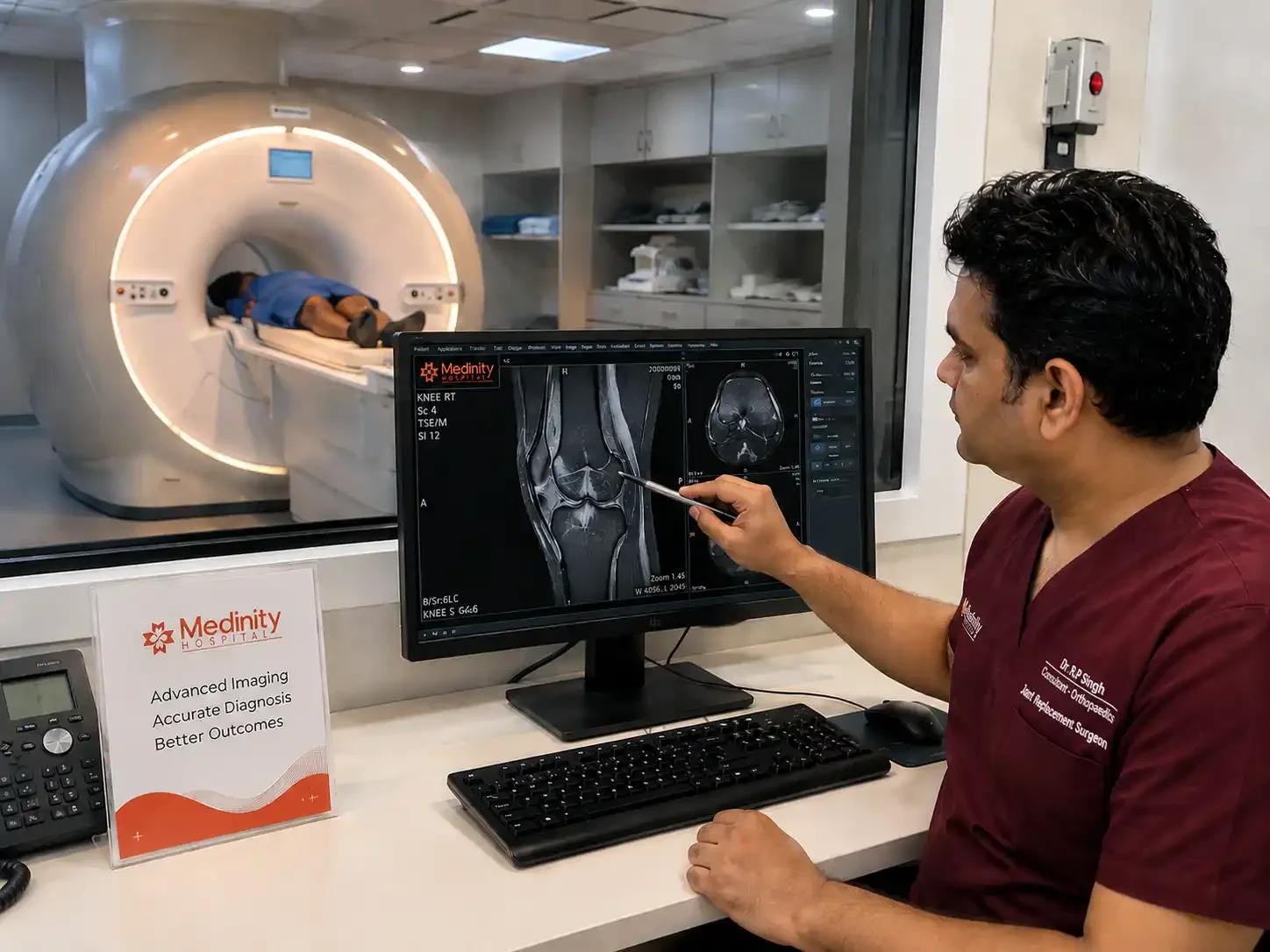
Patients are referred for an MRI to confirm the diagnosis, grade the tear, and check for associated meniscus or cartilage damage that may not be visible on clinical examination.
Step 4: Treatment plan
Based on the MRI findings, your age, and your activity goals, Dr. R.P. Singh recommends either conservative management (physiotherapy, bracing, structured rest) or surgical reconstruction using arthroscopic technique.
Dr. R.P. Singh is a Gold Medalist in MS Orthopaedics with fellowship training in joint replacement surgery from both the United States and Germany. He has performed over 2,000 orthopaedic surgeries over more than 20 years of practice in Lucknow. Medinity Hospital is NABH-accredited and maintains an integrated physiotherapy unit that works alongside the surgical team from day one of your recovery.
Patients from across Uttar Pradesh, including Sitapur, Hardoi, Barabanki, and Kanpur, come to the orthopaedics department at Medinity Hospital for both initial diagnosis and surgical treatment of knee ligament injuries.
Why patients across Uttar Pradesh choose Dr. R.P. Singh for knee injuries
Dr. R.P. Singh is a Senior Orthopaedic Surgeon at Medinity Hospital, Gomti Nagar, Lucknow, with more than 20 years of clinical experience and over 2,000 orthopaedic surgeries performed. He holds an MS in Orthopaedics with a Gold Medal, and completed fellowship training in joint replacement surgery in both the United States and Germany.
Patient story
“Mera accident 2022 mein hua tha, pura ligament damage ho gaya tha. Dr. R.P. Singh aur Dr. Mohit Pal ki wajah se main bilkul theek ho gaya.”
Patient story
“After 2 months I can stand on my own feet and work professionally.”
Medinity Hospital holds NABH-accredited standards of care and has a 4.8-star rating from more than 246 verified patients on Google.
If your knee has not felt right since a fall or sports injury in Lucknow, Sitapur, Hardoi, Barabanki, or anywhere across Uttar Pradesh, early consultation with an orthopaedic specialist is the most important first step.
Help centre
Frequently asked questions about knee ligament tears
Quick answers on healing time, sprains vs tears, surgery, and when to seek care.
Minor ligament sprains, Grade 1 and some Grade 2 injuries, can often heal with rest, physiotherapy, and bracing over 6 to 12 weeks. A complete tear, Grade 3, of the ACL typically requires surgery if the patient wants to return to active life or sport. Dr. R.P. Singh will assess your MRI and recommend the right treatment for your specific injury at Medinity Hospital, Lucknow.
Healing time depends on the grade and which ligament is affected. A mild Grade 1 sprain may recover in 4 to 6 weeks with physiotherapy. A Grade 2 partial tear typically takes 3 to 4 months. A complete ACL tear that requires reconstruction typically takes 8 to 12 months for full return to sport.
A sprain is a stretch or micro tear in the ligament fibres (Grade 1), whereas a ligament tear involves partial or complete rupture of the ligament (Grade 2 or Grade 3). All three are technically 'sprains' in medical terminology, but in everyday language, a tear refers to the more severe grades that cause instability and may require surgery.
It depends on which ligament and how severe the tear is. Many patients with ACL tears can walk with discomfort. However, walking on an unstable knee without a diagnosis puts additional stress on the cartilage and meniscus, which can create secondary damage. If your knee feels unstable when you walk, see an orthopaedic specialist before continuing physical activity.
About the author
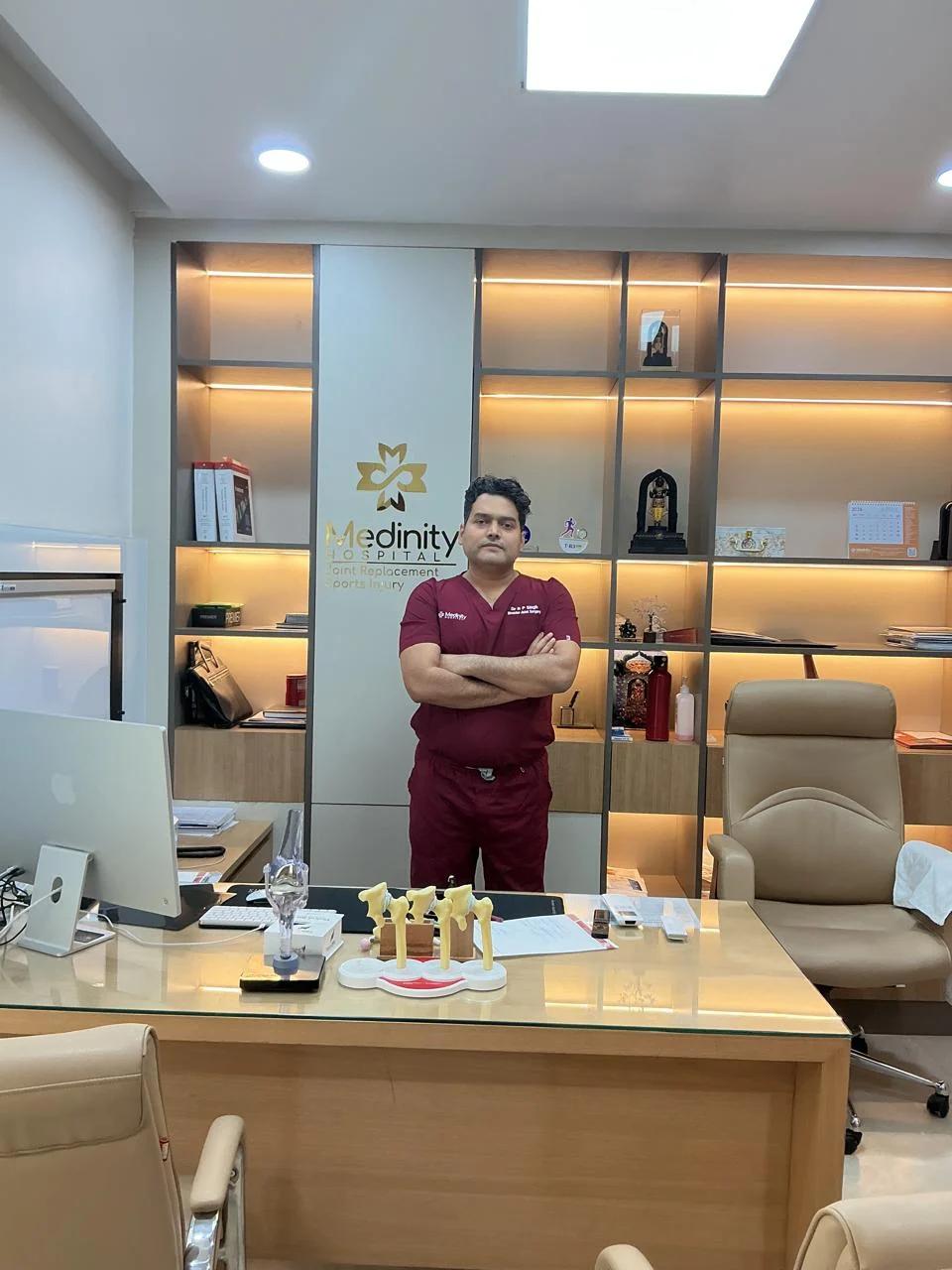
Dr. R.P. Singh
MS Ortho (Gold Medalist) · Fellowship Joint Replacement (USA, Germany) · Senior Orthopaedic Surgeon
- 20+ years experience
- 2,000+ surgeries
- Knee ligament & sports injury care
Dr. R.P. Singh leads orthopaedics at Medinity Hospital, Gomti Nagar, with expertise in knee ligament reconstruction, arthroscopic surgery, and return to sport rehabilitation for patients across Uttar Pradesh.
View full profile & credentialsConsultation
Book a consultation at Medinity Hospital, Lucknow
If you are experiencing a sports injury or your knee has felt unstable since a fall, do not wait. Dr. R.P. Singh will review your MRI, explain conservative and surgical options, and outline a recovery plan matched to your activity goals.
- Same orthopaedic team from first OPD visit through surgery and rehab
- Walk-in OPD and 24/7 emergency orthopaedic support at Gomti Nagar
CP-221, Hahnemann Medinity Hospital Road, Gomti Nagar, Lucknow 226010 · Walk-in OPD · 24/7 emergency