
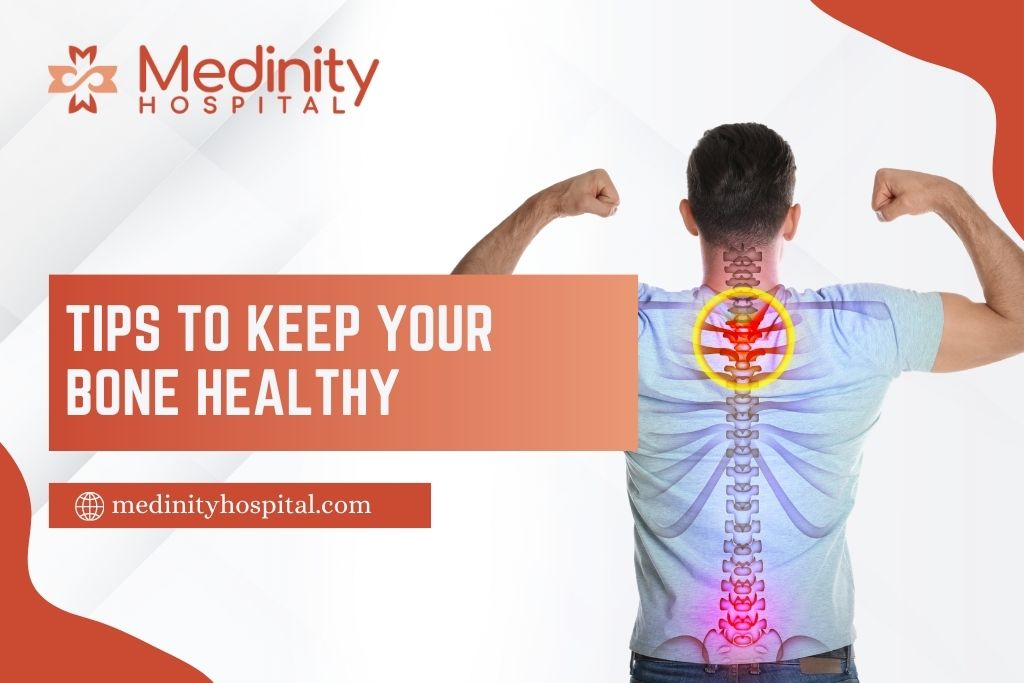
The majority of us do not give much thought to our bones until there is a problem. A broken bone, chronic back pain, struggling to get out of bed, or a fall, which takes much longer to get up straight again, these can make us start thinking that we have been riding on a system that has been silently carrying us since we were born.
Bones are not just a structure that keeps us together. They safeguard the important organs, contain the much-needed minerals, synthesise the blood cells and even enable us to move, work and live without depending on others. However, until middle age or even later, no one pays much attention to bone health, and the damage has already been caused.
In Medinity Hospital, we think that bone health must be taken care of before the pain sets in. It doesn’t matter whether you are in your twenties, developing peak bone mass, a busy parent with a lot of things to attend to, or an elderly person seeking to remain active and confident; healthy bones are relevant at any age. We should discuss the way they can be defended, in practice, in nature, and regularly.
The Secret to Know: Bone Loss Is Silent
Among the greatest problems that are facing bone health is the fact that bone loss does not present itself at an early stage. Such disorders as osteoporosis emerge silently. You do not feel your bones getting weak. No warning precaution is present in it until the fracture occurs, in some cases, at a mere slip or even a cough. This is the reason why prevention is much better than treatment. Strong bones cannot be constructed in a day. They are the product of customs of decades of daily habits.
Nutrition: What You Feed Your Bones, Daily Counts
It is true to say that when we talk of bones, the first thing that most people think about is calcium. It is the major mineral that renders the bones their strength. However, calcium is not the only thing that bones require to be healthy.
Every day food should also assist in this process of bone repair and bone generation. Milk, curd, and cheese are good sources of calcium; however, when you can no longer consume lactose or prefer eating vegetarian foods, ragi, sesame seeds, almonds, tofu, leafy greens, and fortified foods can be used to supplement the deficiencies. Vitamin D is also very crucial as it aids your body in absorbing calcium. Having a diet that is rich in calcium will not be of good use in case of a lack of vitamin D. The most natural source is sunshine, but indoor lifestyles usually suppress exposure to sunshine. Medical advice on supplements then comes in handy in such situations.
Protein is very critical as well. The bones are not purely mineral, but have a protein structure which makes them flexible. The lack of sufficient protein may cause the bones to become fragile in old age. At Medinity Hospital, it is common to come across patients who emphasise a single nutrient and fail to realise the big picture. Balance is good in contributing to bone health.
Exercise is Medicine for Your Bones
The bones react to normal stress. Some signals are sent to your bones when you move, walk, lift, stretch, or exercise, to maintain bone strength. A sedentary lifestyle, on the other hand, informs your bones that they do not need to work so hard.
Exercises such as walking, jogging, dancing, climbing stairs and yoga exercises aid bone density. Even light resistance exercises, but most importantly, the strength training, are particularly effective since the muscles that attach to bones stimulate bone formation.
The good news? It does not require workouts or a gym membership. It is not about intensity but only about consistency. It can be a daily walk, home-based simple strength exercises, or assisted physiotherapy, and a significant difference can be observed over time. Supervised exercise plans are more effective and safe for seniors or people who are affected by joint pain. This is the field where professional guidance is needed.
Posture, Balance and Fall Prevention
Powerful bones do not represent the whole story. The prevention of falls is also significant among older adults. Weak core muscles, poor posture, low balance and vision predispose people to falls, thereby elevating the risk of fracture. Even the easiest task, such as proper sitting posture or working on leg muscles, could help a lot to minimise this risk.
At home, it is advised to make sure that the light is adequate, loose carpets are taken away, handrails in the bathrooms and supportive footwear is used to prevent avoidable injuries. Within the context of Medinity Hospital, we also stimulate patients to consider bone health as a system in its entirety, that is, bones, muscles, nerves, and balance.
The Relationship Between Hormones and Bone Health: An Overlooked Relationship
The effect of hormonal changes contributes significantly towards bone strength. Perimenopausal women lose their estrogen levels, leading to bone loss. This is the reason why postmenopausal women are more susceptible to osteoporosis. Men are not immune either. Bone density may be influenced by low levels of testosterone.
Other types of disorders which may cause weakened bones are thyroid disorders, diabetes and long-term steroid use, among others, when not taken care of. Health check-ups ensure that such risks are observed early enough and prompt responses. The condition of the bones is closely related to the general health, etc, it is hard to treat one without treating the other.
Smoking and Alcohol: A Secret Enemy of Bones
Smoking causes the blood supply to bones, decreasing bone healing, as well as interfering with calcium absorption. The bone density of long-term smokers tends to decrease, and the risk of fracture increases.
Taking too much alcohol interferes with the metabolism of vitamin D, compromises the bone composition. Although intermittent drinking might not cause any harm, constant heavy drinking has a silent undermining effect on bone health in the long run. To the extent that cutting down on or eliminating these habits not only benefits your lungs or liver, but as such, it helps your bones directly.
The Health of Bones at Each Life Stage
The bone care in the various ages has a different appearance. During childhood and adolescence, bones develop at an excessive rate. This is a severe period of enhancing bone mass by appropriate nutrition and outdoor games, and physical games.
In the adult stage, the objective is the preservation of the bone density. Poor eating patterns, stress and busy schedules will tend to creep in here. This is the stage where lifestyles begin to produce effects in terms of the long term.
At old age, bone loss prevention and fracture avoidance take priority. Physiotherapy, nutritional support, fall prevention measures and medical assessment are critical. It is never too soon or too late to begin taking care of the bones.
How Often Do You Check Your Bones?
Even when you experience continuous back pains, frequent fractures, height loss, poor posture, or when you have a family history of osteoporosis, do not overlook this. Bone strength can be effectively examined with the help of bone density examinations, blood examination, and imaging.
Females over 50, men over 60, people who are on long-term hormonal drugs such as steroids, and hormonal disorders are the ones who should see the bone regularly. An earlier onset can be managed easily with ease.
The Strategy of Medinity Hospital on Bo Health
In Medinity Hospital, the issue of bone health is not assigned as an independent concept. Our multidisciplinary model is the combination of orthopaedic care, internal medicine, physiotherapy, nutrition advice, and preventative screening.
We think there is no better treatment than education. When patients are made aware of the importance of bone health, they tend to take it consistently. In the treatment of fractures, screening for osteoporosis, rehabilitation, etc., we are always trying to restore the mobility of the patient, confidence, and quality of life.
Final Thought
Strong bones imply that you can move, be independent, travel, work, play with your children or grandchildren and live without fear that any harm can be caused. They are those who stand up behind you all your life. You have to care about your bones, not because of your age, but because you have to be a levelheaded person.
Start today. Walk a little more. Eat a little better. Sit a little straighter. And always make an endeavour to take medical advice where there is a doubt about anything that appears rather than at the time of awaiting the pain worsens. Your bones are sustaining you in life. High time you overpaid me. As far as bone health, prevention, or the suggestion of a specialist is concerned, you will always have the experts of the Medinity Hospital to support you during every step.