
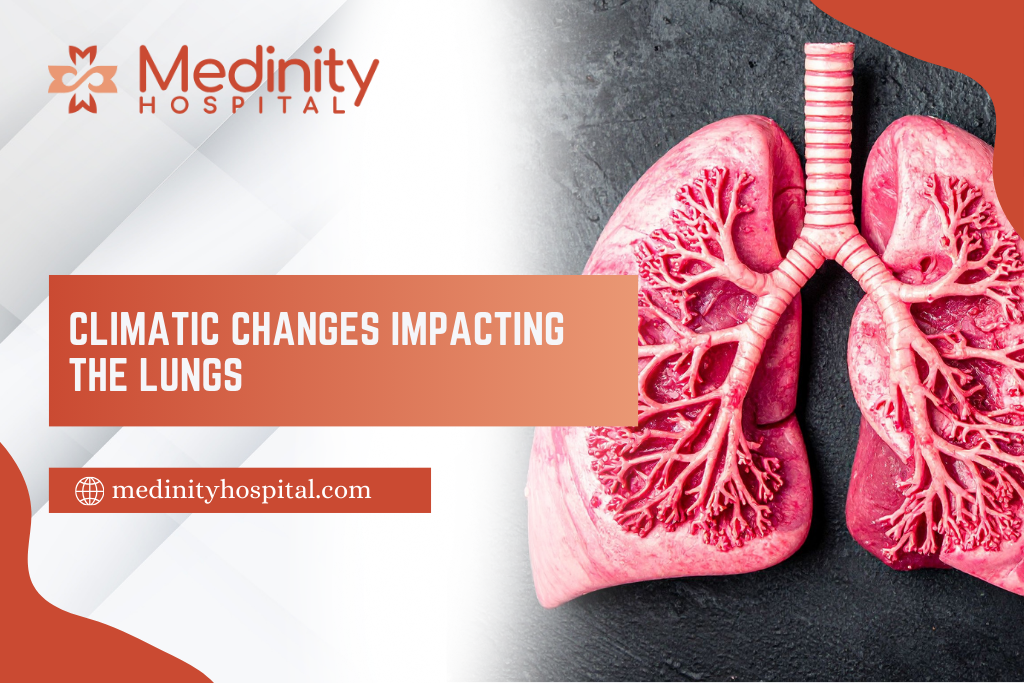
There is a change in the air that we breathe, and our lungs are suffering the effects. With a change in the climate patterns in Lucknow and the Uttar Pradesh region in general, we are experiencing an unmatched effect on respiratory health. In Medinity Hospital, we have noticed a worrying pattern of patients who come with breathing problems and lung-related issues that are directly associated with the change of the environment. This relationship is very important to know because your breathing health can be preserved in the climate of uncertainty.
The Threat behind the Curtain: Air Quality Deterioration
The nature of climate change is that it completely transforms air quality, which we need to survive. An increase in global temperatures provides the breeding ground of ground level ozone, a dangerous pollutant that is formed by the combination of heat and sunlight and the emission of vehicles and industries. This is more pronounced in cities such as Lucknow, where it is obvious that the quality of the air stems out to be unsafe during summer seasons, making breathing itself a risk to health.
Chemical reactions in the atmosphere increase when temperatures are high, resulting in increased concentrations of ozone and particulate matter. These microscopic particles enter deep into the lung tissue ,causing an inflammation and lung impairment. In patients who have asthma or have chronic obstructive pulmonary disease, such an assault on the environment can turn the symptoms that were otherwise manageable to medical crisis. Healthy people also report having a decreased lung capacity, chronic coughing, and tightness in the chest during periods of peak pollution.
Seasonal Changes and Lungs Dispositions
The seasonal patterns have been altered by the changing climate, which leaves prolonged durations of susceptibility to respiratory health. Winters in the northern parts of India are currently characterised by extended periods of dense fog and smog, which hang in the air and trap polluting substances near the ground due to temperature inversion, thereby causing the population to be exposed to polluting air over several weeks.
At the same time, the seasons with hot temperatures are increasing and increasing the allergy season. Increased carbon dioxide concentration causes plants to produce more pollen, and warmer weather enables the growth of allergen-making species in new areas. It implies that people who have allergic rhinitis and asthma experience more time when the symptoms become worse, and they have to use more medications and consult a doctor.
Extreme Smoke and Humidity of Wildfires
Wildfires have been exacerbated by climate change in many areas, and smoke from the fires in remote areas can travel hundreds of kilometres, including small particles of particulate matter that get into our respiratory tract. These particles circumvent the set of natural filtration systems that the body has and instead penetrate to the deepest points of the lungs, initiating acute inflammatory reactions and resulting in symptoms ranging from bronchial constrictions to severe bronchial constriction.
Extreme variations in the degree of humidity have also come with climate variability. Too much humidity will make the atmosphere conducive to the growth of moulds, dust mites, and allergens that will grow within a wet environment, especially in the unpredictable monsoons. On the other hand, excessive aridness makes the mucous membranes that cover the respiratory system unable to effectively trap and remove harmful particles. Such a swinging back and forth does not give the respiratory system much time to adapt and recover.
At Risk Populations: Vulnerable
The respiratory effects of climate are not felt by all. This is especially dangerous to the children as their lungs are still developing, and they breathe faster than adults, with disproportionate amounts of air and pollutants inhaled. Older people tend to have lower lung capacity, and they have respiratory illnesses that can be greatly worsened by climatic problems.
The individuals who are occupied with outdoor jobs are exposed to low-quality air over an extended period, with no possibility to escape to filtered environments. The poor communities tend to live in regions where there is more pollution and a lack of health facilities. It is important to be aware of these disparities in order to come up with specific interventions and support systems.
Breathing in Safely
We cannot regulate the patterns of global climate; nevertheless, we can do something significant to safeguard our lung health. Measuring the quality of air in the atmosphere has reached the level of importance as weather forecasts. During the days when the pollution is at its highest level, it is possible to cut down on outdoor activities, especially during peak time, in order to limit the exposure. Planting quality air purifiers in homes and workplaces forms recreational areas where the lungs can rest.
Hydration will prevent drying out of the natural defences in the respiratory passages by keeping the moisture shield on the respiratory tracts. Exercise also increases the capacity of the lungs, but it is extremely important to exercise at the best time possible, considering the quality of the air. In the case of people with underlying respiratory illnesses, regular communication with health care providers would enable them to make proactive changes to treatment plans depending on the environmental conditions.
The Path Forward
We are determined to not only treat the respiratory diseases at Medinity Hospital in Lucknow, but also empower our community on how to prevent them. Climate change is one of the most important community health issues of our generation, and the effect it has on lung health should draw our attention to the necessary action.
Lungs are wonderful organs, which should be able to endure and adapt to the changes, although it requires support in the era of environmental change. They may understand the connections between climate change and respiratory conditions, make informed lifestyle choices and consult a doctor when necessary; this makes you gain control over your pulmonary health. Always keep in mind that each breath counts,s and in an evolving climate, quality of life is more significant than ever to preserve the possibility to breathe freely.
To consult the expert on respiratory health or ask questions about some breathing related to any climatic conditions, pay a visit to Medinity Hospital, Lucknow. The pulmonology department has modern diagnostic instruments and treatment regimens to manage the entire range of lung health issues.