

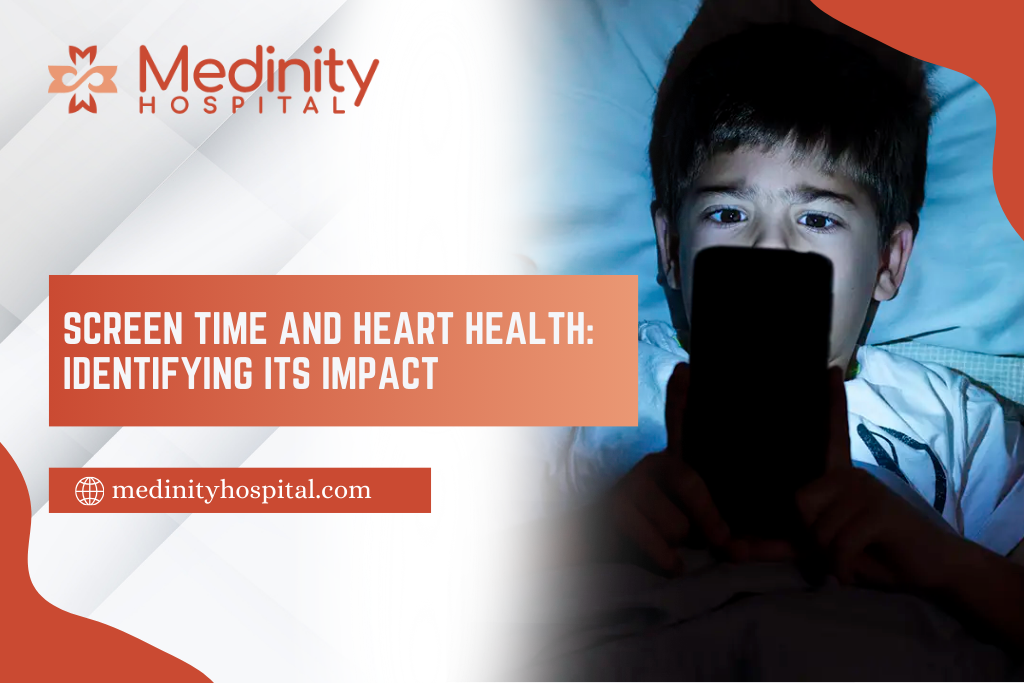
Modern life has been turned into the radiance of screens. Our days revolve around smartphones, whether in the morning with the help of alarms or in the late evening with the help of social media. In the case of the Medinity hospital, Lucknow, we are observing a worrying trend of overuse of the screen and cardiovascular complications in patients of all ages. Technology has made our lives connected and convenient; however, it is also causing an unfathomable health crisis by making it silent. The first tool to regain your digital life and your heart is to understand the impact of long screen time on the latter.
The Sedentary Trap: When Sitting is Dangerous
A full hour in front of a screen is generally an hour of non-exercise, and sedentary lifestyles have a domino effect of heart attacks. When you sit for long, your muscles require less fuel, thus your metabolism slows down significantly. Blood circulation is slow, and the body’s capability of the body to break down fats reduces. This slows the metabolism,m increasing the levels of triglycerides and bad cholesterol, and decreasing the levels of good cholesterol, which predisposes the arteries to the formation of plaque.
The cardiovascular system of the human body did not develop to remain standing. Sustained sitting makes the lower extremities full of blood, and the heart then has to work harder to keep the blood flowing. With time, this strain impairs the cardiac efficiency and increases the resting blood pressure. It has been shown that those who spend over four hours a day in front of screens are at high risk of cardiovascular diseases. We have seen cases at Medinity Hospital where patients in their thirties and forties have been admitted with heart conditions that are considered to be an auto-retirement feature of older age groups, with high levels of screen time being a prevailing cause.
Connection of Stress, Sleep and the Screen
It is not only physical inactivity because of screen exposure which affects your heart, but also it interferes with the hormonal balance that controls cardiovascular health. Digital gadgets emit blue light that inhibits the production of the melatonin hormone that regulates sleep patterns. Poor quality of sleep activates stress hormones such as cortisol and adrenaline that increase blood pressure and raise heart rate. Chronic insomnia worsened by screen time at the end of the day adds to the inflammation of blood vessels, which enhances the progression of atherosclerosis.
In addition to the disruption of sleep, the information that we view on the screens often causes stress reactions. Fight-or-flight response is triggered on a regular basis throughout the day due to constant news alerts, work emails during personal time and social media comparisons. There is no way to describe every activation other than that it causes stress hormones to rush through your system and spike blood pressure and heart rate. Although there is nothing wrong with some stress responses now and then, when it is triggered by a regular, not a single digital stimulus, it puts your cardiovascular system in a permanent state of stress, causing permanent cases of high blood pressure and heart disease.
Weight Relation and Influence of Lifestyle
Time spent at the screen is associated with a high probability of gaining weight and obesity, which are key cardiovascular risk factors. The correlation is complex. Screen time replaces the chances of engaging in physical activities. Watching the screen is commonly accompanied by mindless eating, where one ends up overeating because there is no attention to the cues that would indicate his or her fullness. The use of digital devices, especially before sleep, interferes with the metabolic functions of appetite and energy spending.
The dietary choices are also influenced by the advertising and the content that is encountered during screen time. Social media information and food advertisements arouse appetite and encourage unhealthy dietary habits. In the ever-more digitalised culture of Lucknow, we are finding children and adults spending hours gaming or watching content and eating snacks with high-calorie content, which forms a habit that exacerbates cardiovascular risks. Excessive weight overburdens the heart, which has to circulate blood to more tissue, raising the blood levels and increasing the chances of heart failure.
Online Work Experience and Heart Failure Outcomes
The move to working online has led to a situation where there is no distinction between work and personal life, a culture of being always connected that has impacted heart health. Remote employees and the representatives of the emerging tech industry in Lucknow tend to spend eight to twelve hours a day sitting at their screens, alternating between their work and personal ones without purposeful differences. This work risk is not limited to tech experts, but students who are about to take a competitive test, administrative staff, and medical workers have been spending more hours glued to computers.
The cardiovascular stress is caused by the psychological pressure of omnipresence. Alerts cause micro-stress responses throughout the day, and failure to lose leads to the inability of the parasympathetic nervous system to activate rest-and-digest functions. It is a chronic sympathetic nervous system preeminence that maintains the blood pressure and heart rate interchangeability at an increased level, both signs of a bad cardiovascular condition and indicators of forthcoming cardiac incidents.
Reclaiming Digital Health in a Digital World
It does not mean that you need to forego technology altogether in order to protect your cardiovascular system, but rather a deliberate limit and behavioural change. Use the 20-20-20 principle: you have a twenty-second break every twenty minutes and stare at something twenty feet away with some sort of action throughout the time. Get on your feet, stretch, or check out of the office with a short walk to get blood flowing once again.
Create screen-free areas and regularities in your routine. Make the bedrooms technology-free to enhance the quality of sleep and mark meal times to eat without digital interruption. Establish a definite number of hours of work and stick to them, and allow your nervous system to rest. Scheduling some replacements of screen time with physical activity, even fifteen minutes of a stroll around your Lucknow area.
Be aware of using technology by monitoring screen time by using the device settings, setting app restrictions, and switching off unnecessary notifications. These changes minimise the sources of stress and ensure the required connectivity. The heart health indicators, such as blood pressure, cholesterol, and other vital cardiovascular parameters,s are monitored at cardiovascular clinics such as Medinity Hospital to ensure that early intervention is made in case of necessity.
Taking Action Today
Your heart is too precious to put on the altar of continuous connectivity. Although screens have become part of modernity, they must improve and not harm your well-being. The connection between unhealthy screen time and heart disease is obvious and alarming, but one that can be changed with the help of conscious decisions and regular routines.
Conclusion
We work to make our community realise and prevent contemporary health risks at the Medinity Hospital in Lucknow. Chronic stress needs to be out of your heart, rest and movement. Through acknowledging the effect of screen time on your heart health and taking sensible measures to lower your screen time, you are spending money on the future, a longer, healthier future in which technology can be of service to you without undermining the same organ that supports your life.
To conduct extensive heart tests and provide specific instructions on heart care, go to Medinity Hospital, Lucknow. Our cardiology department provides a high-level of diagnostics and evidence-based intervention in order to take care of your cardiovascular health.