
Knee pain is no longer only limited to old age. In present times, most people who are in their 40s and 50s or even younger are struggling with chronic knee problems. The cause behind this is the sedentary lifestyles, obesity, sports injuries, and arthritis. The early-stage knee issues can often be managed with the help of medication, physiotherapy and the other lifestyle changes. But then there comes a point when conservative treatments stop working.
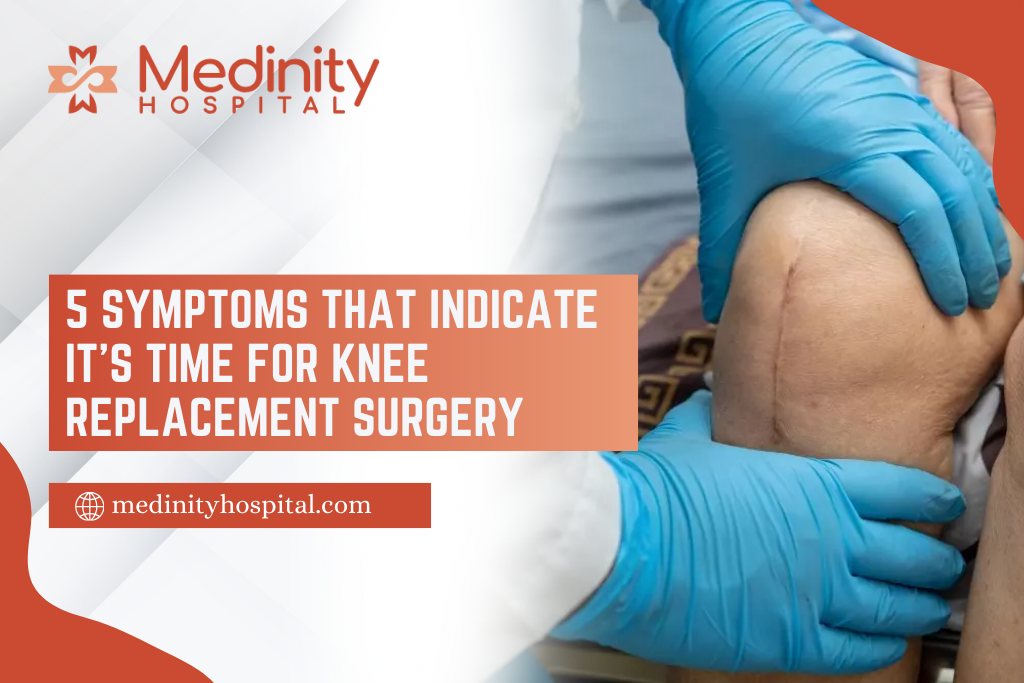
Recognizing the right time for surgery is crucial. Delaying the treatment can worsen the joint damage while reducing mobility. All together it affects the quality of life. This blog talks about the 5 key symptoms that indicate it may be time for knee replacement surgery, helping patients in making informed decisions before pain takes over their daily life.
Understanding Knee Replacement Surgery
Knee replacement surgery which is also known as knee arthroplasty, can be defined as a medical procedure in which a damaged knee joint is replaced with an artificial implant. It is most commonly recommended for individuals suffering from severe joint degeneration, which is most often caused by osteoarthritis.
The goal of the surgery is not just to have relief in pain, but also to ensure and restore mobility, stability, and independence. With the help of modern surgical techniques and a vast variety of advanced implants, patients can expect long-term improvement and betterment in the quality of life.
1. Chronic Knee Pain That Doesn’t Improve With Treatment:
It is one of the most common and serious warning signs in the patients as is often underestimated. This chronic knee pain persists despite ongoing treatment.
Occasional or minor knee pain after exertion is normal but if the pain shows following patterns then it may indicate a sort of advanced knee damage.The patterns/symptoms are as follows:
Lasts for months or years
Occurs even while resting or sleeping
Does not improve with painkillers, injections, or physiotherapy
Such cases of consistent pain are usually the result of worn-out cartilage, which causes bones to rub against each other. When pain becomes constant and interferes with everyday activities like walking, sitting, or standing, it is a strong signal that conservative treatment options are no longer effective.
Ignoring persistent pain often leads to muscle weakness and further joint deterioration, making surgery more complex later.
2. Limited Mobility and issues in walking:
When knee problems begin to restrict the normal body movement, then it is a clear red flag. Limited or less mobility often develops gradually, so many people adapt to it without even realizing how much normal functions they’ve lost.
Signs to watch for include:
Trouble walking even short distances
Needing support while climbing stairs
Difficulty standing up from a chair
Feeling unstable while walking
With the passage of time, reduced movement affects posture as well as places stress on the hips and lower back. Many patients report that they stopped going out or exercising and started avoiding travelling due to fear of pain or falls.When knee stiffness and weakness prevent you from performing basic routine tasks independently and efficiently, then in this case knee replacement surgery may be the most effective solution to restore movement.
3. The Reduced Range of Motion and Knee Stiffness:
The long term persistent knee stiffness especially in the morning or after sitting for a long period of time is another important symptom.
Some of the key noticeable factors are mentioned below:
Difficulty to fully bend or straighten the knee
A feeling of tightness or locking
Reduced flexibility during normal movements
Stiffness occurs when the inflammation and joint damage limits the smooth motion. As arthritis progresses with time, the joint space narrows and as result bone spurs may form. It makes movement more restricted as well as slow, hampering the normal lifestyle. If this stiffness continues and does not improve with exercises or medication then it means that the joint has reached the stage of degeneration and requires surgical intervention.
4.Knee Swelling and Inflammation:
It is normal to observe little swelling in legs after a physical activity but if this swelling and inflammation in knee becomes frequent or constant then it indicates a sort of concerning joint damage.
If swelling becomes common on a daily basis or the knees feel warm or tender then one should attentively consult doctors for treatment. The chronic swelling tells about the ongoing inflammation inside the joint, usually due to cartilage breakdown. Slowly this repeated inflammation damages tissue around it and leads to arthritis.
Short-term relief can be achieved with the usage of ice-packs, medicines or anti-inflammatory drugs but for a long-term relief, Knee Replacement Surgery is must as it directly addresses the cause as it entirely removes the damaged joint surfaces.
5. Knee Problems affect the quality of life:
Sometimes it’s not just about the physical pain that one goes through. Instead it’s also about the impact and pressure it creates mentally, affecting the mental well being and independence. It is at this stage that one should take it seriously.
Knee problems are affecting the quality of life can be noticed through following signs
Trouble in sleeping due to pain
Dependence on others for routine tasks
Dependence on others for routine tasks
Feeling of depression or frustration
People usually delay surgery because of fear or any sort of misinformation, and suffer. Modern Joint Replacement Surgery’s have a high rate of success and eventually improves the quality of life.
When should one Consider for Knee Replacement Surgery:
If the temporary relief options like exercises or medications are not providing enough relief and the pain remains the same, then it is the need of hour to have a detailed evaluation including, X-Rays, physical examinations and analyse the medical history.
At such a crucial point of time, an experienced orthopaedic surgeon can guide the concerned person regarding the need and type of surgery.
After Effects of Knee Replacement:
The modern technological advancements have made the journey after replacement smooth and less painful. These developments have also made the recovery faster as well as comfortable.Some common after replacement experiences include improved joint stability, better walking ability and significant pain relief. With the help of good and regular physiotherapy, patients may return to normal activities and lifestyle within weeks and enjoy results in the long-term.
Conclusion:
Recognizing and taking stand for knee pain as soon as it starts affecting our lives is crucial to prevent years of unnecessary pain, sufferings and diability. It not only causes physical pain but also impacts the quality of life in the long-run, hence it becomes necessary to consider Knee Replacement Surgery and avoid unnecessary tensions. In short we can say that, early consultation leads to early diagnosis and this further helps in early comfort, confidence and movement.